

Defense Minister Israel Katz issued a response Thursday morning to remarks by U.S. President Donald Trump, who said he believed Israel would withdraw its forces from Lebanon as part of the framework agreement signed in Washington between Jerusalem and Beirut. “We did not ask permission from any party to enter Lebanon, and we do not need permission to remain in Lebanon,” Katz said in an apparent response to the American president.
Trump was asked Wednesday on the sidelines of the NATO summit in Ankara, Turkey, whether he believed Israel should withdraw IDF troops from southern Lebanon. He said that after speaking with “Bibi,” he believed Israel wanted to do so, adding that Israel and Lebanon were getting along and signing agreements for the first time. U.S. Secretary of State Marco Rubio said an agreement was in place and that it reflected the ultimate goal, while noting that Israel remained concerned about its security. He added that Trump had done important work in bringing the two countries closer together.
Gallery
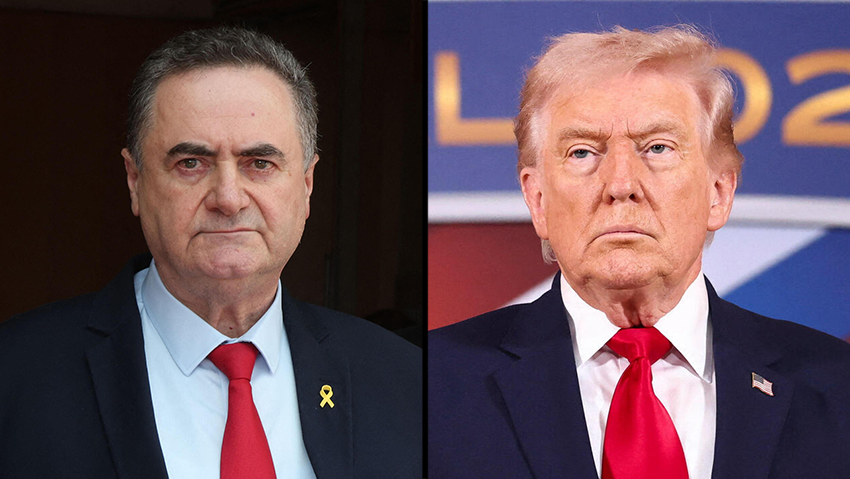
Defense Minister Israel Katz and US President Donald Trump
(Photo: Menahem Kahana/AFP, REUTERS/Kevin Lamarque)
In response, Katz said Thursday morning: “It is our right and our duty to protect the residents of the Galilee and the citizens of Israel from the threats posed by the jihadist terrorist organization Hezbollah, which seeks to destroy the State of Israel. As Prime Minister Benjamin Netanyahu and I have made clear: We will continue to remain in the security zone in Lebanon and operate from it for as long as necessary, until Hezbollah is disarmed throughout Lebanon and the threat to the residents of the north is removed. We promised security to the residents of the north, and that is what we have done and will continue to do.”
Israel and Lebanon are expected next week to hold a two-day round of talks in Rome, following the framework agreement signed in the United States by their ambassadors. The meeting could be postponed by a week, as Lebanese President Joseph Aoun is expected to visit Washington on July 21.
The Americans are still considering the idea of a trilateral meeting between U.S. President Donald Trump, Prime Minister Benjamin Netanyahu and Lebanese President Joseph Aoun, but the Lebanese strongly oppose a meeting with Netanyahu. Trump may apply pressure to make it happen. There is also still no date for Netanyahu’s visit to Washington. Officials are apparently discussing next week, but nothing has been finalized.
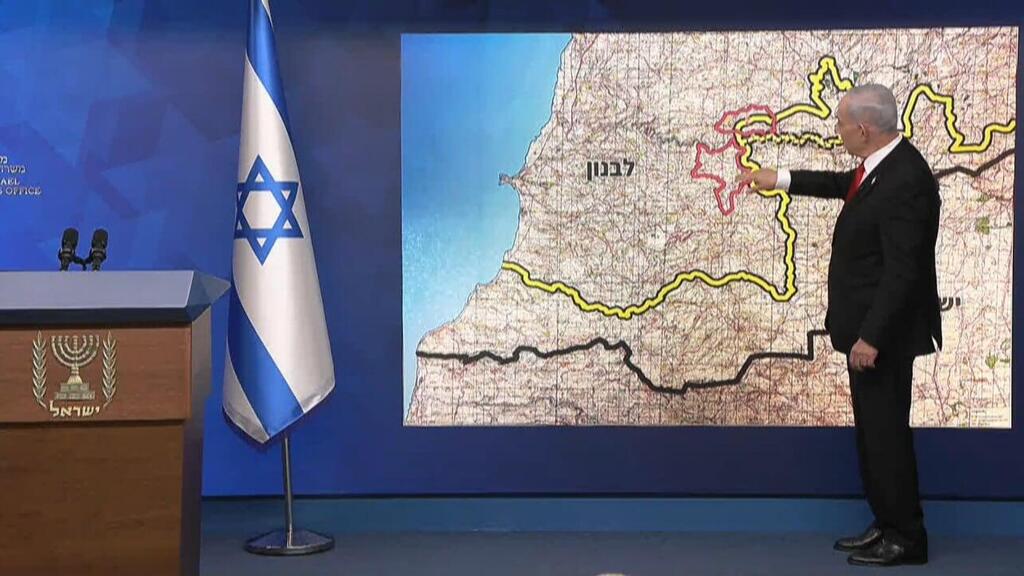
Prime Minister Benjamin Netanyahu presents the pilot areas in southern Lebanon
(Photo: GPO)
As for the talks with Lebanon, briefings presented at the security Cabinet meeting said Israel’s situation is “excellent.” In effect, the agreement enabled Israel to create a separation from Iran, and above all, to receive legitimacy from the sovereign state on the ground. Under the agreement, Israel received international legitimacy to remain in the security zone, between 8 and 10 kilometers inside Lebanese territory, and to continue deepening its effort to clear the area and dismantle terrorist infrastructure until Hezbollah is dismantled. This is a major achievement for Israel — remaining in the area with authority and approval, while the IDF continues to operate and dismantle the infrastructure.
The IDF is expected to hand over two pilot areas to the Lebanese army. According to a senior Israeli official, it will take at least several weeks before the Lebanese army is prepared for that. The official added: “From Israel’s perspective, there are no more pilot programs in its part of the yellow line; everything is going out. We believe the Lebanese army cannot dismantle Hezbollah, and in the end we will have to do it ourselves, on our own timeline. We will prepare for that from an intelligence standpoint, and we will prepare for everything necessary. But at least during this time, we are remaining in a security zone, pushing the enemy away from our communities, distancing the threat and thoroughly clearing this entire area to achieve total sterilization — something that has never existed before.”