

IDF Chief of Staff Lt. Gen. Eyal Zamir secretly visited the United Arab Emirates during the war, leading a security delegation and holding meetings in the Gulf state, ynet learned on Friday.
Zamir’s visit came amid reports that an Iron Dome battery, along with Israeli forces, had been deployed in the UAE and intercepted Iranian missiles and drones.

The visit makes Zamir the latest senior Israeli official reported to have traveled to the UAE during the war, alongside Prime Minister Benjamin Netanyahu, Mossad chief David Barnea and Shin Bet chief David Zini. The UAE has denied the visits took place, despite an official statement from Netanyahu’s office Wednesday confirming the prime minister’s trip.
Meanwhile, the UAE said Friday it would accelerate completion of the West-East 1 oil pipeline from Abu Dhabi to Fujairah, a project designed to double export capacity for ADNOC, the Abu Dhabi National Oil Co. The pipeline, expected to begin operating in 2027, would allow the UAE to bypass the Strait of Hormuz, where Iran has restricted maritime traffic.
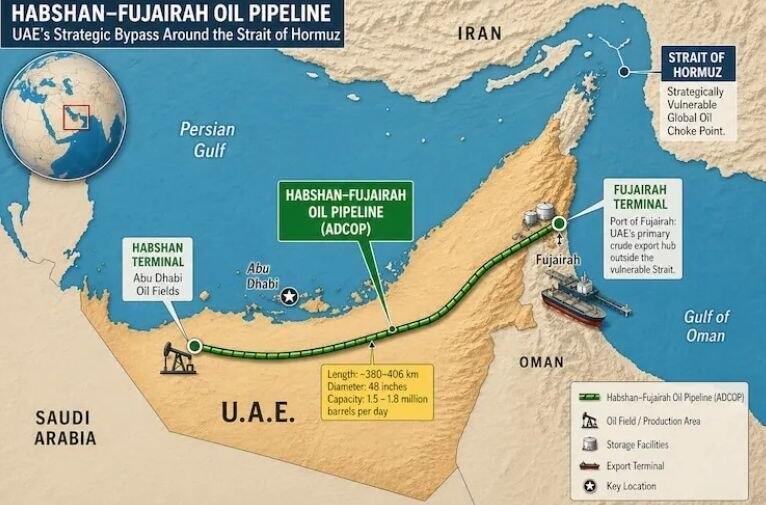
Map shows the UAE’s Fujairah oil corridor, designed to bypass the Strait of Hormuz and preserve exports during Iranian disruptions in the Gulf
Earlier this month, Iran fired toward oil industry sites in Fujairah. Iran’s Tasnim news agency, which is affiliated with the regime, described Fujairah as “the United Arab Emirates’ only alternative to the Strait of Hormuz.”
Tasnim said the Fujairah pipeline can carry 1.5 million barrels of crude oil a day, with capacity expandable to 1.8 million barrels, and was built to allow the UAE to export oil without passing through Hormuz.
The Iranian report included an image showing the bypass route, as Tehran threatens Gulf alternatives, aiming to preserve control over regional oil routes.