

The United Arab Emirates said Tuesday it was withdrawing its remaining forces from Yemen, after Saudi Arabia backed a call for Emirati troops to leave the country within 24 hours.
The announcement followed a Saudi-led coalition airstrike on the southern Yemeni port of Mukalla.
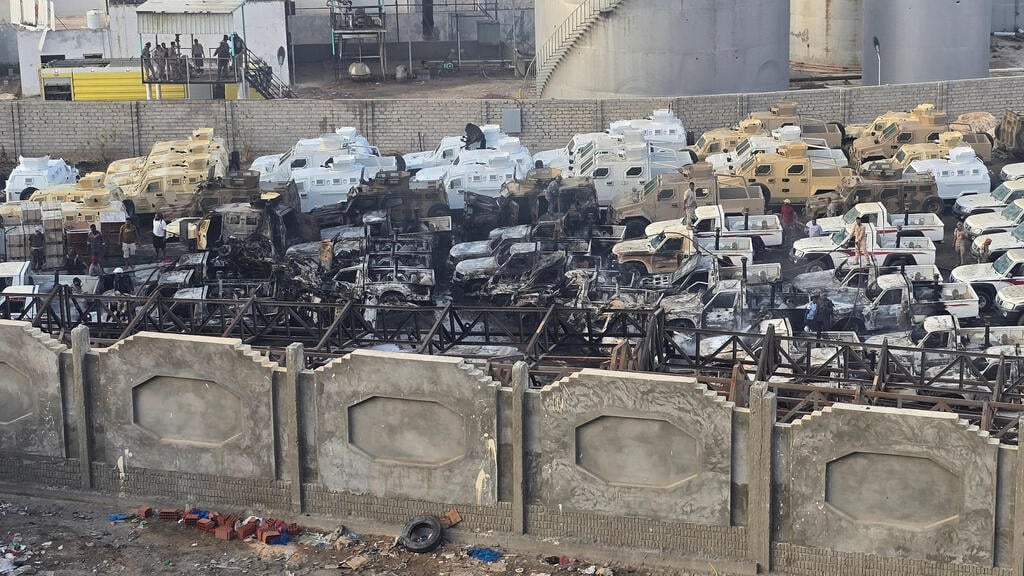
Saudi Arabia attacked Emirati weapons shipments in Yemen
(Photo: Stringer/ AFP)
Riyadh said the strike targeted a weapons shipment linked to the UAE, marking the most serious escalation to date in a growing rift between the two Gulf powers.
Once close partners and twin pillars of regional security, Saudi Arabia and the UAE have increasingly diverged on issues ranging from oil policy to regional influence.
Earlier Tuesday, Saudi Arabia declared its national security a red line and accused the UAE of pressuring southern Yemeni separatists to carry out military operations that had reached the kingdom’s borders.
It was Riyadh’s strongest public language yet against Abu Dhabi in a dispute between neighbors who once cooperated in a coalition against Yemen’s Iran-aligned Houthis but whose interests in Yemen have steadily drifted apart.
Saudi-led airstrikes on the port city of Mukalla, Yemen


Tensions within the coalition have grown as the UAE backed southern separatists seeking self-rule, while Saudi Arabia continued to support Yemen’s internationally recognized government, eventually creating an open rift.
On Tuesday, the coalition said it struck a dock used to provide foreign military support to the UAE-backed separatists. Yemen’s Saudi-backed presidential council chief gave Emirati forces an ultimatum to leave within 24 hours.
The UAE said it was surprised by the airstrike and denied that the shipment contained weapons, saying it was destined for Emirati forces.
Yemen’s presidential council head, Rashad al-Alimi, canceled a defense pact with the UAE, Yemen’s state news agency reported, and accused Abu Dhabi in a televised speech of fueling instability through its support for the separatist Southern Transitional Council.
“It has been definitively confirmed that the United Arab Emirates pressured and directed the STC to undermine and rebel against the authority of the state through military escalation,” he said.
The UAE said earlier that recent developments must be handled responsibly and in a way that prevents escalation, based on reliable facts and existing coordination between the parties involved.
Major stock indexes across the Gulf fell following the developments.
Saudi Arabia and the UAE are both key members of the OPEC oil exporters group, and any rift between them could complicate consensus on oil output policy.
They and six other OPEC+ members are scheduled to meet online on Sunday. Delegates say the group is expected to maintain its current policy of no change in first-quarter production.