


After the justices of the High Court of Justice practically pleaded with Justice Minister Yariv Levin and Attorney General Gali Baharav-Miara to reach a compromise regarding the investigation into the case of the Military Advocate General - Major General Yifat Tomer-Yerushalmi, the parties' responses to the court Thursday indicated that negotiations had failed. According to the justices’ decision, in the absence of an agreement, a ruling will be issued Sunday.
Justice Yael Wilner described the legal issue as “difficult and complex,” and stated that in exceptional cases exceptional decisions must be made. What, then, are the options available to the High Court?
First: The court could accept one of the proposals offered by the parties — either by the Justice Minister or by the Prosecution/Attorney‑General’s Office. But neither proposal appears to fully address the judges’ concerns. The judges were clear that the State Comptroller, whom Levin appointed, must not hold an investigative role, and that there is an unacceptable risk of undue influence by the Justice Minister over the investigation. Levin proposed that the comptroller, whom he himself appointed, lead the inquiry, assisted by a civil‑service official nominated by the court — a formula the judges rejected.
Gallery
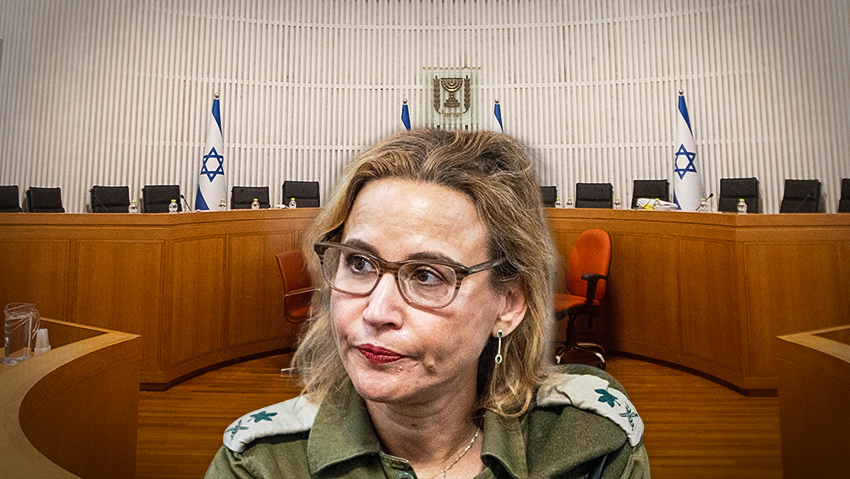
Supreme Court will rule on case of former military advocate general Military Advocate General - Major General Yifat Tomer-Yerushalmi
(Photo: Shilo Shalom)
The Prosecution’s proposal that a retired Supreme Court judge run the investigation alongside State Prosecutor Amit Isman also appears to fall short: the justices emphasized that the prosecutor is conflicted because he sat on at least one meeting reviewing the Sde Teiman leak incident. The judges noted that the advantage of a retired judge is neutrality, but the Attorney General’s alternative view is that the suitable forum is a state commission of inquiry headed by a Supreme Court judge — a post highly desirable for many justices.
In the Prosecution/AG’s draft, the key principle was “the complete neutralization of the Minister of Justice’s influence over the investigation” — however, judge Alex Stein hinted in the hearing that statute grants the Justice Minister some power in extraordinary cases.
The justices have many options before them — including some they themselves floated. For example, they suggested the possibility of granting a sitting district court judge the role of investigator. This would be a dramatic and unusual step because it would inaugurate the practice of a “judge‑investigator” which is not customary in Israel.
They also raised the idea of having the investigation conducted by the Competition Authority or the Israel Securities Authority — but these, like the prosecutor’s office, answer to the AG, which the judges found problematic. That these options were even floated suggests the court is prepared to go beyond conventional frameworks.
It appears the Supreme Court favors appointing a sitting district court judge to lead the investigation into the handling of classified footage by the Military Advocate General’s Office. However, this option comes with considerable legal and political challenges.
The first obstacle is statutory: Israeli law requires the approval of both the President of the Supreme Court and the Justice Minister for a sitting judge to take on any additional role beyond his judicial duties. If the court blocks Justice Minister Yariv Levin from participating in the selection, Levin could refuse to approve the appointment, effectively vetoing the judge's involvement. A ruling authorizing such an appointment without the Justice Minister’s approval — and potentially in contradiction of current law — would require a bold and activist interpretation by the court.
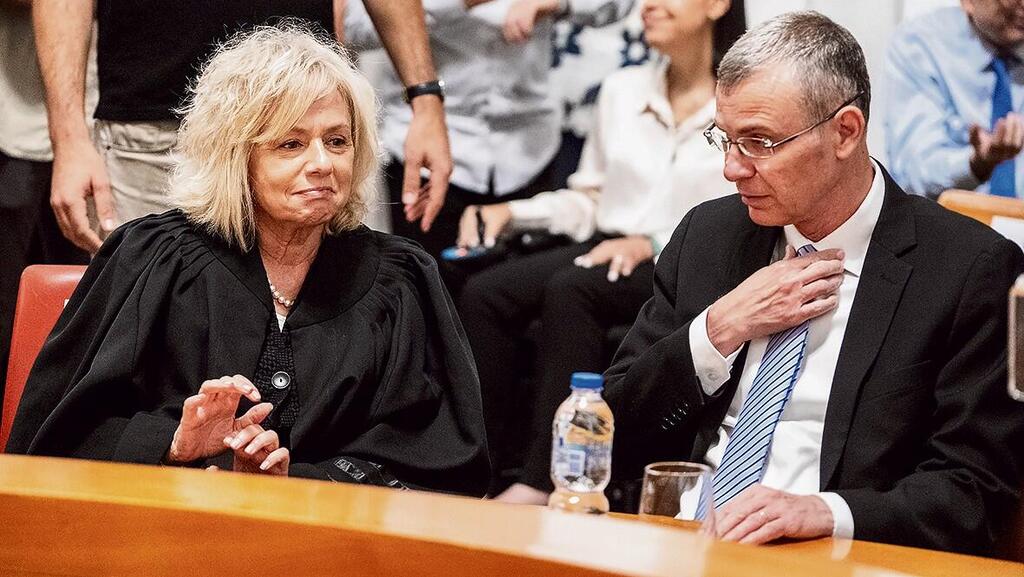
Yariv Levin and Gali Baharav-Miara
(Photo: Shilo Shalom)
Due to this legal tension, the State Attorney’s Office prefers appointing a retired Supreme Court judge, which would bypass the need for ministerial approval and minimize political interference. The second major question centers on who will select the investigator and whether either the Justice Minister or the State Attorney will be granted influence over the process, despite both sides opposing such involvement from their counterpart.
The prosecution is pushing for an arrangement in which the “investigative judge” works alongside the State Attorney, while Levin opposes any prosecutorial involvement. Should the court decide to fully exclude the Prosecution from the process, a new issue arises: who will decide whether to file charges once the investigation concludes?
If that decision rests with the judge-investigator, it would present another procedural dilemma — such a judge cannot also prosecute the case. This could leave the court to determine whether the State Attorney’s Office should be compelled to take a case it had no role in preparing.