

Following the questioning earlier Tuesday of Chief Military Prosecutor Maj. Gen. Yifat Tomer-Yerushalmi and former chief prosecutor Col. (res.) Matan Solomesh, investigators Tuesdday evening summoned the close associate who first exposed the affair to complete her testimony.
The investigation team possesses evidence indicating that Tomer-Yerushalmi repeatedly showed interest in the results of her own polygraph test. The interrogations are being conducted at a Defense Ministry facility to ensure maximum confidentiality and compartmentalization.
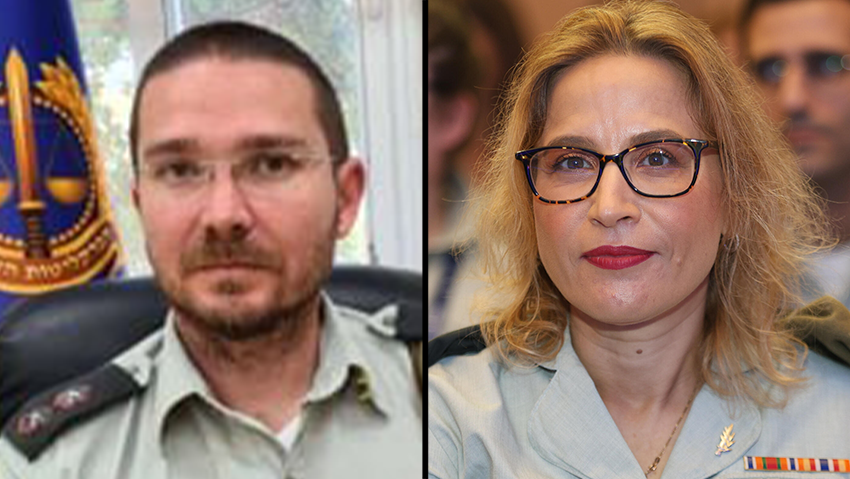
After a day and a half of rest following her arrest, Tomer-Yerushalmi’s police questioning began Monday morning. The interrogation is led by a senior police officer, a lieutenant colonel seconded from the Defense Ministry’s security division (MALMAB) to the special investigative team established for this case.
Meanwhile, searches continue for Tomer-Yerushalmi’s missing cellphone, which police suspect she threw into the sea two days ago while she was unaccounted for. Search teams from ZAKA Tel Aviv, including divers, are combing the Herzliya coastline. ZAKA Tel Aviv spokesman Israel Hassid told Ynet that the operation was launched “at the request of security forces.” However, both the IDF and Shin Bet denied asking ZAKA to conduct the search.
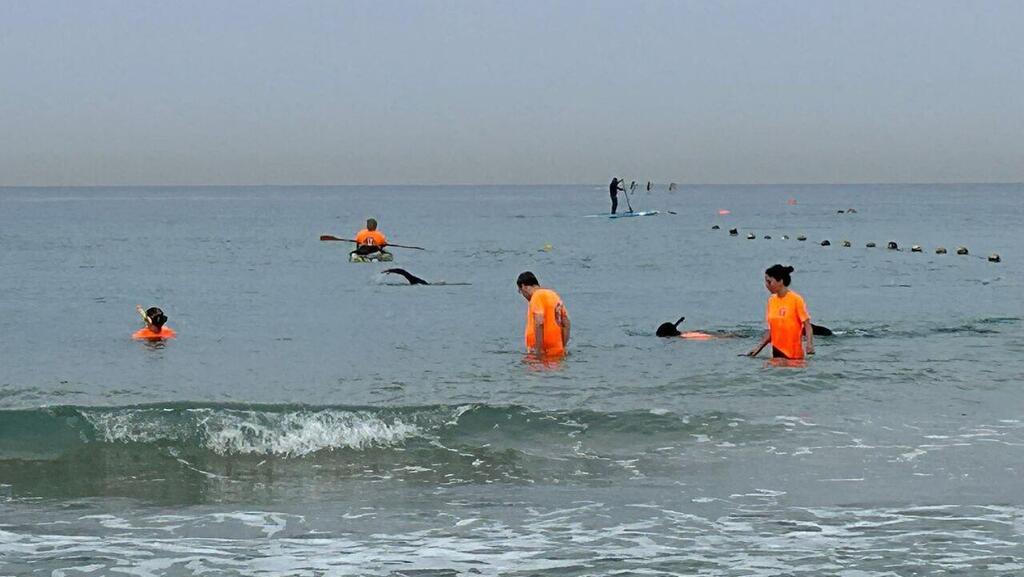
ZAKA teams search for the outgoing chief military prosecutor’s phone
Police believe that Tomer-Yerushalmi’s personal phone contains crucial evidence in the investigation into her alleged involvement in leaking footage showing IDF reservists apparently abusing a detained terrorist at the Sde Teiman base. According to law enforcement sources, the leak was planned and coordinated in a WhatsApp group of senior officers in the Military Advocate General’s Corps, led by Tomer-Yerushalmi. Some of those officers are also suspected of obstructing the criminal probe into the source of the leak and drafting false affidavits submitted to the High Court of Justice.
If Tomer-Yerushalmi’s phone is not found, it will be more difficult to identify additional suspects whose names do not appear in the known message threads. Even so, investigators could request her passwords for messaging apps and email accounts, which would allow access to communications without the physical device itself.
On Monday, the Tel Aviv Magistrate’s Court extended Tomer-Yerushalmi’s detention until Wednesday. Her appeal to the Tel Aviv District Court was denied. The magistrate’s court judge also prohibited photographing her during the hearing.
Justice Minister Yariv Levin announced his decision to appoint retired judge Asher Kula, currently serving as the Commissioner for Public Complaints Against Judges, to head the investigation into the Sde Teiman video leak. The move drew sharp opposition from Attorney General Gali Baharav-Miara and is expected to reach the High Court.
In a letter to Acting Civil Service Commissioner Prof. Daniel Hershkowitz, Levin wrote that Kula agreed to the request, explaining his choice by citing Kula’s “knowledge and experience in criminal law, his leadership of a capable system to assist him in the role, his independence from the Attorney General’s Office, and the broad public trust he commands, essential for a matter so sensitive and at such a complex time.” Kula himself stated that he agreed to accept the role “if formally assigned to him, subject to all legal provisions.”
Senior legal experts sharply criticized Levin’s move, telling Ynet that “the justice minister is not interested in the investigation but only in dismissing the attorney general. He is acting without authority, contaminating the investigation, and undermining it in real time.” Kula clarified that he was not expressing any position regarding the attorney general’s authority or potential conflict of interest. “The commissioner agrees to accept the role if it is legally assigned to him, and in accordance with all applicable laws,” his statement read.
First published: 04:23, 11.05.25