


Last year, Avi and Meirav Nadiv stood inside the charred shell of their home in Metula, lighting candles in a Hanukkah menorah that had survived a Hezbollah anti-tank missile strike which destroyed their house. This Hanukkah, the house isn’t ready yet, but the end of renovations is finally in sight. The new walls still smell of fresh paint, the flooring is nearly complete, and now they’re waiting on the final stages of construction and furnishing.
“They say the war is over and it’s safe to come home, but for us and many others, there’s still no home to return to,” Avi says. Although the ceasefire took effect a year ago, he says the emotional toll remains. “I feel like I’m still in a war. We’re invisible. People in central Israel hear on the news that things are getting back to normal, but they don’t understand, we’re still refugees in our own country.
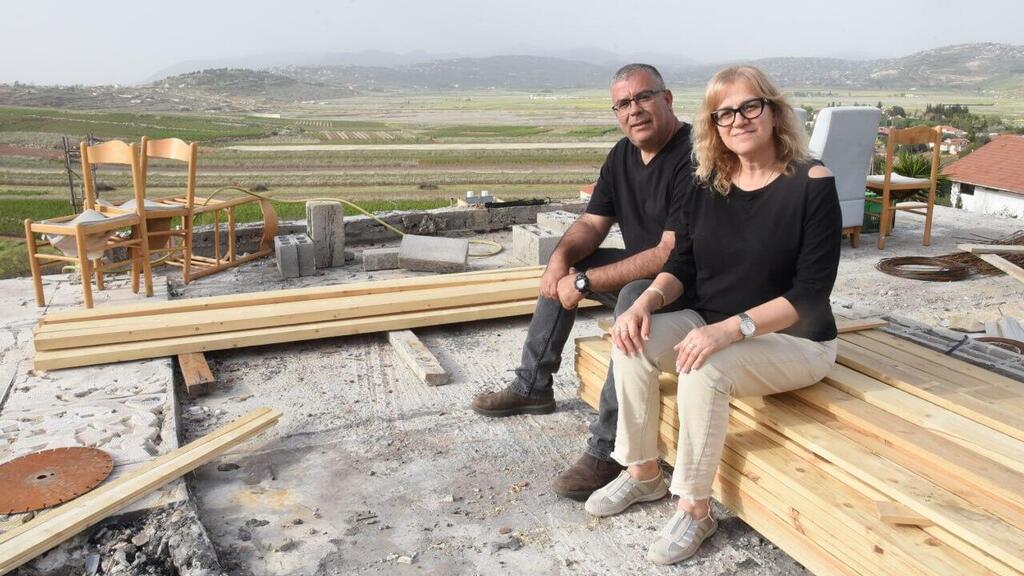
“We’re living with one foot here, one foot there,” says Meirav. “Every day we drive up to Metula to see the progress, then go back down to the valley. It’s like being neither here nor there.”
The challenges of rebuilding their dream home have been both complex and exhausting. The couple praises the staff from the Property Tax Authority who have accompanied them through the process but expresses deep frustration over the limited compensation the state offers to those who lost their homes.
“It’s a joke,” Avi says angrily. “They declared the contents of the house a 'total loss' and gave us about 110,000 shekels—the maximum allowed by law. Just the basic estimate for built-in closets is 60,000. What’s left for appliances? For a living room? For beds?”
Pointing to the empty rooms, he adds, “We had solid wood furniture here, high-quality pieces we’d owned for years. You can’t buy that again with this kind of money. Do they expect us to go buy plastic cabinets? That’s not going to happen.”
Beyond the financial strain, there is also the existential fear that comes with investing in a home just meters from the Lebanese border, one that has already been hit more than once by Hezbollah fire.
“Yesterday, the whole house shook,” Meirav says. “There were loud explosions, and your mind just starts racing. It’s stressful, it’s scary, and those sounds are anything but reassuring.”
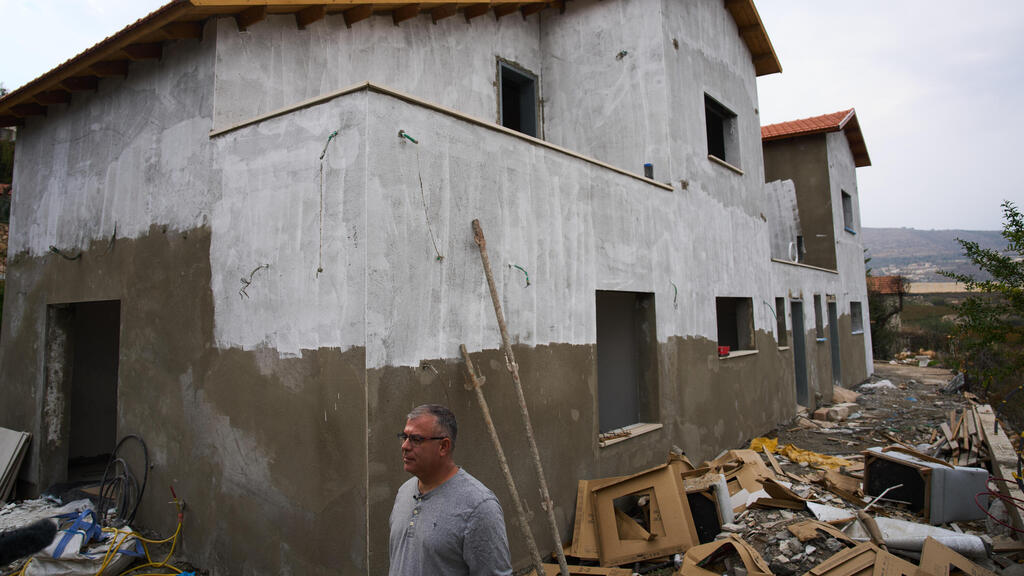
Avi Nadiv next to a home that's under renovation in Metula, Nov. 2025
(Photo: AP Photo/Ariel Schalit)
“Every shekel I spend here makes my stomach turn,” Avi adds. “I stand here with the contractors, the army's planes are circling overhead, and the house is shaking from the booms of strikes in Lebanon. And I ask myself: who’s to say Hezbollah won’t fire again tomorrow morning? Why should I invest in a new kitchen if it could all be gone again?”
Still, they’re building, and even upgrading. Amid the fear and uncertainty, it was Meirav who insisted on not giving up on their dreams. “We had this debate over the stairway marble,” Avi recalles with a small smile. “We could have gone with something basic for 400 shekels per meter, but Meirav wanted the special kind that costs 800. We argued, we hesitated, but in the end, I decided to silence that voice of fear and told her, ‘Let’s go for it.’ But we can’t go through something like this again, we’re not young anymore.”
It may sound like a minor renovation detail, but in Metula of 2025, choosing expensive marble is a statement: they’re here to stay. “The process is exhausting, but we can see the light at the end of the tunnel,” Meirav says with cautious optimism. “We can already see a home.”
The Nadiv family’s goal is clear and marked on the calendar. “We’ll be done in about two months,” Avi promises. “By Passover, all the kids and grandkids already know—we’re hosting the seder dinner in Metula.”
Meirav adds, “The girls have been planning it since last year. They already told their husbands: ‘Next year, we’re in Metula.’ And with God’s help, we’ll all be here, safe and at peace.”