

Iran continued Sunday evening to insist that its representatives will not attend the talks in Pakistan, to which U.S. President Donald Trump said he would send his envoys. At the same time, no senior officials in the Islamic Republic have publicly addressed the issue.
Parliament Speaker Mohammad Bagher Ghalibaf and Foreign Minister Abbas Araghchi made no statements about the planned talks, and reports have so far appeared only in media outlets affiliated with the regime, citing unnamed sources.
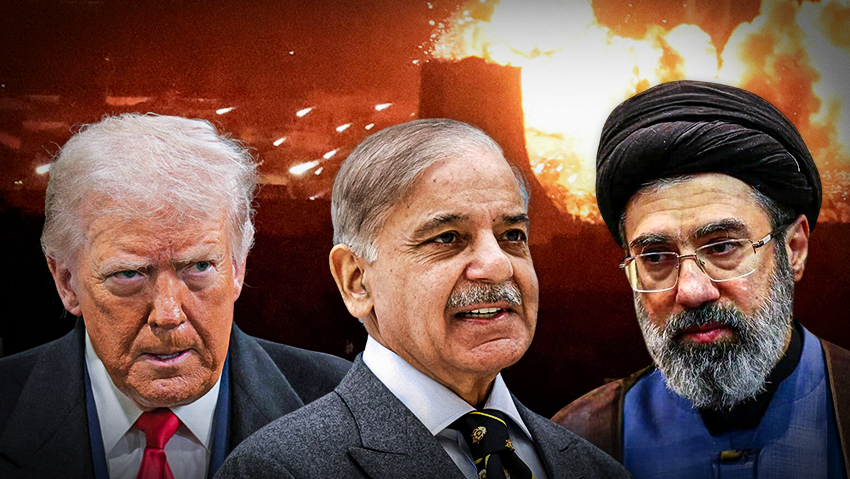
Earlier in the day, CNN reported, citing Iranian sources, that Tehran was planning to send representatives to talks in Pakistan on Tuesday. However, Iran’s Tasnim news agency, which is affiliated with the Islamic Revolutionary Guard Corps, later reported that no delegation would leave for the talks as long as what it described as a U.S. blockade of Iranian ports continues.
Tasnim also reported that messages have been exchanged in recent days between Washington and Tehran through mediators.
Later Sunday evening, Iran’s official IRNA news agency published a report stating that “the report about a second round of talks in Islamabad is not correct.” According to the report, “the excessive demands of the United States, frequent changes in positions, contradictions and the continued naval blockade, which is considered a violation of the ceasefire agreement, along with threatening rhetoric, have so far delayed progress in the talks.”
“Under these circumstances,” the report added, “there is no clear prospect for fruitful negotiations. The report published by the United States is a media maneuver intended to exert pressure on Iran.”
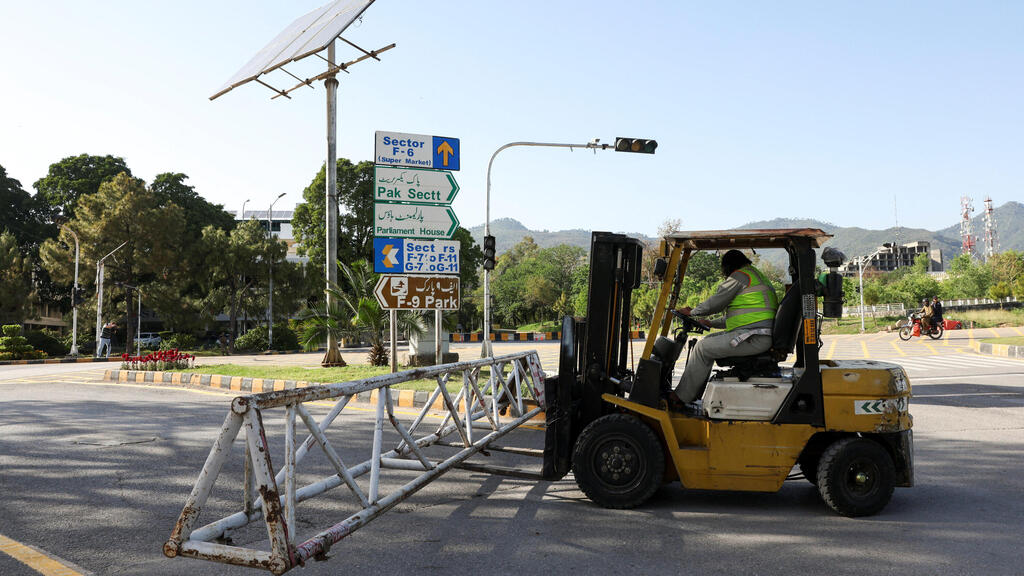
Pakistan sets checkpoints in Islamabad today
(Photo: Akhtar Soomro/ Reuters)
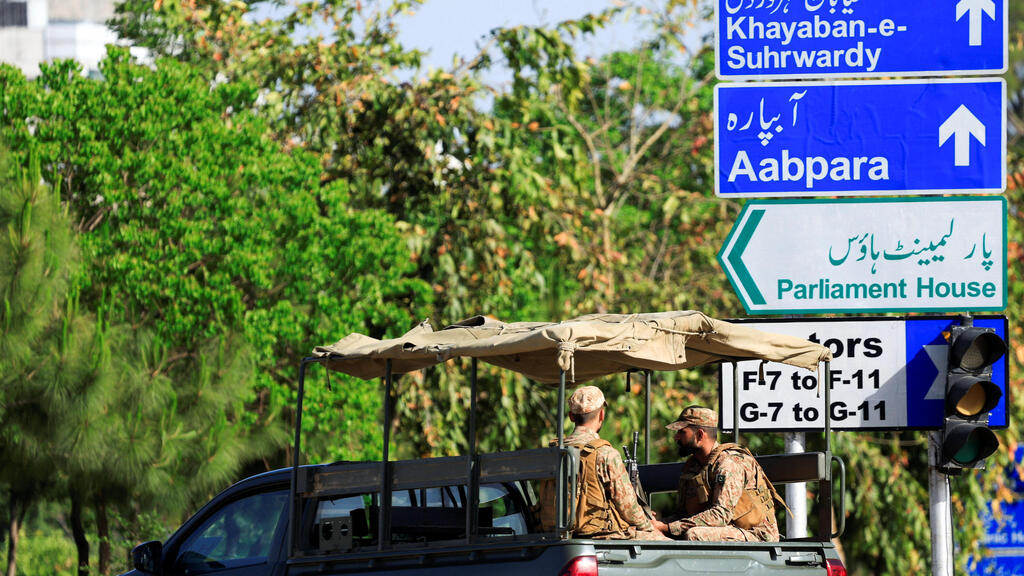
(Photo: Akhtar Soomro/ Reuters)
At the same time, statements from Iranian officials stopped short of explicitly ruling out participation in the talks. Ibrahim Azizi, head of the Iranian parliament’s National Security Committee, told Al Jazeera that “we accept negotiations based on national interests.”
“Negotiations must lead to tangible results for Iran,” he said. “Our diplomatic team will not accept any dictates. Washington must accept the new system for managing activity in the Strait of Hormuz. There is no change in our positions regarding all issues related to Iran’s national interests.”
Another Iranian lawmaker said: “In accordance with the guidance of our leadership, we will not accept any negotiations under pressure, nor will we participate in them.”
Hotel in Pakistan cleared of guests
Despite the conflicting Iranian reports, Trump announced earlier that his envoys would depart for Pakistan, and Islamabad is already preparing.
Authorities imposed a lockdown overnight in the area surrounding the hotel where talks were held last week, and the hotel itself, where U.S. Vice President J.D. Vance met Iranian officials, has been completely cleared of guests.
Pakistani officials said they plan to deploy around 10,000 security personnel across the city, including hundreds of special forces members and snipers.
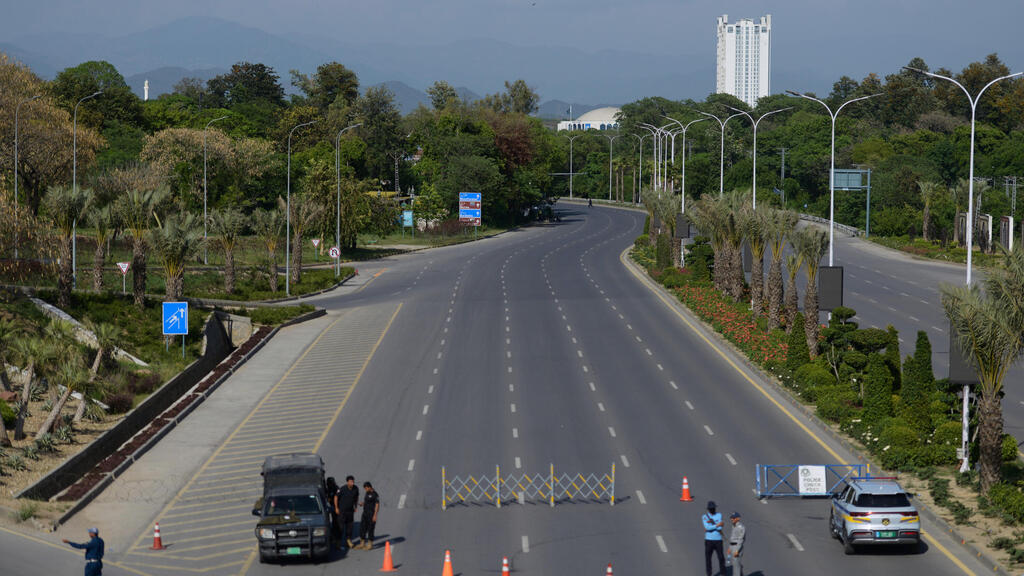
The hotel was completely cleared of guests
(Photo: M.A. Sheikh/ AP)
Although Pakistan has not officially confirmed that a new round of talks will take place, preparations in the capital are in full swing. A regional source involved in mediation efforts said U.S. security teams are already on the ground. The source spoke on condition of anonymity because they were not authorized to speak to the media.
Pakistan’s Prime Minister Shehbaz Sharif spoke Sunday evening with Iranian President Masoud Pezeshkian. According to Pakistani officials, the conversation focused on the regional situation.
No details were released regarding future talks, but Pakistani officials said Sharif updated Iran’s leadership on his meetings with Pakistan’s army chief Asim Munir, who recently visited Tehran. Pezeshkian, for his part, thanked Pakistan for its commitment to advancing peace efforts.
Israel prepares for multiple scenarios
In Israel, officials are preparing for several scenarios, including a possible resumption of fighting or an extension of the ceasefire as part of ongoing diplomatic efforts beyond the current deadline.
While Trump is seeking a deal and appears determined to exhaust negotiations, Israeli officials say it is difficult to ignore the signals coming from Iran. They assess that Tehran may be misleading the Americans, with the Islamic Revolutionary Guard Corps taking a more rigid and extreme line than the negotiators.
In Jerusalem, there is also concern that Trump could ultimately agree to what Israel views as a bad deal with Iran, and some officials say they would prefer no deal at all.
Although Trump has said there will be no sunset clause in any agreement, reports reaching Israeli officials suggest the United States may be open to limits on Iran lasting 15 to 20 years, a scenario Israel considers highly problematic.
The possibility that the U.S. could agree to lift economic sanctions is seen in Jerusalem as particularly troubling, as it could inject tens of billions of dollars into Iran’s economy, prolong the survival of the regime and remove pressure for regime change.
A possible renewal of fighting with Iran could also have implications for renewed conflict in Lebanon. Despite official denials, Israeli officials say there is a clear linkage between the two fronts, or as Trump put it, a “psychological connection.”
Despite preparations for a potential escalation, Israel is continuing preparations for Memorial Day and Independence Day ceremonies, all of which are set to be broadcast live. A rehearsal of the torch-lighting ceremony will be recorded in advance in case renewed fighting prevents a live broadcast. Pre-recordings for Memorial Day ceremonies have been canceled.
Prime Minister Benjamin Netanyahu
(Video: GPO)


Prime Minister Benjamin Netanyahu convened a phone consultation of the smaller security cabinet overnight on the Iran issue and postponed a meeting of the broader cabinet until Monday afternoon.
Prime Minister Benjamin Netanyahu, speaking alongside Argentina’s president, underscored the uncertainty surrounding developments with Iran.
“We are at a time of great challenge and great consequence,” he said. “We have been engaged with the United States in a battle against the great tyranny of Iran, which terrorizes the world, which seeks our destruction and seeks to bring down the United States, seeks to bring down Western civilization as we know it.
“We have achieved enormous things. It’s not over yet. Any moment could bring new developments,” Netanyahu added. “I don’t know what tomorrow or the day after tomorrow will bring.”