


Prime Minister Benjamin Netanyahu has remained silent on the draft-exemption bill, but senior members of the ultra-Orthodox parties and officials in his circle are expressing confidence that the legislation will pass.
Despite rising tensions within the coalition since the bill was unveiled and assessments on Monday that it might fail, Netanyahu’s allies insist the pushback from some lawmakers is part of routine political maneuvering.
Gallery
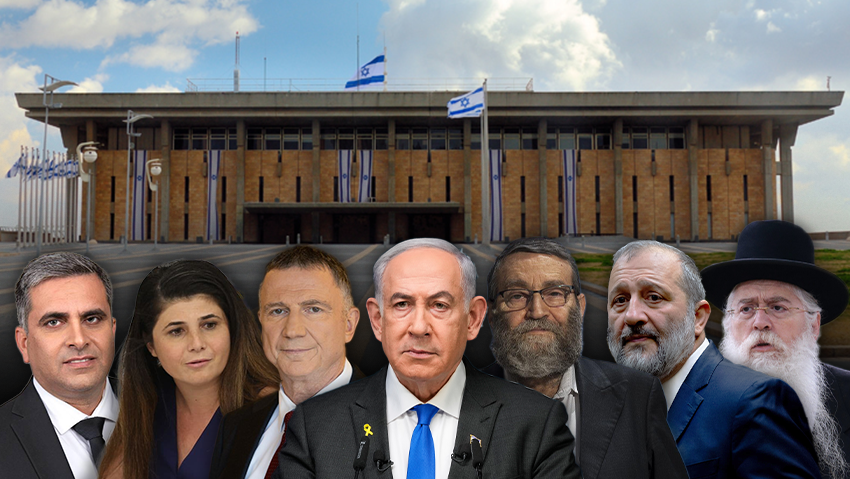
Draft-exemption bill
(Photo: Alex Kolomoisky, Eli Attias, AP/Ohad Zwigenberg, Moti Kimchi, Shutterstock)
Haredi officials say they expect wavering lawmakers to fall in line and believe that only three Knesset members will ultimately vote against the bill: Yuli Edelstein, Deputy Minister Sharren Haskel and Ofir Sofer, who has already said he will oppose the current proposal even at the cost of being removed from government.
As the political season heads into an election year, the bill — which would exempt tens of thousands of Haredi men from mandatory military service — has become one of the most sensitive issues facing the coalition. Netanyahu has avoided personally intervening, leaving his advisers to signal support. Cabinet Secretary Yossi Fuchs said Tuesday in an interview with Kol Barama radio that he expects the bill to pass. “We know of four who won’t support it, but overall the backing will be along party lines,” he said. Fuchs added that Netanyahu is determined to approve the measure. “He fully stands behind the bill, and in the coming days you will hear him say so himself.”
Haredi lawmakers echoed that optimism, saying the objections voiced by coalition partners were “negotiation tactics.” Even Knesset Member Meir Porush, who called the bill “a bad law that should be torn apart,” has not formally declared he will vote against it.

Haredi protest against draft, IDF troops in Gaza
(Photo: Shalev Shalom, IDF)
A senior figure in Agudat Yisrael said the bill is far from perfect but argued that the political posturing among religious-nationalist MKs is expected. He suggested that some voiced opposition to avoid being portrayed as the only ones compromising on principles or to avoid embarrassment if the bill ultimately fails.
Inside the Haredi press, efforts continue to legitimize the bill despite concerns over enforcement mechanisms. In Yated Ne’eman, the newspaper of the Degel HaTorah faction, rabbinic leaders urged calm. Rabbi Dov Landau dismissed fears of quotas that would disproportionately affect Sephardi students, and Rabbi Dan Segal said decisions should be made with discretion.
The Knesset Foreign Affairs and Defense Committee convened Monday to discuss the bill’s language. At the opening of the meeting, Haggai Lober — whose son, reservist Elisha Yehonatan, was killed in the war — confronted committee chair Boaz Bismuth, saying, “Your bill is dangerous. You are harming Israel’s security.” Bismuth called the moment “a rare point in the nation’s history.”
People close to Netanyahu say they are not worried about securing enough votes for passage, but they are watching public reaction closely. They warn that a backlash could jeopardize the legislation even if the coalition numbers remain intact.