


Even before Prime Minister Benjamin Netanyahu flew to Washington, Israeli officials said he was expected to present U.S. President Donald Trump with updated intelligence on Iran’s Pickaxe Mountain site. Yet, at least according to the official accounts released after the meeting, the subject did not come up. Despite that omission, both sides described the talks as good, positive and even excellent.
Ultimately, there is no way to know exactly what was said behind closed doors. It is also possible that the claim that Pickaxe Mountain was not discussed was itself intended as misdirection, another effort to keep Iran uncertain about what Israel and the United States know and what they may do next.
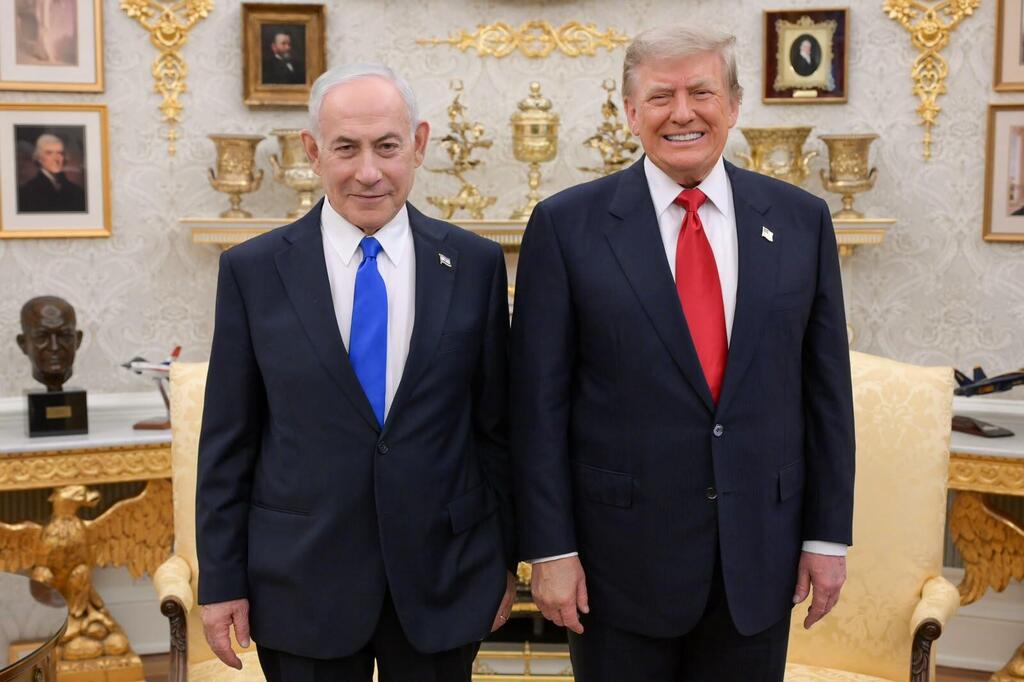
Beyond the security issues, Netanyahu may have another reason to present the meeting as an exceptional success: It serves his political interests.
With Israel’s election less than three months away, it is important for him to demonstrate to the Israeli public and the international community that he and Trump remain coordinated, but that Washington is not dictating Israel’s actions.
Trump may also have eased Netanyahu’s concerns about a poor agreement with Iran and reassured him that the U.S. president would not concede on the nuclear issue. Netanyahu may even have learned more about Washington’s plans for the next stage and left the Oval Office feeling calmer.
The message from Netanyahu’s advisers after the meeting was clear: The talks were excellent, the two leaders were united around the same objective and coordination was complete. In other words, according to the Israeli message, Trump will not compromise over Iran’s nuclear program, even in return for an agreement limited to the Strait of Hormuz.
Trump, however, has reached a crossroads. His decision will depend partly on the answers Iran provides, while he faces growing domestic pressure ahead of the November midterm elections. For now, Iran’s hard-line camp appears to be prevailing over those seeking an agreement, with the latest overnight missile fire reinforcing that assessment.
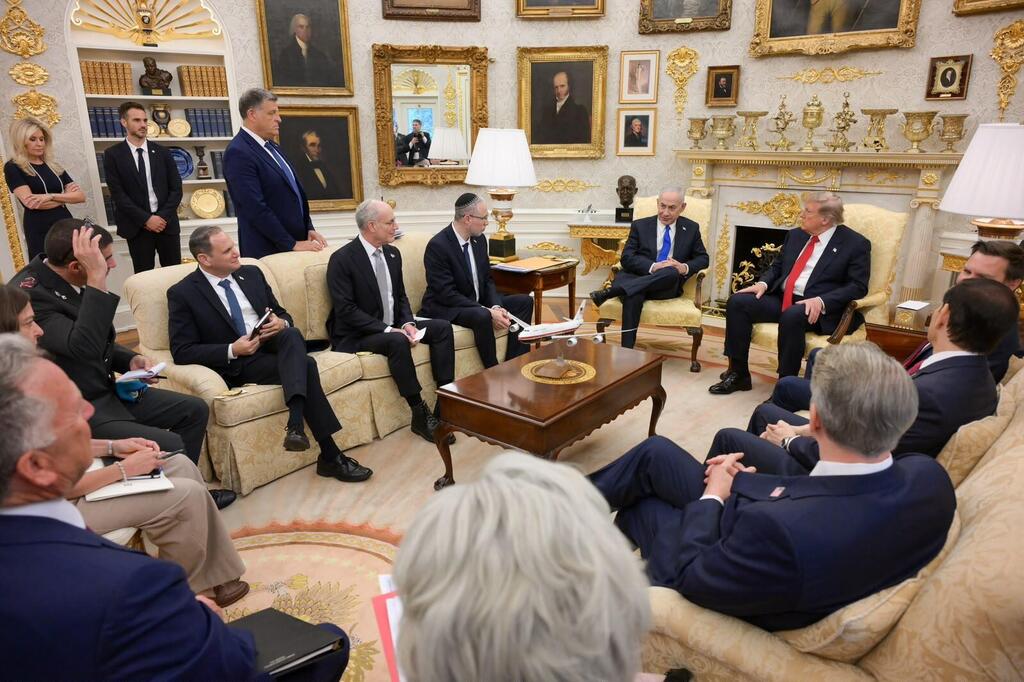
No press conference and no statement from Trump afterward. The meeting in the Oval Office
(Photo: Maayan Toaf, GPO)
Since returning to the White House, Trump has generally relished hosting foreign leaders before the cameras, holding lengthy press conferences and allowing meetings to unfold publicly. That makes the decision to hold his meetings with Netanyahu and Ukrainian President Volodymyr Zelensky away from the cameras noteworthy.
So too was the unusual decision to allow the visiting leaders to issue their own summaries afterward while Trump himself offered little detail.
Like Netanyahu, Zelensky needed an Oval Office meeting to project coordination with Trump, strengthen public support and reinforce his position amid an ongoing war. “I have just finished an excellent meeting with President Trump, and when I say excellent, I do not mean that as an empty phrase,” Netanyahu said in a video released shortly after the meeting, moments before the memorial service for the late Sen. Lindsey Graham began.
“It was a conversation marked by complete partnership, mutual support and an understanding of the common objective: ensuring that Iran does not obtain nuclear weapons, as well as other goals. This was one of the best conversations I have had with U.S. President Trump. His entire senior team was there, as was our senior team, and it was an opportunity to exchange ideas and coordinate steps that are important for the security and future of the State of Israel.”
But there was no joint press conference and no statement from Trump at the conclusion of the talks. The White House issued only a brief response. Press secretary Karoline Leavitt wrote on X that the meeting was “positive and productive.”
It remains unclear what Trump will do next. He must decide whether to continue an unpopular war that is damaging his party ahead of the midterm elections. Many Americans remain uncertain about what the United States is trying to achieve in Iran.
A Reuters poll released this week found that only one in three Americans supported the war. Against that political backdrop, Netanyahu’s declaration of unity and complete coordination is valuable to the Israeli prime minister, but it does not resolve Trump’s dilemma.
The quiet format of the meeting may itself have conveyed the tension: Netanyahu obtained the Oval Office encounter and the image of partnership he needed, while Trump avoided publicly committing himself to the next stage of the war.