

Judges overseeing Prime Minister Benjamin Netanyahu's corruption trial said Thursday they had considered summoning Attorney General Gali Baharav-Miara to court to discuss the future of Case 4000, acknowledging unusual circumstances in the proceedings and expressing frustration over the lack of direct dialogue with the official ultimately responsible for the prosecution.
The disclosure came after defense attorneys Jack Chen, representing businessman Shaul Elovitch, and Amit Hadad, representing Netanyahu, asked the three-judge panel to summon Baharav-Miara for discussions on how to proceed with the case, which includes a bribery charge against the prime minister.
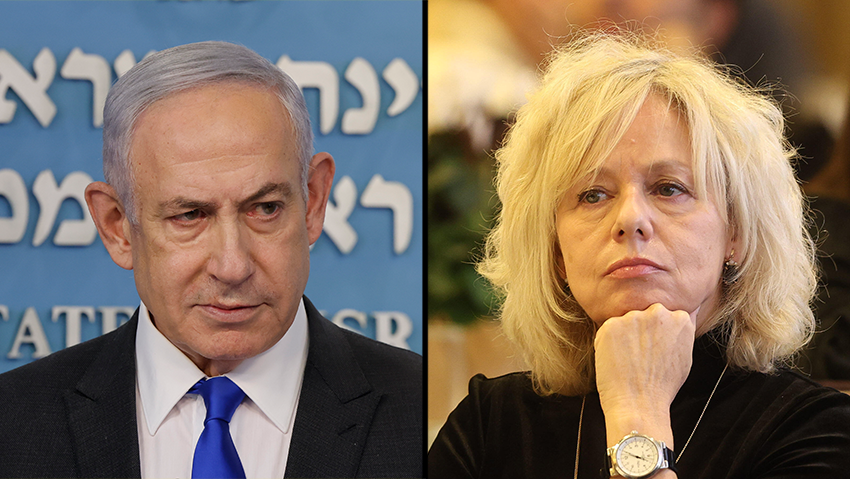
Prime Minister Benjamin Netanyahu, Attorney General Gali Baharav-Miara
(Photo: Marc Israel Sellem, Gil Nechustan)
The attorneys urged the judges to convene a meeting with the attorney general and continue discussions until a resolution was reached.
"Actually, you're pushing at an open door," the judges responded, revealing that they had previously considered the same step but encountered opposition from prosecutors.
Prosecutor Nitzan Wolkan questioned the request, asking why the current attorney general should be required to appear before the court.
"The current attorney general? My colleagues should explain on what grounds she should be summoned here," Wolkan said.
Presiding Judge Rivka Friedman-Feldman challenged that objection. "Why can't she be summoned?" Friedman-Feldman asked. "There have been many unusual things in this case."
Judge Oded Shaham elaborated, saying the defense's request reflected the attorney general's overarching responsibility for the proceedings and the need for more direct communication between the court and the prosecution's leadership.
"The request is based on the understanding that the person ultimately responsible for managing these proceedings is the attorney general," Shaham said. "If we want to have a meaningful dialogue, perhaps it needs to be conducted with her."
He confirmed that the judges had independently considered summoning Baharav-Miara but had not proceeded. "I can tell you that the defense may have been pushing at an open door, because we considered this before but did not do it," Shaham said.
The judge stressed that the panel had not reached a decision and was exploring ways to move the proceedings forward.
"This is an attempt to see how we can proceed in the situation we find ourselves in, based on what we have already experienced," he said. "I'm not saying yes or no. We haven't made a decision. We're simply saying that we heard these arguments and that the idea was not entirely unreasonable."
Wolkan acknowledged the attorney general's supervisory role but maintained that prosecutors appearing in court were acting on her behalf and keeping the relevant authorities informed.
"The attorney general bears overall responsibility, and we are her representatives here in court," Wolkan said. "The messages, the course of the hearings and the issues raised by the court are conveyed to the relevant officials."
Shaham responded that the judges believed a more direct channel of communication might be necessary.
"We thought this dialogue should take place more directly," he said. "There is no need for question marks or exclamation points, but it is worth considering."
The exchange follows repeated indications from the judges that prosecutors should reconsider the bribery charge in Case 4000, the most serious of the three corruption cases against Netanyahu.
The case centers on allegations that Netanyahu granted regulatory benefits to telecommunications giant Bezeq in exchange for favorable coverage on the Walla news website, both of which were controlled by Elovitch. Netanyahu denies wrongdoing.
On two previous occasions, the judges expressed doubts about whether the evidence supported the bribery allegation and suggested that prosecutors withdraw that charge.
Baharav-Miara has not provided the judges with a position on the matter.
The panel had also previously urged the prosecution and defense to pursue mediation through a third party in an effort to resolve the case. Baharav-Miara rejected that proposal, instead informing Netanyahu's attorneys that they were free to seek a plea agreement.