

High-resolution satellite images from VANTOR Technologies taken in September and October 2026 showed significant renewed activity at Min-Zadayi, a nuclear weapons development complex in northeast Tehran that was exposed and attacked by Israel during Operation Roaring Lion. Several buildings, and apparently underground structures as well, were destroyed in the strike, according to a report published by the Institute for Science and International Security.
The latest satellite images indicated the return of regular vehicle traffic around the site following an extensive cleanup operation that included removing rubble and debris and repairing damage to the hillside. In one area struck in March 2026, ongoing earthworks can be seen. The work is taking place on a surface designed to resemble a courtyard, where numerous craters were visible after the attacks on the site.
Gallery
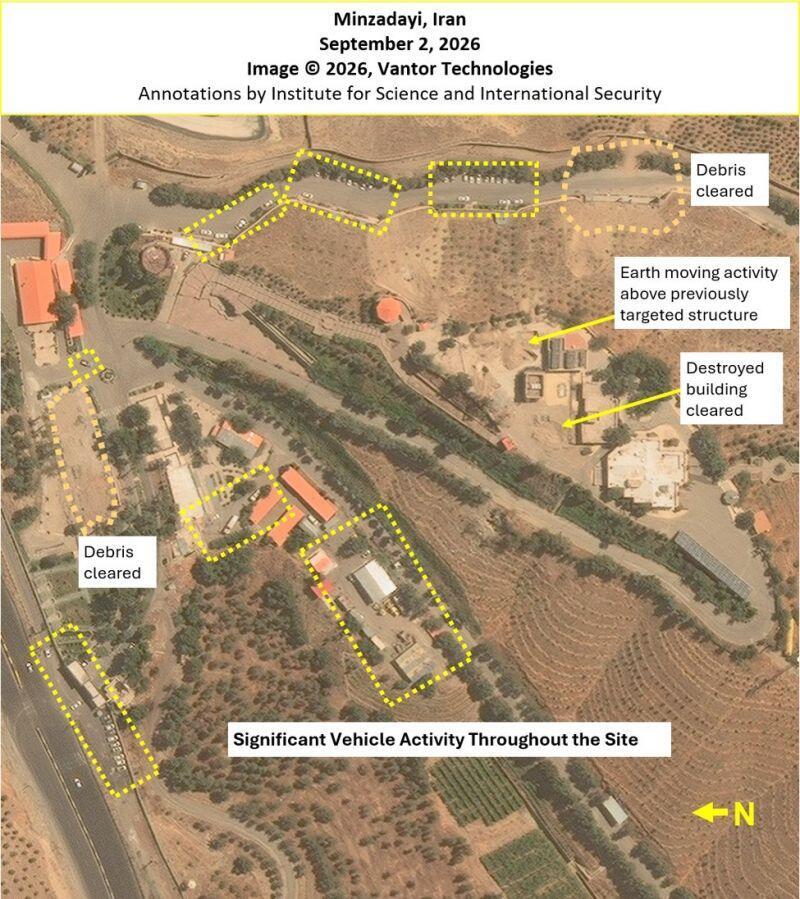
Satellite images show significant resumption of activity at Min-Zadayi, a nuclear weapons development complex northeast of Tehran
(Photo: ISIS Reports)
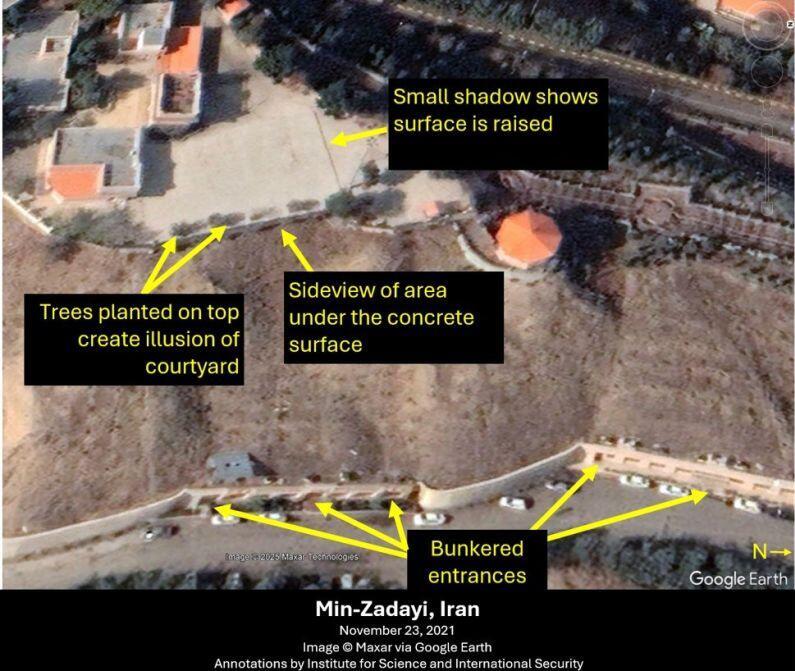
The website in November 2021
(Photo: ISIS Reports)
A significant presence of vehicles was observed throughout the site between early September and early October 2026. Cars were parked outside the security fence in a lot, while numerous private vehicles and trucks were seen inside the compound. Given what is known about the site, this activity may indicate an Iranian effort to restore a nuclear weapons development capability and recover what was lost in the attack on the complex.
According to the institute’s report, based on public reporting and statements issued by the IDF, the nuclear weapons work carried out there likely included research and development of nuclear warheads. The IDF originally said that “a group of nuclear scientists operated covertly to develop a key component of the nuclear weapons program,” adding that “the complex was intended to enable the restoration of the required technology and the advancement of capabilities for developing nuclear weapons.”
The X account @IntelliTimes published additional information about the complex. In a post dated Sept. 24, 2026, it claimed that infrastructure related to nuclear weapons had been established in 2022 and “absorbed some of the means from the nuclear warehouse” — a common reference to the Turquzabad site, which was exposed by Prime Minister Benjamin Netanyahu in September 2018.
Netanyahu disclosed the site after Iran removed more than a dozen shipping containers from it, which were believed to contain nuclear material and equipment relevant to Iran’s nuclear weapons capabilities.
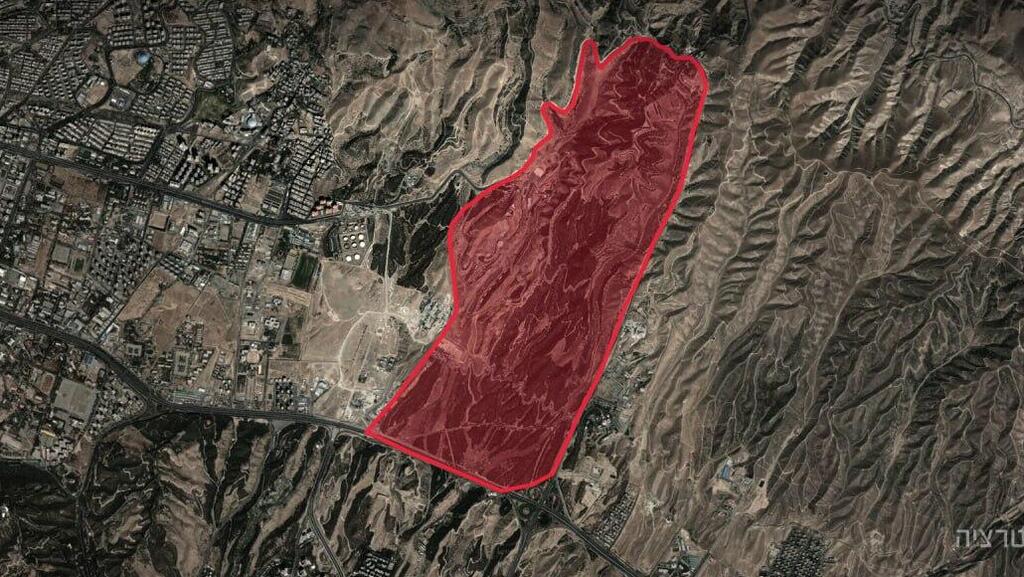
Illustration of the Iranian terrorist regime's secret nuclear complex that was attacked
(Photo: IDF Spokesperson's Unit)
When the International Atomic Energy Agency visited Turquzabad in March 2019, it found evidence that nuclear material or contaminated equipment had been present at the site. Since then, the IAEA Board of Governors has pressed Iran to answer the agency’s questions about the current location of that material or equipment.
According to @IntelliTimes, Iran did not simply transfer the material or equipment to a new long-term storage site. Instead, it used the Min-Zadayi site in northeast Tehran to establish “an industrial nuclear command center for restoring the research, development and adaptation infrastructure for nuclear warheads,” including the means “to produce cores of enriched uranium and the explosive material required to cast the initiation chain into them.”
During rounds of fighting with Iran, extensive strikes were carried out against nuclear targets in the country. In late June 2025, the United States led a massive strike using B-2 bombers and Tomahawk missiles that hit Iran’s three main nuclear sites — Fordow, Natanz and Isfahan.
Following the attack, Iran formally acknowledged heavy damage to its facilities in July 2025, while the IDF released satellite images and assessed that the operations had succeeded in setting the nuclear program back by years. At the same time, the Israeli Air Force destroyed significant components at the Isfahan facility, though Western intelligence officials cautioned that the bombers’ impact had been limited mainly to external structures and tunnel entrances.
Despite months of prolonged fighting, former senior officials and intelligence agencies warned that the strikes had damaged the program but had not eliminated it entirely. Professional assessments published in August 2026 showed that most of Iran’s stockpile of uranium enriched to 60% remained intact, and that the Iranian regime had moved thousands of advanced centrifuges to protected underground sites deep inside the mountains.
That reality led, as reported in September 2026, to an acceleration in U.S. preparations for additional targeted strikes aimed at preventing Iran from breaking out to a nuclear weapon.