

They came running, swimming and even floating on inner tubes. Within a short time, tens of thousands of people crossed from Morocco into Ceuta, Spain’s enclave on the North African coast, entering by sea and through a breach in the border fence. Spanish security forces were overwhelmed, reception centers filled up and what began as a local emergency quickly became a crisis with repercussions across Europe.
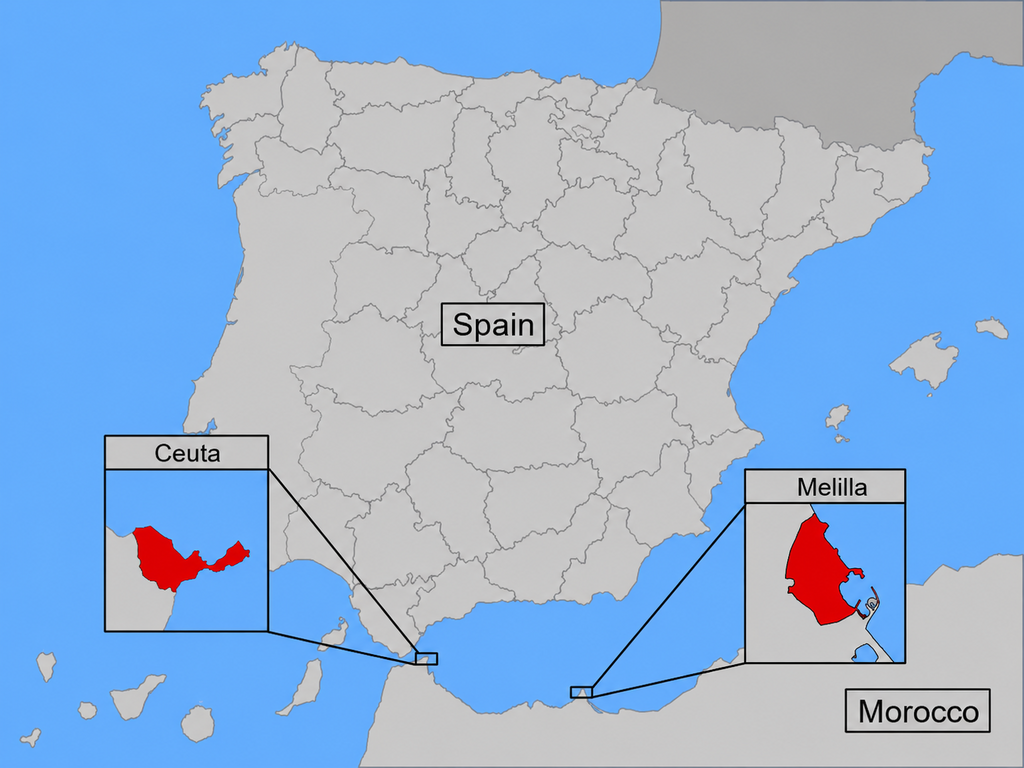
Ceuta, along with the Spanish enclave of Melilla, forms one of the world’s most unusual borders: European territory located on the African continent and surrounded by Morocco. For anyone who manages to cross into the enclave, the move means entering Spanish territory and, in effect, the European Union. For Madrid and Brussels, however, the tall fences, cameras and patrols are only the final layer of defense. The more important barrier lies on the other side, in the hands of Moroccan security forces.
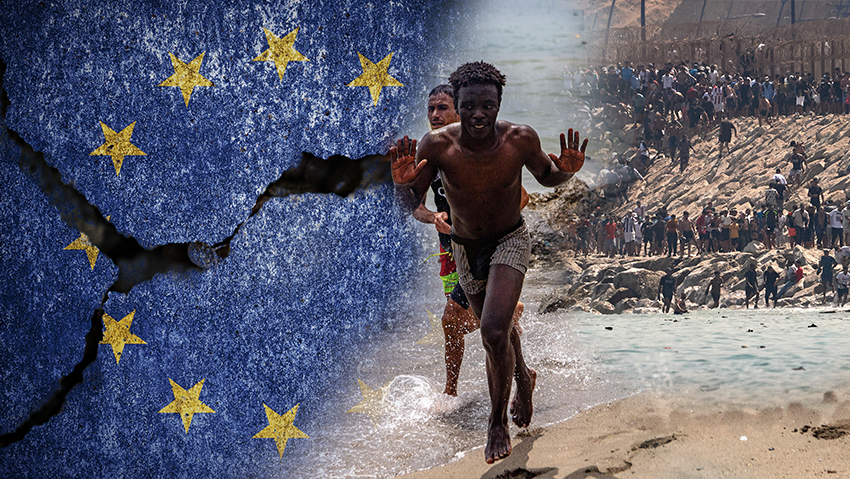
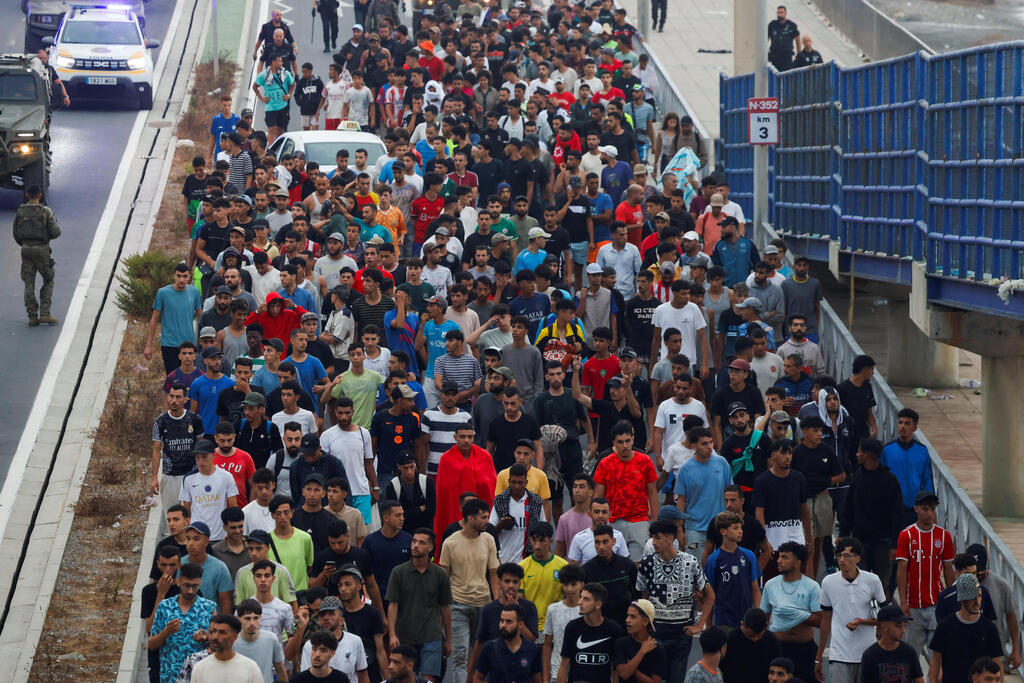
Migrants deported from Ceuta back to Morocco
(Photo: REUTERS/Jon Nazca)
The reason for the latest surge remains unclear. Initially, it was attributed largely to rumors circulating on social media, smuggling networks and a misreading of a Spanish court ruling that restricted authorities’ ability to immediately return migrants who reached the enclaves by sea.
But in the days that followed, suspicions grew that Rabat’s conduct had also played a decisive role. According to reports in the Spanish media, intelligence services concluded that Morocco had not organized the mass crossing in advance but had allowed it to happen. Moroccan border controls, according to that assessment, had been gradually relaxed during July and did little to stop the crowds on the day of the breach.
Ceuta regional president Juan Jesús Vivas told the European Parliament this week that around 100 people were killed during the border rush and that between 3,000 and 5,000 migrants remained in the enclave.
EU Migration Commissioner Magnus Brunner called for trade and visa policy to be used to pressure Morocco, while Vivas declared: “Morocco is not a reliable country.” But the crisis raises a much broader question: How were so many people able to reach one of the region’s most heavily guarded borders at roughly the same time, and what happens to Europe when the country it relies on is unable, or unwilling, to stop them?
The border that begins in Rabat
Since the 2015 refugee crisis, Europe has increasingly sought to move its effective borders south and east.
Instead of waiting for migrant boats to reach the shores of Italy, Spain or Greece, the European Union has invested heavily in countries of origin and transit. That money has gone toward training security forces, buying equipment, improving surveillance systems, combating smugglers, returning migrants to their home countries and preventing boats from leaving in the first place.
Mass crossing from Morocco into Ceuta
(Video: Reuters)


Arriving by sea, breaching the fence: The rush into Ceuta
Morocco is one of the central partners in this strategy. According to European Commission figures, between 2015 and 2021 the EU committed 234 million euros to migration-related projects in the kingdom. The money funded border management, efforts against smuggling and human trafficking, migrant protection, voluntary return programs and improvements to Morocco’s migration policy.
In 2023, the EU launched another program worth 152 million euros aimed at strengthening Morocco’s ability to manage its borders, dismantle smuggling networks and return migrants to their countries of origin.
That program formed part of a much larger cooperation package with Rabat worth 624 million euros. From Europe’s perspective, the logic is straightforward. It is cheaper to stop a boat before it leaves shore, or a group before it reaches the fence, than to deal with thousands of people who have already entered European territory, allow them to apply for asylum and then manage months or years of deportation proceedings and appeals.
Morocco benefits as well, not only through money and equipment but also through its status as a strategic partner, access to European decision-makers and greater leverage in negotiations over trade, visas, investment and diplomatic issues.
But that is also where the weakness lies. Once Europe entrusts part of its border control to another country, that country can decide how tightly to enforce the rules, and when to loosen them.
The clearest precedent came in Ceuta in May 2021. Within about two days, roughly 8,000 people entered the enclave, including around 1,500 minors, after Moroccan security forces displayed what Spain described as unusual passivity.
Many migrants simply walked along the shore or swam around the maritime barrier. The episode took place at the height of a diplomatic crisis. Spain had allowed Brahim Ghali, leader of the Polisario Front, which seeks independence for Western Sahara, to receive medical treatment secretly on Spanish territory. Morocco, which considers Western Sahara an integral part of its territory, reacted furiously.
Spanish Defense Minister Margarita Robles accused Rabat at the time of “blackmail,” saying it was using migrants and minors to pressure Spain.
The European Parliament later condemned what it described as Morocco’s use of border control and migration, particularly unaccompanied minors, as a tool of political pressure against an EU member state. Morocco rejected the accusations.
But the message was unmistakable in Madrid: Spain’s borders depended not only on the number of police officers, soldiers and fences on the Spanish side, but also on the state of relations with Rabat.
The following year, Spain changed its long-standing position on Western Sahara and backed Morocco’s autonomy plan as a basis for resolving the conflict. Relations improved, and border cooperation strengthened. That does not mean every migration surge from Morocco is orchestrated by the government.
Rabat itself faces pressure from young Moroccans who want to leave, smuggling networks and thousands of migrants arriving from sub-Saharan Africa. But the events of 2021 demonstrated how even a temporary and unofficial reduction in enforcement can become a European crisis within hours.
From Tunisia to Mauritania
Morocco is far from the only country involved in this model. In recent years, the European Union has signed a series of agreements with North African and Sahel countries combining economic aid and investment with commitments to curb irregular migration.
In 2023, Europe signed a memorandum of understanding with Tunisia that included 105 million euros in migration support, almost three times the country’s average annual funding in that field during the previous two years. The money was intended to strengthen borders, combat smugglers, return migrants and prevent deaths at sea.
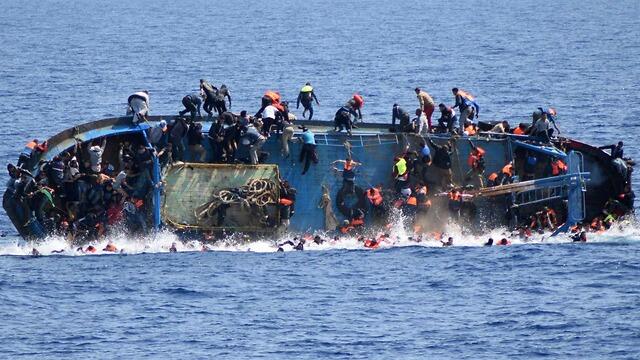
Migrant boat that capsized off Libya in 2016
(Photo: Italian Navy)
Mauritania, which has become a major departure point for boats heading toward the Canary Islands, entered a migration partnership with the EU in 2024 backed by a 210 million euro assistance package.
Not all of that money was earmarked for migration. It also covered humanitarian aid, jobs and security. But a major part of the program focused on border control, disrupting smuggling networks and stopping boats from heading into the Atlantic.
Egypt was also elevated to strategic-partner status. An EU support package for Cairo announced in 2024 totaled 7.4 billion euros in loans, investments and grants. Around 200 million euros in grants were designated for migration management.
For Europe, Egypt’s economic stability, in a country of more than 100 million people that has also received refugees and asylum seekers from across the region, became an internal security concern.
Brussels presents such deals as broad partnerships covering infrastructure, energy, education and employment, not simply payments to block migrants. They are also based on the argument that migration cannot be addressed without tackling its underlying drivers, including poverty, war, unemployment and instability. In practice, however, one of the key measures by which these arrangements are judged is whether they reduce the number of boats reaching European shores.
Erdoğan’s ‘open gates’ and Lukashenko’s ‘hybrid attack’
Turkey demonstrated more explicitly than almost any other country how migration can be turned into leverage in relations with Europe.
Under a 2016 agreement, Ankara agreed to take back migrants who reached Greece irregularly, while Europe committed billions of euros to support refugees and the communities hosting them. The EU’s Facility for Refugees in Turkey eventually reached six billion euros.
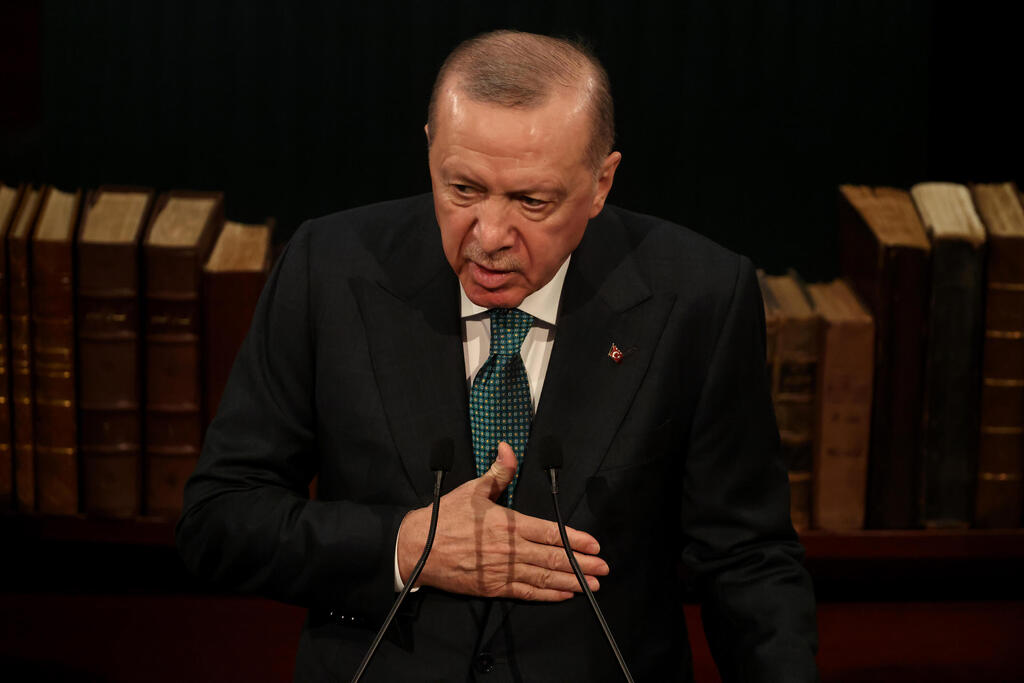
Turkish President Recep Tayyip Erdoğan
(Photo: Chris McGrath/Getty Images)
Turkish President Recep Tayyip Erdoğan repeatedly threatened to “open the gates” and send millions of refugees toward Europe if Ankara did not receive greater political and financial support.
In February 2020, the threat became policy. Turkey announced it would no longer stop migrants trying to reach the Greek and Bulgarian borders, and thousands headed toward the crossings. The move came amid fighting in Syria and Turkish demands for stronger European backing.
Europe discovered that the agreement that had dramatically reduced arrivals on the Greek islands had also created deep dependence on Ankara. Disputes over money, visas, Syria or relations with Erdoğan could suddenly become direct threats to Europe’s external border.
At Europe’s eastern frontier, the use of migrants became even more confrontational. In 2021, the EU, Poland, Lithuania and Latvia accused Belarusian President Alexander Lukashenko’s government of helping bring migrants, particularly from the Middle East, to Minsk and then moving them toward the EU border.
The EU Agency for Asylum concluded that Belarus had taken measures designed to facilitate irregular migration first toward Lithuania and later toward Latvia and Poland. Brussels described the move as a “hybrid attack” intended to retaliate against European sanctions and destabilize member states. Belarus and Russia denied organizing the flow.
In that case, Europe was not paying a neighboring state to guard its border. Instead, it was confronting a hostile government accused of exploiting the same vulnerability against it.
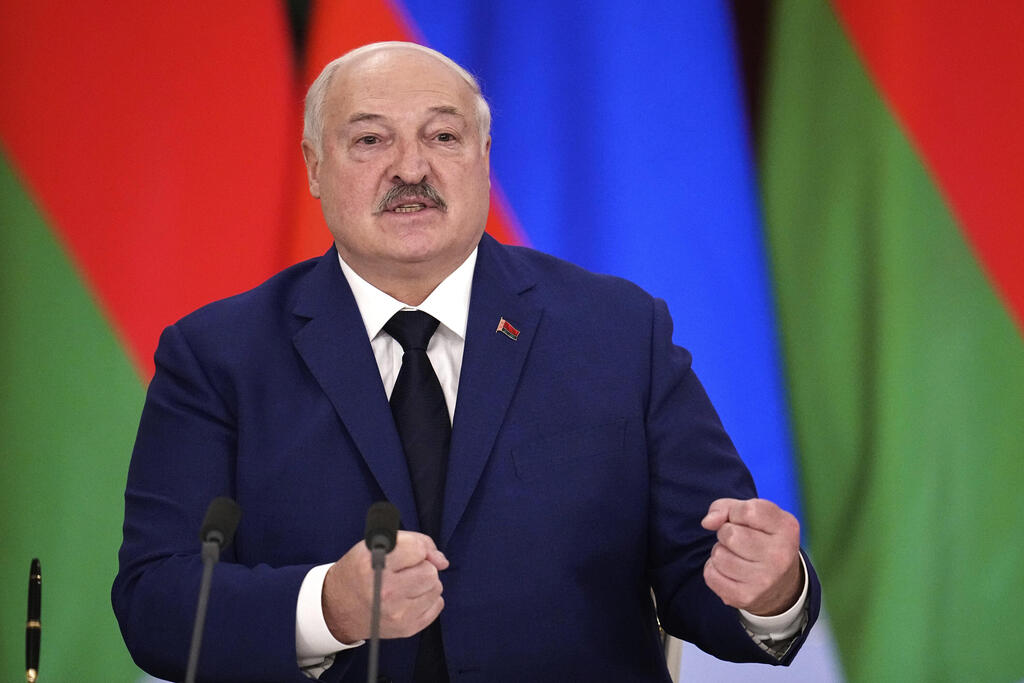
Belarusian President Alexander Lukashenko
(Photo: AP Photo/Alexander Zemlianichenko)
Migrants trying to reach Europe became trapped between Belarusian forces pushing them westward and Polish forces preventing them from entering, often in freezing conditions and without adequate protection.
The lesson was similar: Migration is not only a humanitarian or economic issue. When large numbers of people move over a short period, migration can become an instrument of foreign policy, placing pressure on governments, deepening divisions inside the EU and strengthening anti-immigration parties.
Europe’s policy of externalizing its borders carries another cost. The more responsibility for stopping migration is transferred to countries outside European territory, the further migrants, refugees and asylum seekers are pushed away from Europe’s courts, regulators and media scrutiny.
Libya offers the starkest example. For years, the EU and individual member states have provided equipment, training and funding to the Libyan coast guard to intercept boats and return passengers to Libya.
Human rights organizations say many of those returned are sent to detention centers where torture, sexual violence, extortion, forced labor and arbitrary detention have been documented.
Brussels says its assistance includes oversight mechanisms, efforts against trafficking networks and voluntary return programs that help migrants go back to their countries of origin. Critics, however, argue that Europe is effectively paying others to carry out actions it could not conduct in the same way on its own territory, while distancing itself from legal and public responsibility for the consequences.
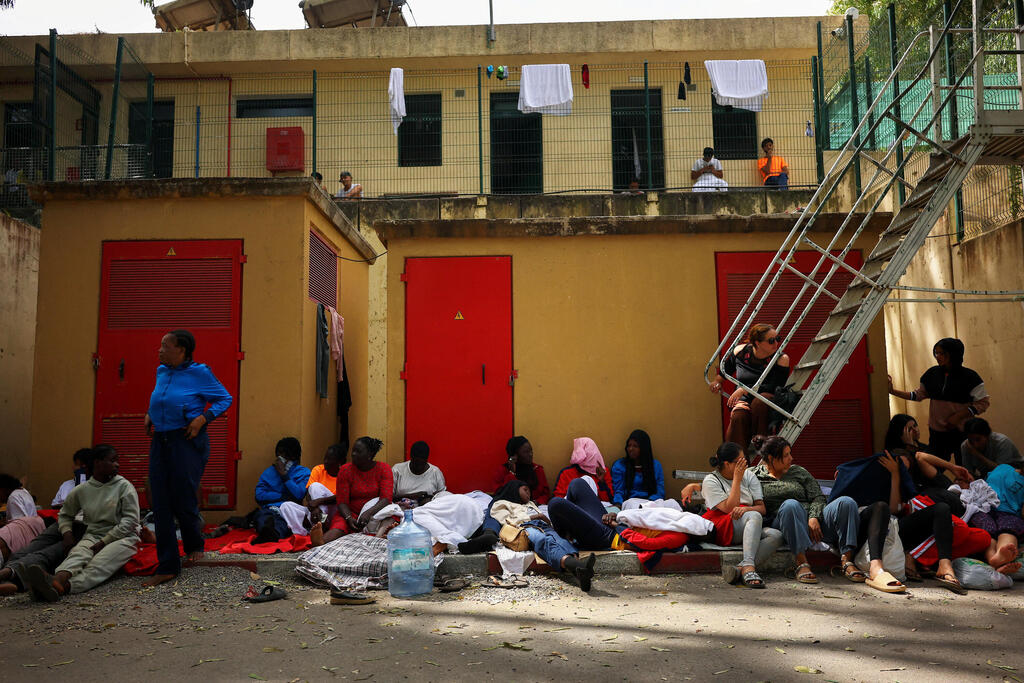
Near an overcrowded asylum seeker center in Ceuta. Cooperation with transit countries can also save lives
(Photo: REUTERS/Pedro Nunes)
Similar criticism has been directed at cooperation with Tunisia, Morocco and Egypt. Governments with controversial human rights records receive money, equipment and political legitimacy because Europe considers them essential to securing its borders.
As fear of migration grows within EU member states, critics argue, Europe’s willingness to impose conditions or challenge its partners diminishes.
Who holds the key?
Europe’s strategy is not without achievements. Cooperation with transit countries can save lives, dismantle smuggling networks, create legal routes for migration and prevent people from embarking on dangerous journeys.
Countries such as Morocco, Tunisia and Mauritania are not merely European gatekeepers. They also face migration pressure of their own, have long borders to police and host substantial migrant and refugee populations.
But the more the European Union relies on non-member states, the more control it effectively transfers to them. European money can buy cooperation, but it cannot guarantee it indefinitely. An economic crisis, a diplomatic confrontation, a demand for political recognition or simply an enforcement failure can reopen a route that Europe believed had been closed.
The current breach in Ceuta does not prove that Morocco deliberately activated migration pressure in the same way Spain accused it of doing in 2021. Spanish intelligence does not appear to believe Rabat created the latest migration wave from nothing. Social media rumors, the court ruling and economic distress helped drive thousands of people toward the border.
But when they arrived, the country Europe pays to stop them allowed them to cross, according to the assessment. The episode shows that Europe’s border does not end at Ceuta’s fences, Greece’s coastline or the waters off Italy. It begins at Libyan coast guard bases, Moroccan police checkpoints, Tunisian and Mauritanian ports and negotiating tables in Ankara.
The valve controlling the flow of migrants into Europe is often located outside Europe itself, in the hands of governments that understand exactly how much that leverage is worth.
First published: 19:21, 08.08.26