

The White House deleted a social media post Tuesday from Vice President JD Vance’s account that described the massacre of Armenians as a "genocide." After the post was removed, the White House said the message had been "posted in error."
Vance is on a two-day visit to Armenia, the first by a U.S. vice president to the South Caucasus country. During the trip, he visited a memorial in the capital, Yerevan, honoring the victims of the mass killings. A post on Vance’s official X account said the visit was meant to pay tribute to those killed in the 1915 Armenian genocide, but it was later deleted. An adviser to the vice president, speaking on condition of anonymity, said the message had been posted in error by staff members who were not part of the delegation to Armenia.
Gallery
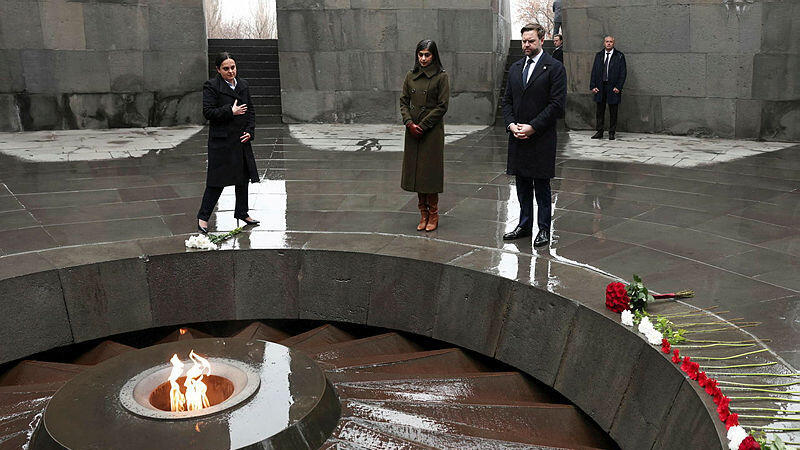
JD Vance and his wife at the memorial to the victims of the Armenian genocide in Yerevan
(Photo: Kevin Lamarque / POOL / AFP)
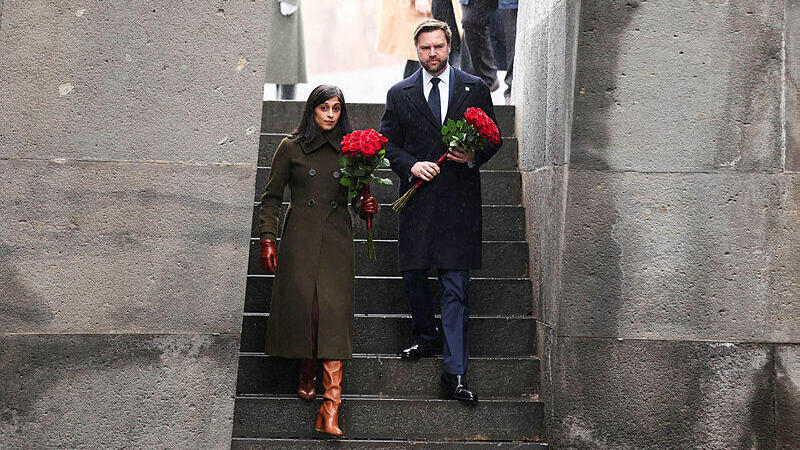
(Photo: REUTERS/Kevin Lamarque/Pool)
The post on X was shared after Vance and his wife, Usha, participated in a wreath-laying ceremony at the memorial, which commemorates 1.5 million Armenians killed in the final years of the Ottoman Empire. A spokesperson for Vance said the account is run by a team whose main role is to post photos and videos of the vice president’s activities, adding that his positions are best conveyed through his own comments to reporters. In his public statements in Armenia, the vice president did not use the term "genocide."
The deletion appears linked to the fact that U.S. recognition of the Armenian genocide runs counter to the position of close U.S. ally Turkey. Ankara acknowledges that many Armenians living under the Ottoman Empire were killed in clashes with imperial forces during World War I but denies the killings were systematically orchestrated and rejects the term genocide. Turkish officials also dispute the widely cited death toll.
The U.S. Congress, as well as former President Joe Biden, have recognized the mass killings of Armenians as genocide. President Donald Trump, however, did not use that term in a statement last year referring to the killings. In addition to being a U.S. ally, Turkey is a NATO member, and President Recep Tayyip Erdogan maintains close ties with Trump, including expressing support for the U.S. plan for Gaza’s future.
Turkey’s Foreign Ministry and Armenia’s Embassy in Washington did not respond to requests for comment. The White House said that there is "no change of policy at this time."
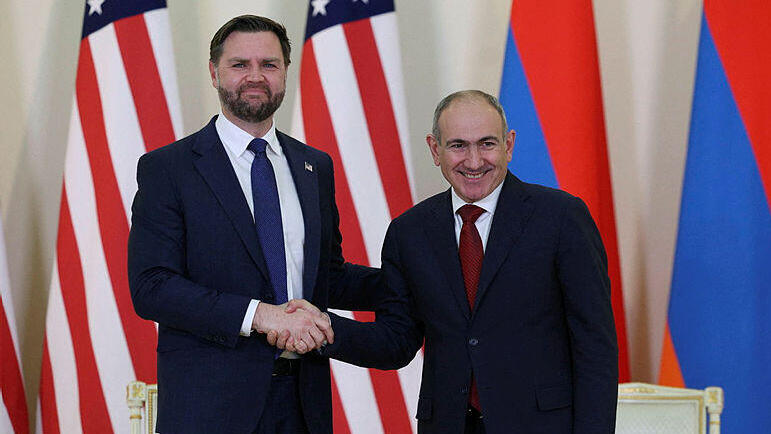
Vance with Armenian Prime Minister Nikol Pashinyan
(Photo: Vahram Baghdasaryan/Photolure via REUTERS)
The deletion drew criticism from some Democratic members of the House of Representatives and from members of the Armenian American community. "Vance is a coward for deleting this post," Alex Galitsky, policy director at the Armenian National Committee of America, wrote on X. He added that the move was "an insult to the memory" of those who were killed.
During his visit, Vance signed an agreement with Armenian Prime Minister Nikol Pashinyan that could pave the way for the United States to build a nuclear power plant in the country. Asked by a reporter whether his visit to the memorial was intended to recognize the genocide, Vance said: "Obviously, it's a very terrible thing that happened little over 100 years ago, and something that was just very, very important to them culturally. So I thought out of a sign of respect, both for the victims, but also for the Armenian government that's been a very important partner for us in the region, to Prime Minister Pashinyan, I wanted to go and pay a visit and pay my respects."
Vance’s trip is aimed at advancing agreements the Trump administration has reached with Armenia and Azerbaijan in an effort to promote peace between the two countries after nearly 40 years of conflict. During his term, Trump has presented those diplomatic efforts as one of his significant achievements. On Tuesday, Vance traveled to Azerbaijan and signed a strategic partnership agreement that includes economic and security cooperation, as Washington seeks to expand its influence in a region where Russia was once the dominant player.
Last August, Prime Minister Benjamin Netanyahu said he recognizes the Armenian genocide. The unusual statement by Israel’s prime minister was made in an interview on the Patrick Bet-David podcast rather than in an official declaration. "I just did," Netanyahu said at the time when asked by the interviewer, who is of Assyrian background, why Israel had not recognized the genocide until that day.