

The United Nations General Assembly may have ended over the weekend, but a photo taken during a meeting on its sidelines has continued to draw attention around the world.
The image shows senior U.N. official Tom Fletcher appearing to bow before Iranian Foreign Minister Abbas Araghchi.
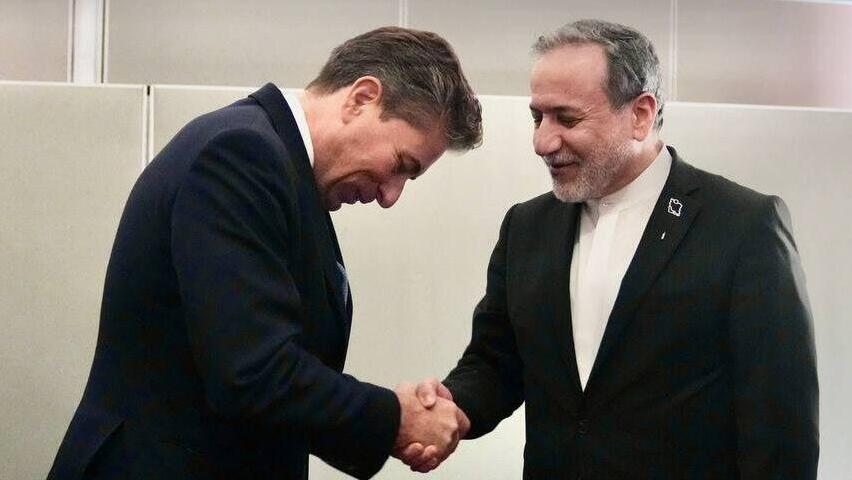
The photo, which drew headlines in Iranian media, angered Israeli and Jewish figures. Hillel Neuer, executive director of UN Watch, wrote: “Shame. Former British diplomat Tom Fletcher, now head of the UN's relief agency, bows to Iranian foreign minister Abbas Araghchi whose regime just massacred tens of thousands of protesters in January. Fletcher often echoed Iranian regime talking points against the US and Israel.”
Israel’s U.N. ambassador, Danny Danon, also criticized Fletcher, asking: “Did the regime’s 'humanitarian work' against its own protesters come up, Mr. Fletcher?”
24 meetings, including with major powers
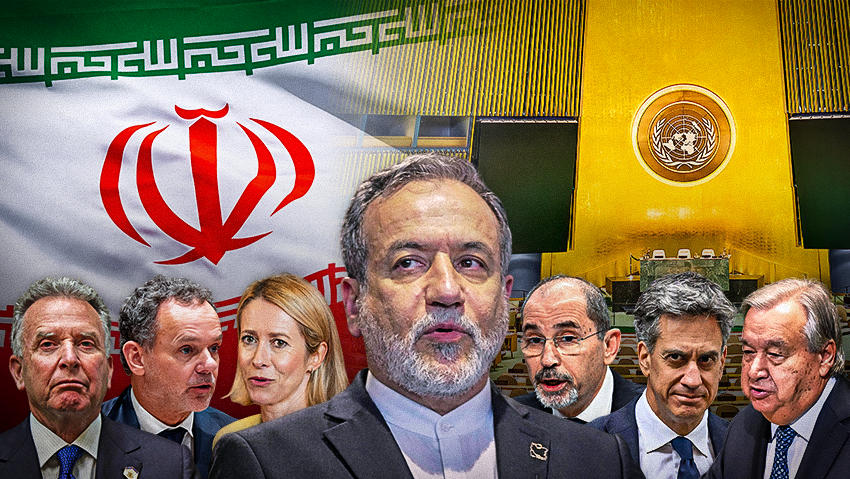
The Iranian delegation sent to the General Assembly had an exceptionally busy diplomatic agenda. The Islamic Republic was represented at the gathering by President Masoud Pezeshkian and Foreign Minister Araghchi. According to a CNN review, Araghchi met with representatives of at least 24 countries during his visit to New York, including the foreign ministers of leading European powers.
(Photo: Jouni Porsanger / LEHTIKUVA / AFP, Shutterstock, AP, Getty Images, Reuters)
Araghchi met, among others, with European Union foreign policy chief Kaja Kallas and his counterparts from Britain, France, Germany, Spain, Portugal, the Netherlands, Poland, Russia and Ukraine. He also met with Jordanian Foreign Minister Ayman Safadi, shortly after Iran attacked U.S. targets inside the Hashemite kingdom. Iranian President Masoud Pezeshkian met with U.N. Secretary-General António Guterres and spoke with representatives of Western media.
But the highlight of Iran’s diplomatic activity during the General Assembly was Araghchi’s meeting with Steve Witkoff, an envoy for U.S. President Donald Trump. After the meeting, Araghchi told Western journalists that he had presented a new proposal in negotiations between Tehran and Washington. Reports overnight said Trump had rejected the proposal and was preparing for further military strikes, but from the Iranian perspective, the significance lay in the fact that the meeting took place at all.
Araghchi also heard tough messages directed at his country in other meetings. According to the BBC, British Foreign Secretary Ed Miliband told his Iranian counterpart of “Britain’s unwavering determination” to confront threats on British soil from Iran-linked actors, including attacks targeting the British Jewish community.
Other foreign ministers urged Araghchi to reach understandings on freedom of navigation in the Strait of Hormuz and stressed the need for a diplomatic resolution to the conflict with the United States.
The attempted attack in Britain and the possible Iran connection
Fletcher, who previously served as a British diplomat, was not the only figure in Britain to face criticism for meeting with Araghchi at the General Assembly. Miliband also met with the Iranian foreign minister on the sidelines of the annual gathering.
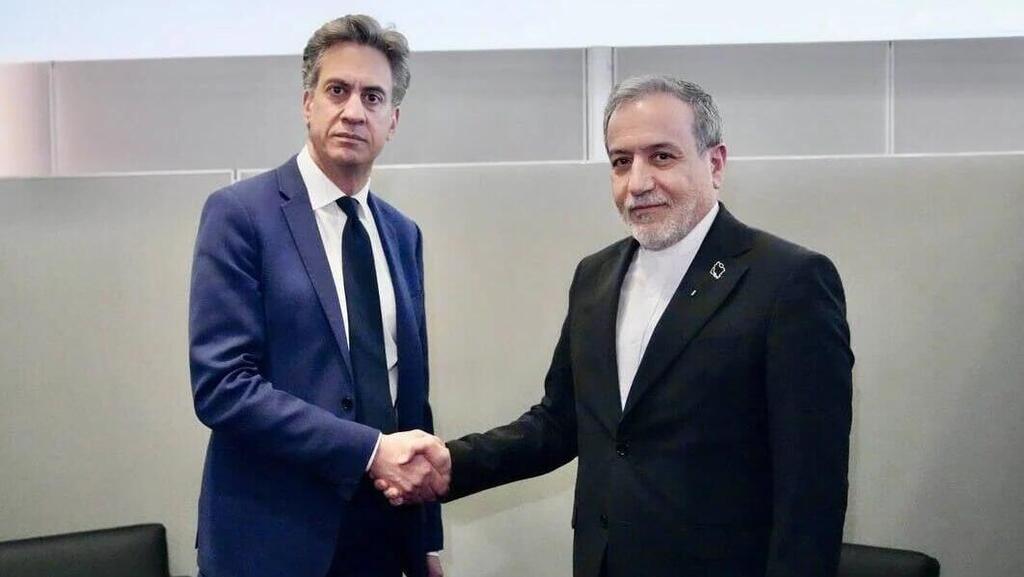
British Foreign Secretary Ed Miliband with Iranian Foreign Minister Abbas Araghchi
Tom Tugendhat, the opposition’s shadow foreign secretary, said: “The Iranian regime has done nothing to justify any senior British minister meeting their envoys. They are murdering protesters, threatening our allies and arming terror groups – including the Houthis – as well as threatening communities in the UK. Shaking hands gives them a credibility they have failed to achieve through violence.”
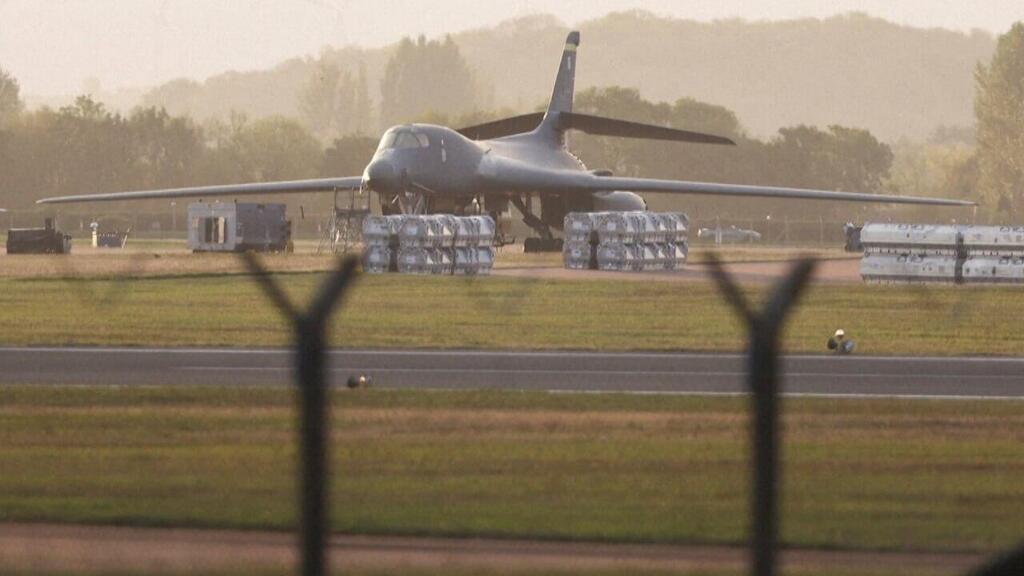
A terrorist attack was foiled, and authorities are investigating whether Iran was behind it; RAF Fairford
(Photo: Reuters)
The meetings took on added significance after British police on Sunday declared a “major incident” in the village of Whelford, near Royal Air Force Fairford, a base used by the U.S. Air Force and from which warplanes have departed for bombing missions in Iran.
Hours later, authorities revealed that five men had been arrested there on suspicion of planning a terrorist attack. Three commercial vehicles loaded with explosives were found in their possession. Photos taken by a local resident showed the suspects shirtless on a sidewalk, their hands cuffed behind their backs, as British security forces searched them.
It later emerged that the suspects had been arrested only about 320 meters, or 350 yards, from the base. British media reported that security authorities were investigating whether Iran had sent them to carry out the attack. Iran had already threatened in July to strike bases such as Fairford if U.S. aircraft continued taking off from them to bomb targets on Iranian territory.
During the latest war, Britain initially prevented the United States from using British bases to carry out strikes on Iran. Then-Prime Minister Keir Starmer later allowed U.S. forces to launch “limited” strikes from those bases against the Islamic Republic, targeting missile sites in particular, including sites used to launch Iranian attacks on vessels in the Strait of Hormuz.