


Something appears to be fraying in relations between Israel and Ukraine, as Ukrainian President Volodymyr Zelensky visited four Arab countries in the Middle East — Saudi Arabia, the United Arab Emirates, Jordan and Bahrain — without stopping in Israel.
It was not the first time Zelensky skipped Israel. Since the Oct. 7 attack, several attempts were made to arrange a visit by the Ukrainian leader, but none materialized, at least one of them because preparations for the trip were leaked.
Gallery
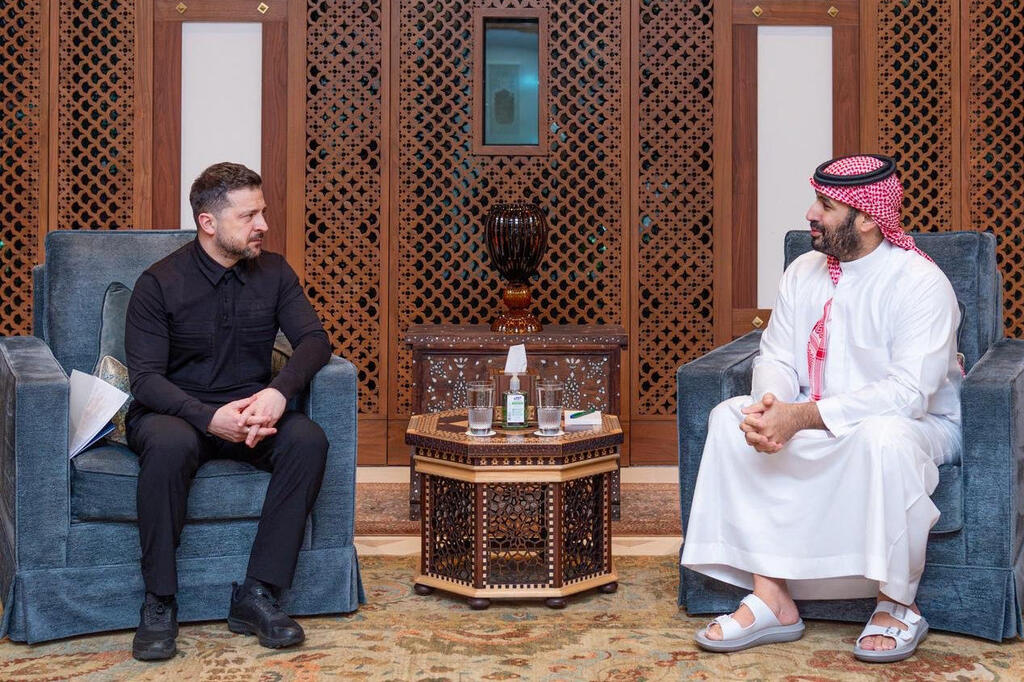
Ukrainian President Volodymyr Zelensky meets with Saudi Crown Prince Mohammed bin Salman in Saudi Arabia
(Photo: SAUDI PRESS AGENCY / AFP)
Since the outbreak of the war between Russia and Ukraine, officials in Kyiv have not hidden their disappointment with Israel, particularly over its refusal to provide weapons for fear of angering Moscow.
Israel limited its assistance to humanitarian aid, including a field hospital, help with water purification systems and, eventually, an early warning system modeled on Israel’s Red Alerts, aimed at reducing the amount of time Ukrainians spend in shelters.
Israeli officials estimate that around 100 million shekels, or roughly $32 million, has been donated to Ukraine since the war in Europe began — a relatively modest amount compared with European countries, though Israel is neither a member of the European Union nor NATO. Ukrainians, however, had expected more and did not hide their disappointment with the scale of support.
More recently, Ukraine’s ambassador to Israel, Yevgen Korniychuk, cast doubt in an interview on the effectiveness of the early warning system Israel transferred to Kyiv. He said the Israeli system did not necessarily operate optimally and added that one of the systems sent to Kyiv had even been deemed unsuitable by local authorities, calling it “an unpleasant story.” In Israel, his comments were not well received and were seen as ungrateful.
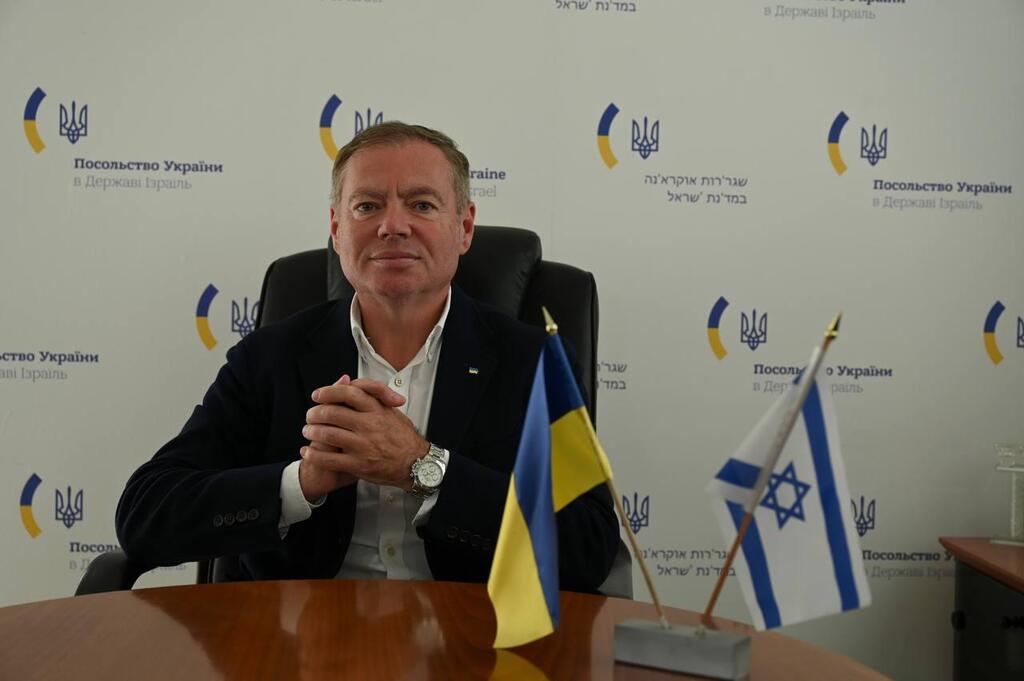
Ukrainian Ambassador to Israel Yevgen Korniychuk
(Photo: Nadav Eves)
Korniychuk also commented on the broader diplomatic relationship, saying Israel avoids public criticism of Moscow in part because it needs to maintain a delicate balance in its ties with Russia. He also said there were gaps in the political dialogue between Kyiv and Jerusalem.
In August, the ambassador referred to efforts to arrange a meeting between the two leaders, saying: “There were several attempts for him to come to Israel since Oct. 7. Unfortunately, those attempts did not succeed, and it was not our fault.”
The latest incident came this month, when Prime Minister Benjamin Netanyahu asked to speak with Zelensky about the war with Iran. Zelensky agreed, but the effort became entangled over scheduling. Netanyahu’s office proposed a time window that did not suit Zelensky. Additional time slots were exchanged, but none worked and the conversation never took place.
Israeli officials were also displeased that Zelensky gave an interview to an Israeli media outlet before speaking with Netanyahu.
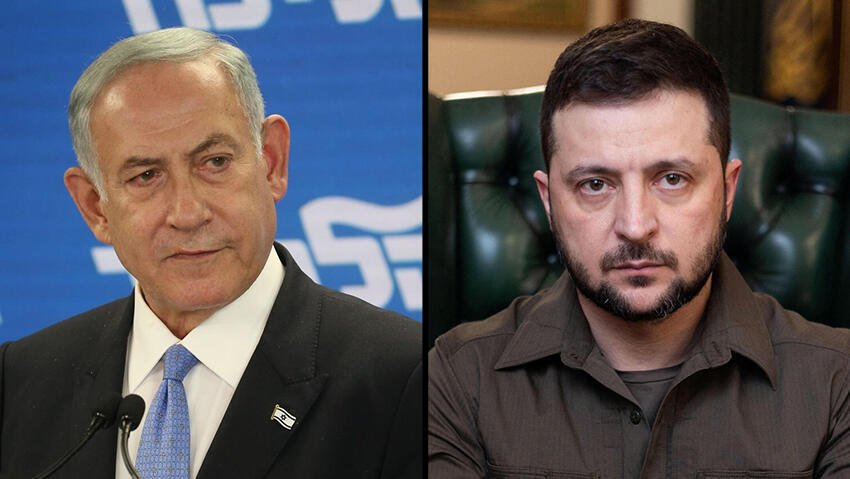
Prime Minister Benjamin Netanyahu, Ukrainian President Volodymyr Zelensky
(Photo: Shaul Golan, Reuters)
One Israeli official familiar with relations between the two countries said that was typical of the Ukrainian style. “They never knew how to conduct a discreet dialogue with us, only to come out with public demands,” the official said. “Zelensky is convinced we owe him something just because he is Jewish, and that is not the case. That does not mean we could not have helped more, but they are no less to blame than we are.”
The official added that Israel has no special strategic interest in Ukraine beyond Uman, the Ukrainian city visited annually by thousands of ultra-Orthodox Jewish pilgrims, and said that issue was seasonal.
“This Middle East tour was meant to strengthen Ukraine’s relevance and send a message to the United States,” the official said. “The story is not about us.”
Another senior Israeli official familiar with the matter said Netanyahu did ask to speak with Zelensky, but was not really intending to seek Ukrainian help in intercepting drones. “We do not really need their help on that issue, and in any case the Gulf states suffer from drones much more than Israel does,” the official said.
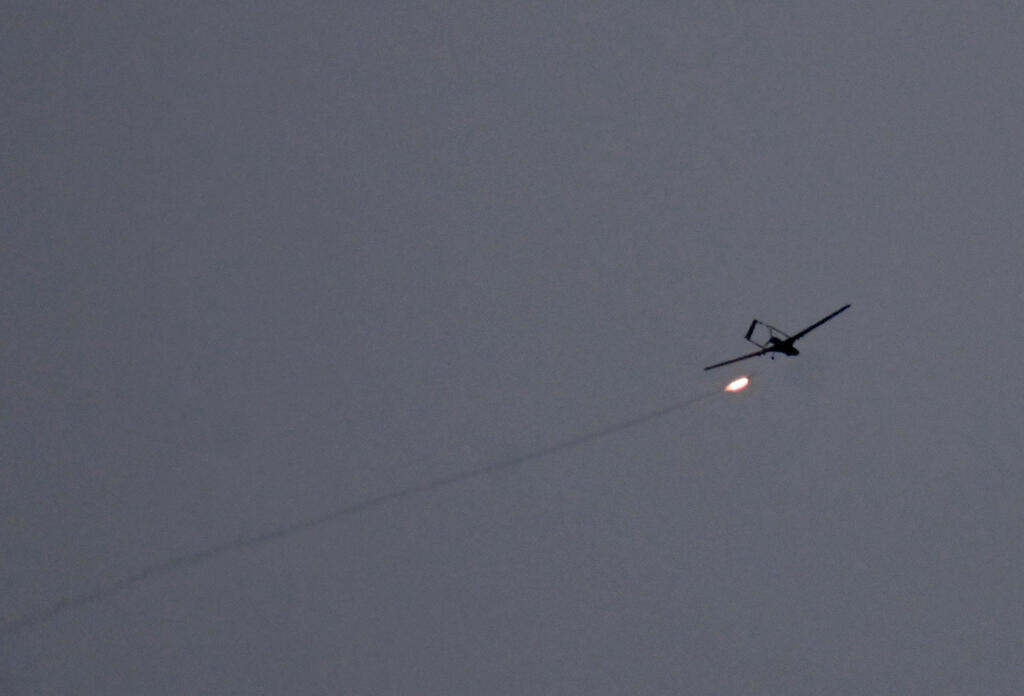
Air defense intercepts a drone over Kyiv, Ukraine
(Photo: AFP)
The official said Ukraine had provided some anti-drone systems and sent experts, but argued that Kyiv had largely inflated the significance of that support in order to boost its standing with Washington out of concern that President Donald Trump might stop supplying weapons.
“Zelensky is doing everything so they take them seriously and is inflating Ukrainian assistance to the Gulf states to say Ukraine is a power,” the official said.
He added that Ukraine’s capabilities were not of real interest to Israel. “They do not come close to our capabilities,” he said. “The reason the Ukrainians are angry is that they are never satisfied. Whatever you give them, they will say it is not enough.”
Only last September, Zelensky revealed that Ukraine had received Patriot air defense systems from Israel. In practice, however, Israel had returned the Patriot systems to the United States, where they were refurbished and then transferred by the Americans to Ukraine. “Zelensky spun it as an Israeli Patriot system,” the official said.
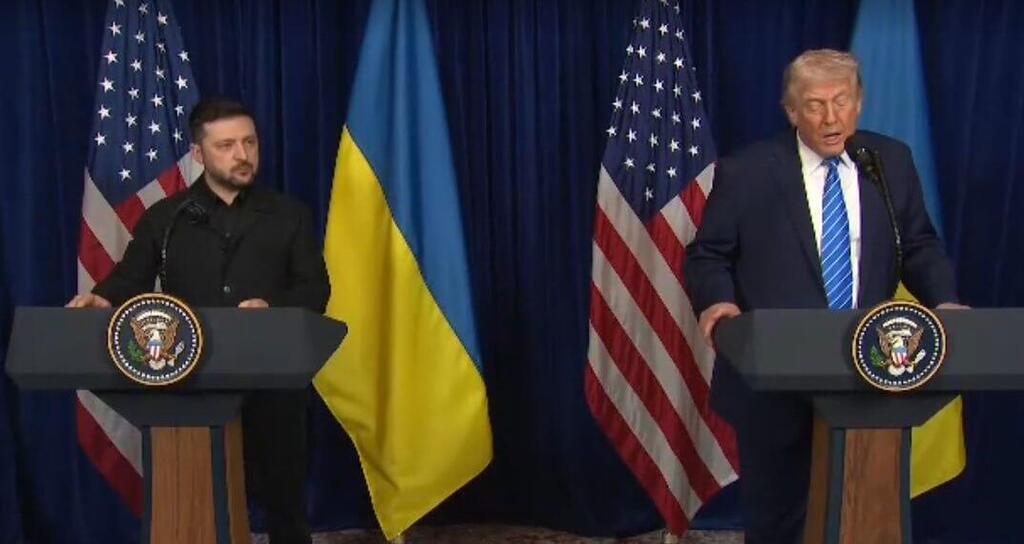
Zelensky and US Donald Trump make statements at Mar-a-Lago
(Photo: Reuters)
There was also an attempt last September to arrange a conversation between Netanyahu and Zelensky related to the annual pilgrimage to Uman, but Zelensky did not take the call. “Zelensky is disappointed and understands that Bibi calls him every year when he needs Uman after pressure from the ultra-Orthodox parties,” a senior Israeli official said, using the prime minister’s nickname.
Despite the tensions, Israeli officials stressed that intelligence cooperation between the two countries remains good. “There is no crisis right now, maybe a kind of competition,” the official said. “They are competing over weapons and American attention. We are simply moving on two parallel tracks. The crisis was at the start of the war, when they expected Israeli weapons and were disappointed. Each side is busy with its own war and can help the other only very little.”