

On the evening of January 8, one of the most horrifying incidents occurred as live fire began to be directed at civilians in eastern Tehran, in the Tehranpars area. Nearly three weeks later, however, profound ambiguity remains over what actually happened at Police Station 126. The government claims that gunfire from the station toward civilians only began after police officers came under armed attack.
That night in Tehranpars, in addition to police forces, Basij units, various branches of the Islamic Revolutionary Guard Corps (IRGC), and affiliated proxy paramilitary troops opened fire on protesters. It is reported that at least 100 people in the area were killed that night alone.
Gallery
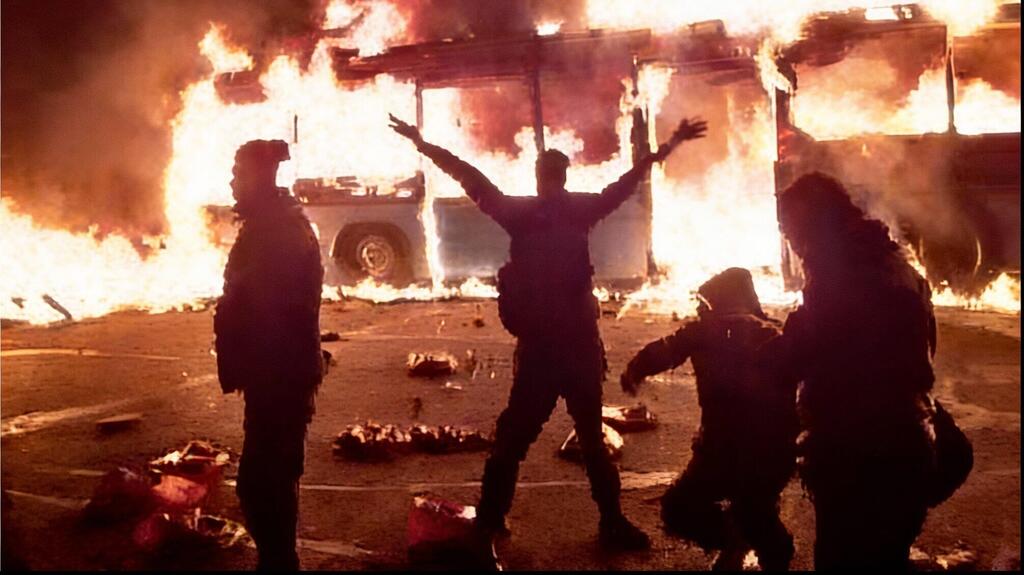
A scene from the intense clashes on the night of Jan. 8, 2026 in the Tehranpars area, which eyewitnesses described as resembling a battlefield
(Photo: Social media)
Amir, one of the protesters present near Police Station 126 that night, strongly rejects the regime’s narrative. He told The Media Line that it is inconceivable that a preplanned, three-person armed group could have attacked a police station heavily staffed with armed personnel. The only plausible scenario, he argues, is that weapons belonging to officers who were overpowered by protesters may have fallen into the hands of a few young people, who then used them in self-defense. According to Amir, the authorities have instead constructed a far less plausible, imaginary storyline.
He says that as soon as tens of thousands of people poured into the streets, security forces attacked them with everything they had on hand. The intensity of tear gas deployment and shotgun fire loaded with metal pellets on Soleimani Street, which was crowded with people, was so severe that it was visibility was obscured.
Pellets struck protesters indiscriminately; Amir himself was hit by several, one of which struck his ear. He says people immediately fled into nearby streets, which were also filled with protesters, where they began erecting makeshift barricades and lighting fires. Suddenly, live ammunition was fired at them from all directions.
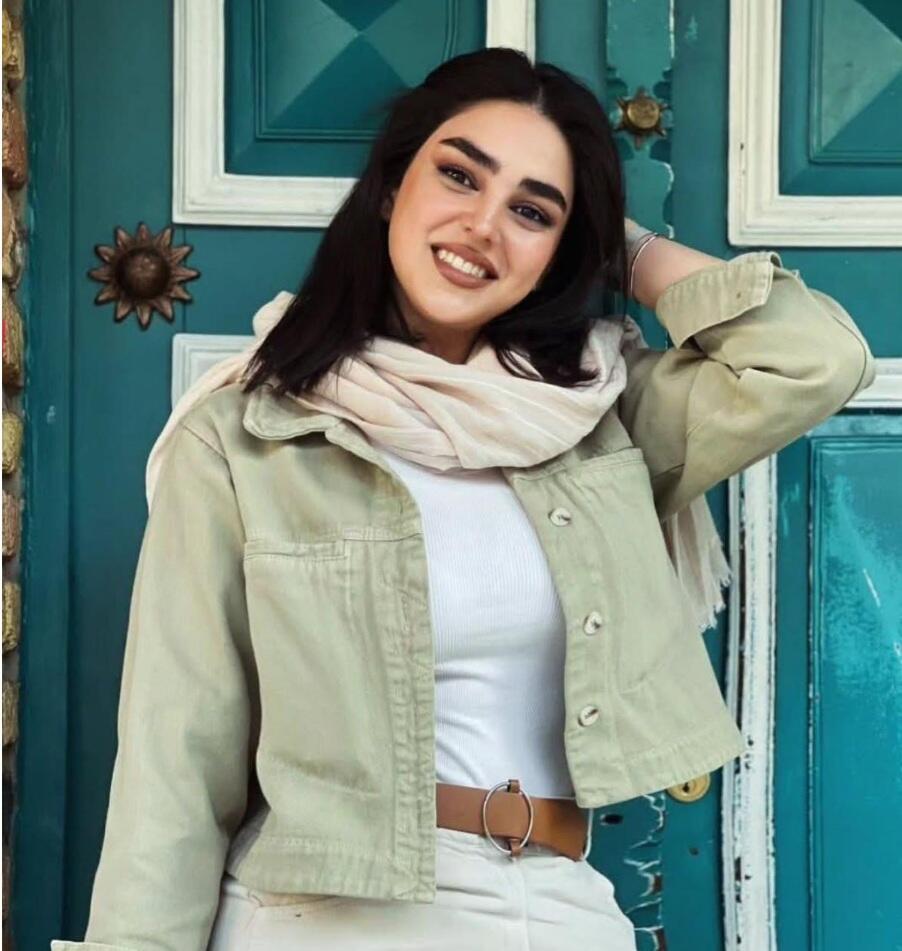
Sahar Fallah, a student, was killed by a direct gunshot to the head near Police Station 126 on the night of Jan. 9, 2026. Her mother kept her body at home until morning
(Photo: Social media)
Amir says he clearly saw armed officers, including snipers who had been stationed on rooftops hours beforehand, firing at protesters. A large number of police officers, Basij members, and IRGC special units were also positioned on the roof of Police Station 126. As clashes intensified —and some IRGC personnel were reportedly trapped while retreating—these forces joined those already on the streets and began firing as well.
Several officers continued shooting at protesters amid fierce clashes on West 164th Street. Amir insists that during the entire time he was engaged in running battles near the area, he never witnessed gunfire coming from anywhere other than regime forces near the police station, though he concedes it is possible that officers’ weapons fell into civilians’ hands.
In a long, exclusive video recently released by Simaye Azadi, affiliated with the Mojahedin-e Khalq (MEK), footage of gunfire near the police station appears, though several aspects are notable. At one moment, it seems shots are fired toward the police station’s sign.
The Islamic Republic’s state media claim that during the armed attack on Police Station 126, one Basij member and two police officers were killed. According to these reports, hundreds of bullets were fired at the station in an attempt to seize it. Fars News Agency, affiliated with the IRGC, says several officers were killed or wounded during the attack. State broadcaster IRIB aired a video it claims shows two young men firing at the station with a handgun and a Kalashnikov rifle.
Amir told The Media Line that, despite the intense clashes nearby, if armed individuals had truly fired some 800 rounds at the station, they would almost certainly have been killed by snipers, unless the incident itself was part of a state-orchestrated scenario. Fars News further claims that the attackers attempted to enter the station, killing two police officers and one Basij member and injuring several others.
Meanwhile, regime police released a video alleging that an officer on the rooftop, while firing at protesters, was shot and killed by armed attackers. The video includes audio of gunfire toward an unclear target and an officer calling for help, saying, “We’ve had fatalities at 126.” Another officer on the same rooftop claims the attackers sprayed the rooftop with automatic fire, causing four officers to fall. How attackers from the street could have targeted officers simultaneously protected by rooftop positions, surrounding rooftops, and continuous gunfire from the station itself remains a perplexing question.
That officer further claims the attackers were trained and fired with precision, asserting that one weapon was likely an Israeli-made Uzi and the other a Kalashnikov. While the Kalashnikov is a standard IRGC weapon, the Uzi is largely obsolete; in recent years, IRGC special forces have reportedly used a compact Korean-made firearm of similar size instead. In another unusual claim, the officer says a detained protester alleged he knew the attacker, who was drunk while firing at both the police station and civilians.
The newspaper Hamshahri, however, claims a three-person armed group attempted to seize the station and distribute weapons to the public. The story grows more extraordinary, alleging that two members of this group were killed the following night by another “riotous group” wielding machetes, while the third was killed during arrest, leaving no witnesses alive. Subsequently, the Ministry of Intelligence issued a statement claiming it had arrested four members of an armed group that entered the country via the western borders, who were responsible for the attack on Police Station 126, and also announced the arrest of MEK members in Tehran.
These claims appear designed to justify the sustained use of automatic gunfire against civilians over two nights in Tehranpars, Thursday and Friday, Jan. 8 and 9, in what many describe as the deadliest area of Tehran. In some alleys, three families reportedly lost loved ones, and in recent days, the entire district has been draped in mourning.
In the edited footage released by Simaye Azadi, given the heavy presence of security and military forces around the station, a genuine attack on Police Station 126 appears unlikely. What is clear, however, is that several regime forces were killed or injured at this location, an outcome more consistent with the police officer’s own statement that one or more ordinary individuals fired at security forces.
It is also evident that supporters of the MEK, who are almost entirely unarmed, have played a notable role in attacks on police stations and sensitive sites. The organization has published a long list of its members killed during nationwide protests on Jan. 8 and 9, including both young supporters and long-standing members. Many Iranians, however, view the group unfavorably, seeing it as cult-like. Nonetheless, it has arguably been the only seemingly organized group operating inside some major cities, engaging in acts such as throwing Molotov cocktails at security targets and sending exclusive videos to Simaye Azadi. They refer to themselves as “Rebel Units.”
Royalist supporters, imitating these tactics, have attempted to establish a group called the Javidan Guard (Eternal Guard) inside the country, carrying out similar activities. The two groups are deeply hostile toward each other and remain vulnerable to infiltration by security forces, particularly through social media use.
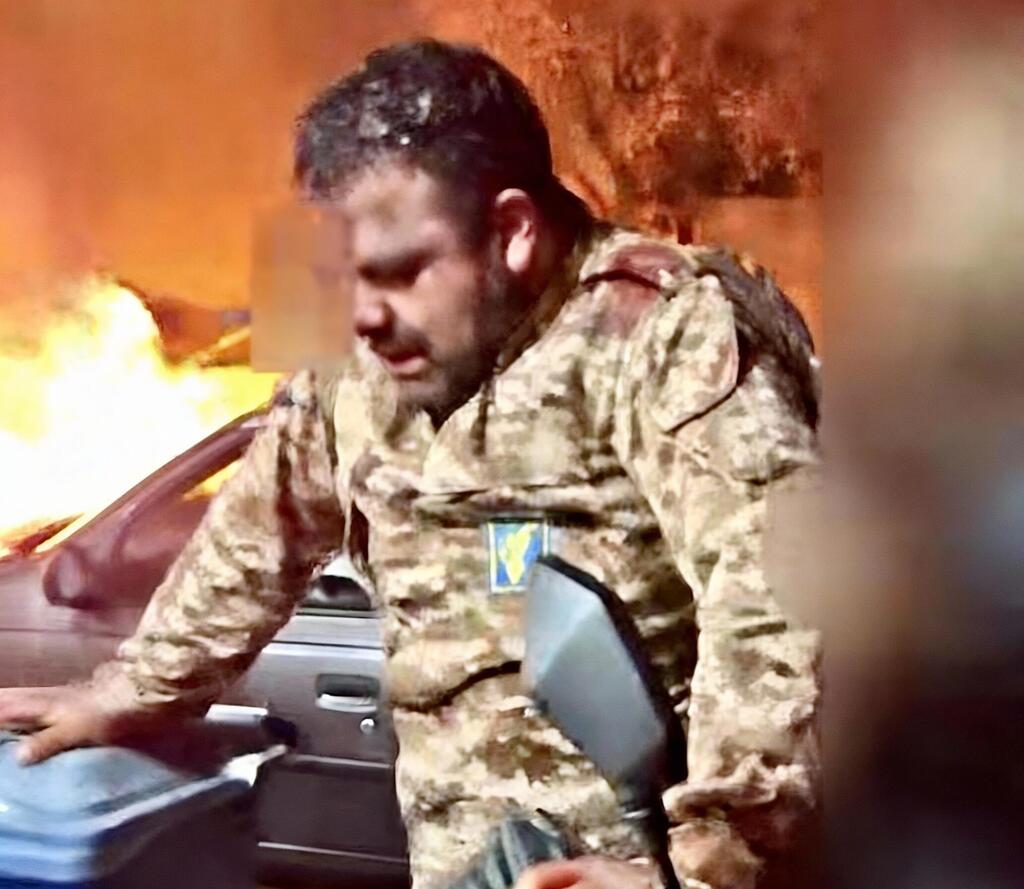
A frame from a video circulated on social media showing an IRGC officer who had been captured by people in Tehranpars that same night, with protesters having pulled down his trousers
(Photo: Social media)
During the intense clashes on bloody Thursday and Friday, several regime forces, including IRGC members, were killed or seriously wounded. Days later, the government announced that more than 100 officers had been killed in Tehran. It remains unclear whether all those later buried were indeed regime personnel. During these clashes, multiple police stations and Basij bases in Tehran and other cities were attacked and set ablaze.
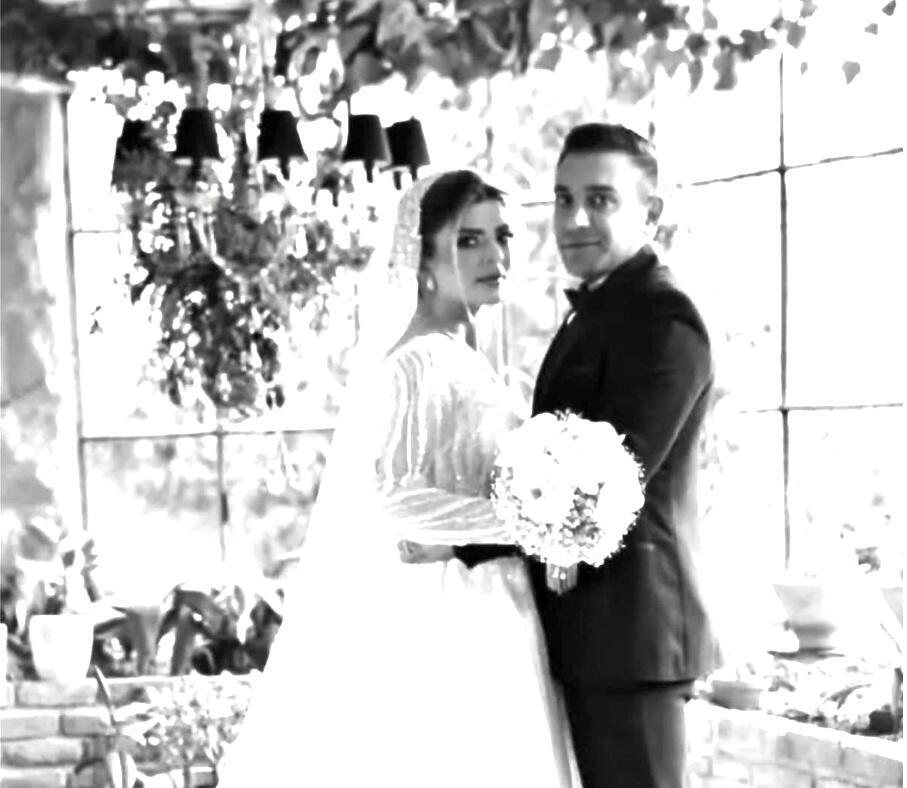
The tragic deaths of Maryam and Majid Salehi, a young couple, in the same area that night sparked widespread anger among the public and social media users. Maryam was reportedly shot first, and her husband shielded her with his body before he too was shot
(Photo: Social media)
Mahtab, an Iranian protester from the same area who recently fled the country, told The Media Line that the alleged armed attack on the Tehranpars police station was one of the strangest episodes of the recent protests. Expressing deep skepticism toward the regime’s narrative, she says that if one were to believe the claim at all, the only plausible explanation is that some individuals in the area possessed weapons and that perhaps one or two enraged civilians fired at the station and its officers. What she has heard, however, is that protesters seized officers’ own weapons and fired a few shots in return. That night, she says, so many protesters were killed that the streets were filled with bodies until morning—a scene resembling only apocalyptic films. Faced with such slaughter, people had no choice but to defend themselves.
Omid Habibinia is a London-based senior investigative journalist with more than 36 years of experience in Persian-language and international TV and news media, a political communication writer, and a former political prisoner during Iran’s 1988 mass executions.