


Less than two weeks before Israel's October 27 election, the country's largest Hasidic movement is threatening to withhold its support from United Torah Judaism (UTJ), potentially costing the ultra-Orthodox alliance some 30,000 votes as an internal power struggle threatens to spill over into the ballot box.
The Gur Hasidic movement, which traditionally holds the most senior position within the Hasidic Agudat Yisrael faction and its representation in the broader UTJ alliance, has yet to begin encouraging its followers to vote. The silence has drawn criticism from within the party, particularly as other ultra-Orthodox communities intensify their election campaigns.

In Hamodia, the newspaper affiliated with Gur, there has been no reference to the election and no public instruction from the movement's spiritual leader, Rabbi Yaakov Aryeh Alter, urging followers to support the party.
The absence is especially unusual so close to election day. In previous campaigns, calls to vote for UTJ were prominently featured in the newspaper weeks before Israelis went to the polls.
Initially, Gur officials dismissed the need for an early campaign, arguing that "the rebbe will tell people on election day whom to vote for, and they will listen."
But the continued silence now appears to reflect a deeper dispute over the balance of power within the ultra-Orthodox political alliance.
The split threatening 30,000 votes
The crisis began just hours before the deadline for submitting candidate lists, when lawmaker Meir Porush, representing the Shlomei Emunim faction, and Elyakim Stark, the representative of the Belz Hasidic movement, broke away from Agudat Yisrael.
The two established a separate party, Homat Torat Yisrael, while remaining within the broader United Torah Judaism electoral alliance.
The move effectively freed them from the authority of Agudat Yisrael's institutions, particularly its Council of Torah Sages, the senior rabbinical body that guides the party's decisions.
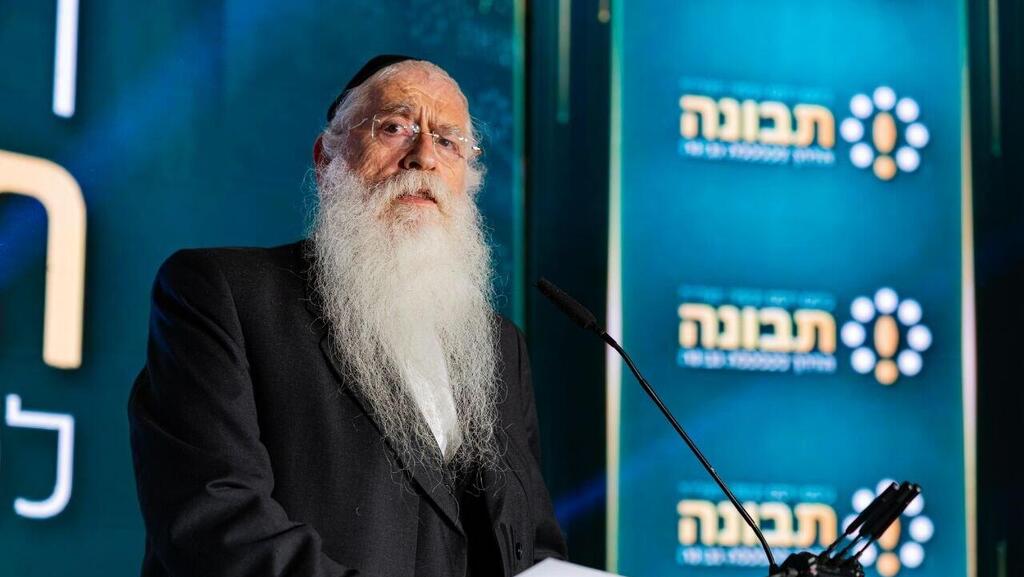
MK Meir Porush. No longer loyal to the Council of Torah Sages
Porush and Stark occupy the fourth and sixth positions, respectively, on the joint UTJ candidate list.
In Gur, leaders are now considering withholding an official call for their followers to vote, a move that could reduce the number of seats won by the alliance and prevent Stark from entering the Knesset.
"Goldknopf will get in anyway. Our representative is number two on the list, so his seat is secure," a Gur source said, referring to Yitzhak Goldknopf, the movement's senior political representative.
Gur has approximately 30,000 eligible voters, whose support could translate into roughly one to one-and-a-half Knesset seats.
"If Gur gives its mandate or mandate and a half to the party, it will bring Elyakim Stark into the Knesset, even though he is not loyal to the council and has left Agudat Yisrael," the source added.
The calculation is straightforward: Gur's own representative is placed high enough on the list that his election is considered secure, while Stark, in sixth place, could lose his seat if the alliance wins fewer mandates.
Negotiations before election day
Gur representatives are currently engaged in negotiations aimed at securing an agreement on the distribution of positions within the alliance before the election.
If those negotiations fail, the movement could maintain its current position and refrain from encouraging its followers to vote, potentially depriving UTJ of tens of thousands of ballots.
Agudat Yisrael is seeking understandings with Degel HaTorah, the Lithuanian ultra-Orthodox faction that forms the other major component of UTJ, regarding the standing of Porush and Stark.
It is also demanding that Degel HaTorah refrain from negotiating separately with Homat Torat Yisrael in future elections until the breakaway faction returns to Agudat Yisrael and again accepts its organizational framework.
Agudat Yisrael did not respond to a request for comment.
Another concern within Gur is that a last-minute voting instruction from the rebbe could carry less weight among some followers than the traditional campaign appeals issued well in advance of election day.
Nevertheless, the prevailing expectation within the movement is that its leadership will ultimately instruct followers to vote for UTJ, whose ballot designation is the Hebrew letter gimel, as it has in previous elections.
Before that happens, however, Gur officials want an agreement on the allocation of political positions to prevent the dispute from continuing after the election.
The internal struggle has also been fueled by the leadership change within the Belz Hasidic movement.
The Belz rebbe appointed Stark, a powerful figure within the community, as its new representative on the UTJ list, replacing veteran lawmaker Yisrael Eichler.
Eichler has served in the Knesset almost continuously since 2003 and currently holds the position of deputy communications minister. He previously chaired the Knesset's Labor and Welfare Committee and served as a deputy Knesset speaker.
With election day approaching, the dispute has left one of Israel's most influential ultra-Orthodox voting blocs without its customary campaign instructions, while negotiations continue over whether its 30,000 voters will be mobilized to support the joint list.