

The United States has already reported signs of a return to the negotiating table, but Iran has remained silent. Four days of exchanges of fire have endangered a ceasefire both sides appeared to want, yet from Tehran’s perspective, its initial attacks on vessels in the Strait of Hormuz may have been a necessary move.
Experts told The New York Times that Iran’s newly demonstrated ability to disrupt traffic through the Strait of Hormuz, and with it the global economy, has become a vital bargaining chip that Tehran cannot afford to lose, either in negotiations or if war resumes.
Tehran has designated shipping lanes through the strait, but many vessels use a different route in the southern part of Hormuz, near Oman’s coastline, rather than the route Iran has instructed them to use. That has infuriated Iran.
Oman and the International Maritime Organization established a new shipping lane through the strait that runs entirely within the sultanate’s territorial waters. Iranian officials appear to have understood that the move could threaten the foundation of their core strategy: ensuring that Iran remains the power controlling the strait.
“Whether the best-case scenario materializes or the worst-case scenario, they need this leverage,” Ali Vaez, an Iran expert, told The Times.
There has still been no official confirmation that talks have resumed, and it remains unclear when the sides would meet. But if they do, Vaez said, the Iranians view control over the strait as their best means of extracting concessions from the Americans.
For years, the possibility that Iran could develop a nuclear weapon served as its main deterrent. During the war, however, Tehran learned that it has a different kind of “atomic bomb.” Through limited attacks in the strait and a campaign of threats, Iran quickly proved, including to itself, that it can shake the global economy.

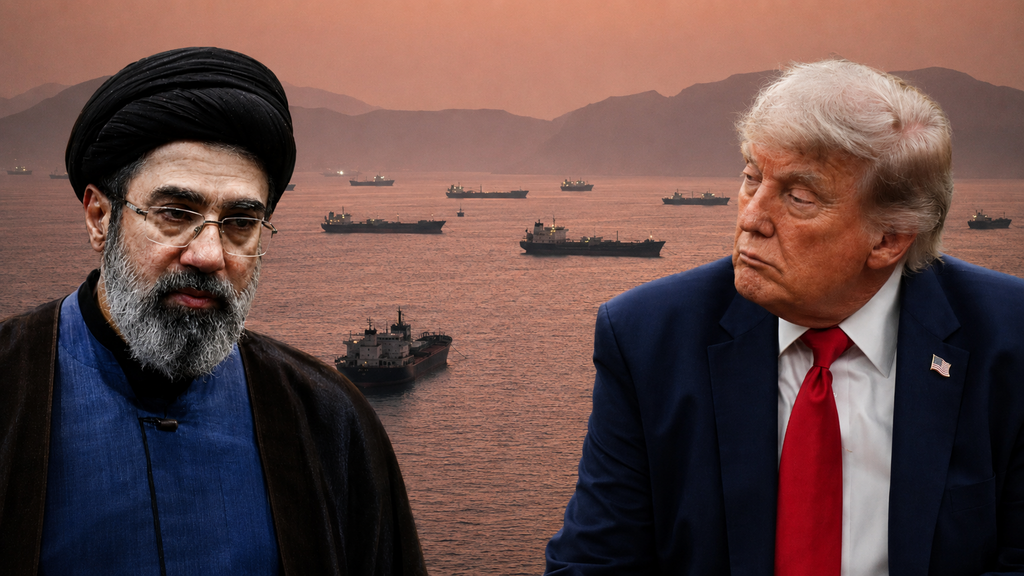
Iran’s ability to disrupt traffic through the Strait of Hormuz, and shake the global economy, has become leverage Tehran cannot afford to lose
(Photo: Stringer/Reuters)
That is why Hormuz has become central as Tehran prepares for the possibility of renewed fighting. The Times reported that some senior Iranian officials suspect the Trump administration signed the memorandum of understanding only to buy time, calm the public economically ahead of November’s midterm elections and then return to war.
“There is no sense for them to allow this leverage to erode before a final deal is reached,” Vaez said.
According to regional experts who spoke with the American newspaper, Tehran feared that this was exactly what Washington was trying to achieve last week: the erosion of Iran’s leverage. The U.S. secretary of state visited Gulf countries and repeatedly stressed that the strait would remain open for passage without fees. Then came Oman’s move and the alternate shipping lane.
“The Iranians realized they were losing control,” Farzan Sabet, an Iran expert at the Geneva Graduate Institute in Switzerland, told The Times.
According to Sabet, Iranian officials likely began to understand that their influence works only “during wartime and during a hostile ceasefire, in which attacks continue.”
That, experts said, explains why Iran’s response to the new route was so swift and took the form of attacks on vessels. Those attacks led to four days of exchanges of fire, including strikes against U.S. military targets in Gulf countries.
On Sunday, Iranian Foreign Minister Abbas Araghchi warned that if efforts continue to bypass Iran’s control over the strait, “instability” will continue as well.
“Any attempt to adopt new or separate arrangements from those of the Islamic Republic will only lead to further complications, delays in reopening the Strait of Hormuz and rising tensions,” he said at a press conference during a visit to Baghdad.
An Iran expert who spoke with The Times said the political elites around Mojtaba Khamenei are characterized by a willingness to take risks.
“The regime is willing to escalate boldly, for example, through attacks in the strait that could collapse the memorandum of understanding,” she said. “But it is also willing to open the path to peace with America through a new track of direct, high-level negotiations.”
The Trump administration also has little interest in returning to war, certainly not before the midterm elections. According to Vaez, “the economic and military costs of returning to fighting create incentives for both sides to try to keep the memorandum of understanding alive.”
Other experts who spoke with The Times also said they expect Washington and Tehran to continue extending the initial negotiating period, set at 60 days, for many more months.