

The majority of the discourse surrounding the Israeli economy focuses on the high-tech industry and its much sought after workers.
It focuses on the prevalent lack of manpower in this booming sector, and on the lavish conditions and salaries of those working there. It gives the impression that anyone who can write even the simplest bit of code will be snatched up as an analyst or a software developer by these companies right away.
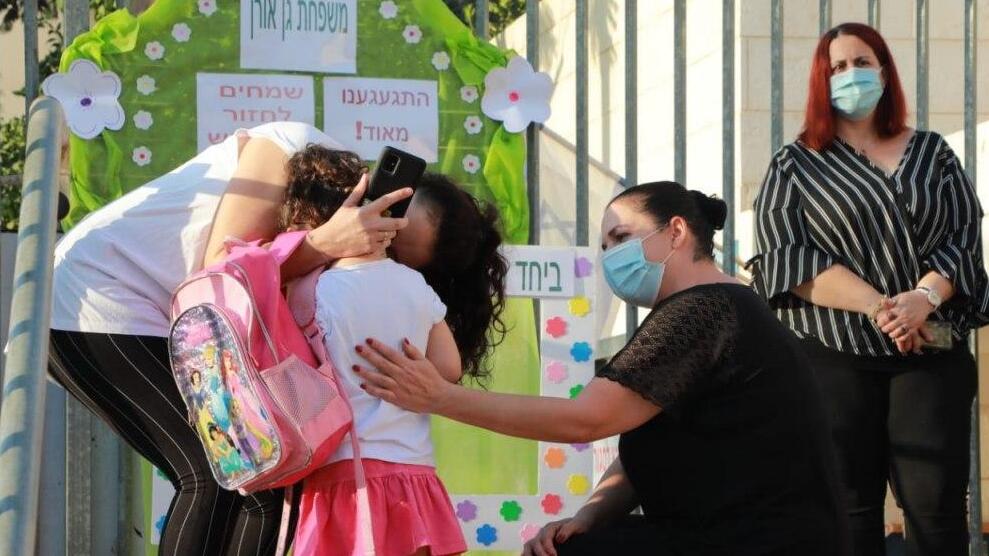
Meanwhile, the country’s kindergartens are overflowing with children who have no one to care for them because the country is dealing with a severe shortage of kindergarten workers. A real national crisis that no one seems to know about.
The lack of caregivers and educators has a direct impact on the most precious thing to us all - our children.
Heads of local authorities are working day and night to try and make sure each kindergarten has enough assistants, since no one really wants to work in such a demanding job under the current, shameful conditions.
Kindergarten teachers are also in an extremely short supply, and any illness or absence usually results in a crisis.
In special education the situation is not much better and the challenge is twice as great due the nature of the work.
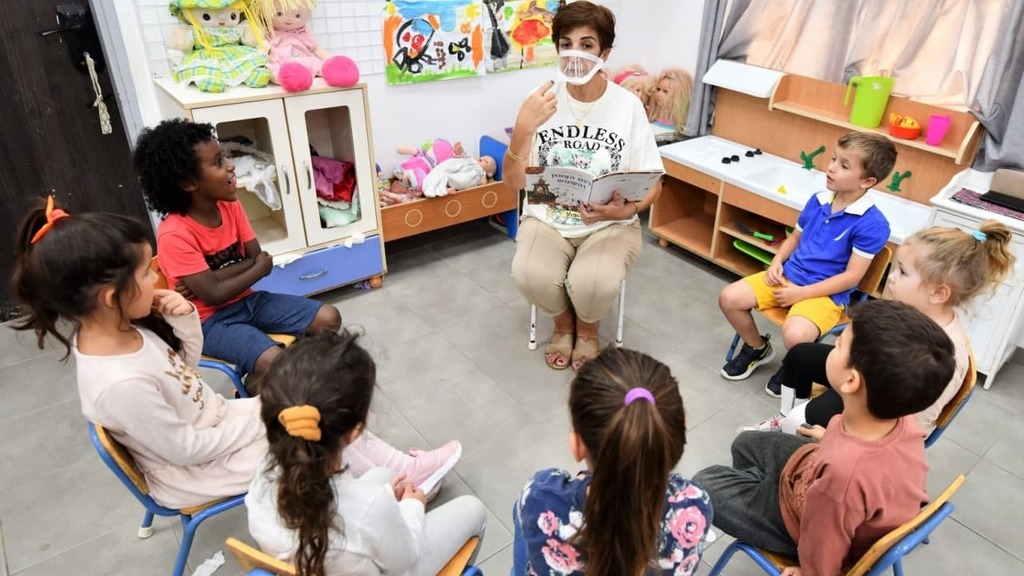
A kindergarten teacher reading a story to deaf kids in Afula
(Photo: Afula Municipality)
In pre-compulsory kindergartens for children ages 3-5, there should be two assistants and a teacher for each study group, but in practice you will find only one assistant, or alternatively, an assistant who was promoted to a teacher alongside an alternate assistant.
In one kindergarten, a assistant applying for a job received a phone call from someone at the local authority where she lives, who informed her she could start immediately, but not as an assistant, but as a substitute teacher.
Training? Studies? Forget about it. This is how a system that’s struggling to survive day by day looks like.
The prevailing argument for the current inequality between different economy sectors is that high-tech is a private industry, while education is part of the public sphere.
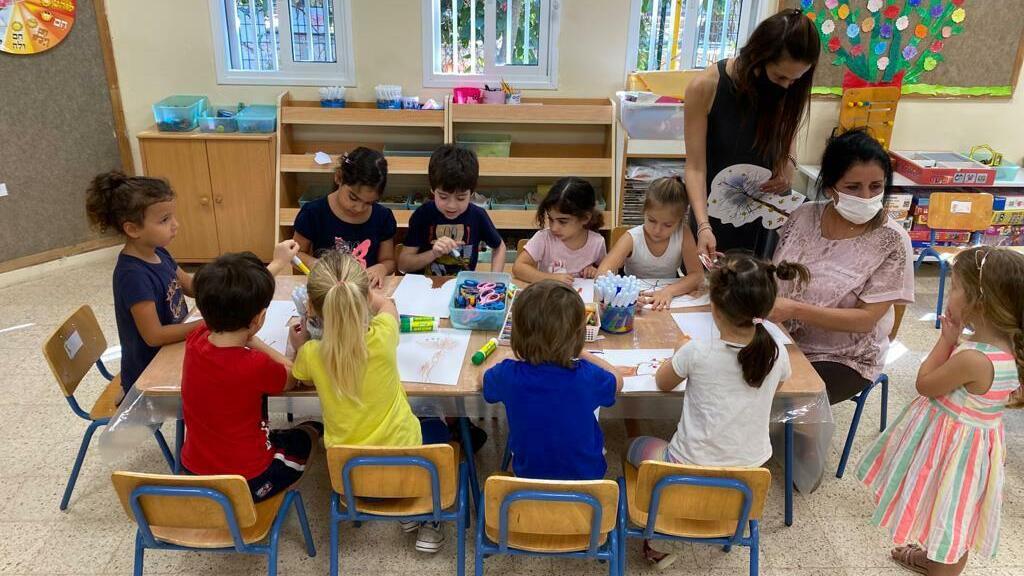
A kindergarten in Ra'anana during the COVID pandemic
(Photo: Ra'anana Municipality)
And while it may be true, it does little to justify the distortion in national priorities.
We are the ones who calmly accept the fact that those who help our children go to the toilet, blow their noses, feed, play and hug them receive meager pay without any progress on the horizon.
The State of Israel is the one who pushes kindergartens to offer “high-tech programs for kids," and invests millions in assistance to the private sector.
Meanwhile, it fails to notice the red flags that spring up as kindergartens close down one after another due to a lack of proper staff.
Like in high-tech, it all comes down to marketing.
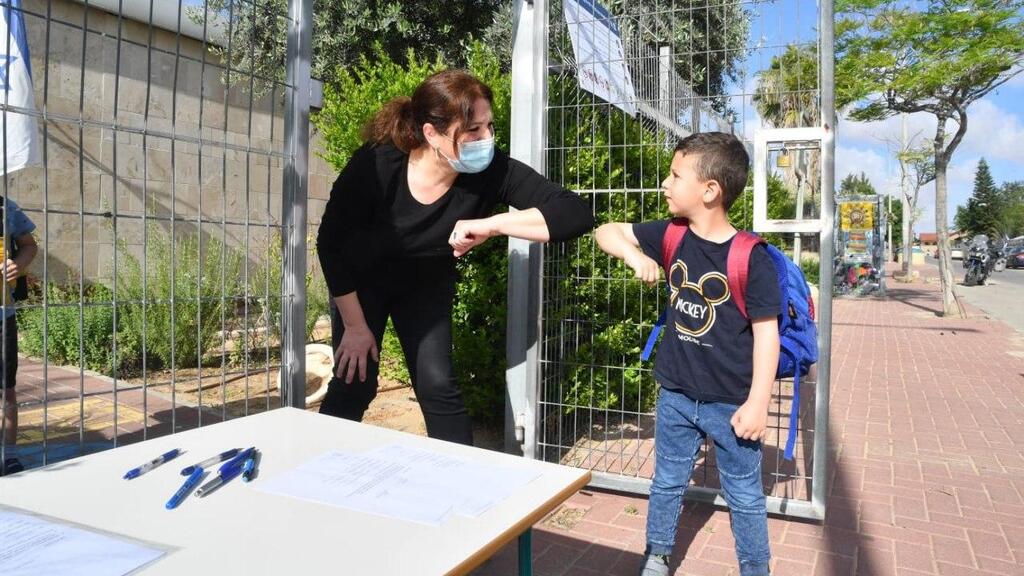
A kindergarten teacher in Ofakim welcomes a child back after the reopening of the education system
(Photo: Haim Hornstein)
Israel, which prides itself on being the start-up nation, prefers to focus on cashing in rather than being at the forefront of the fight for the rights of educators who welcome the high-tech workers' kids at their kindergartens for less than one third of what a software developer or an engineer makes.
The COVID pandemic is, for not at least, appears to have subsided and the education system is in a somewhat functioning state, albeit broken and exhausted.
To end this crisis, we must express solidarity with our educators, who seem to be invisible to our government.
If we refuse to accept the broken system in which our children study - perhaps, finally, there would be a slight shift in Israel's ultimately skewed and unfair job market.