

The mass protest movement widely dubbed the “hijab protest” erupted in Iran in 2022 following the death of Mahsa Amini, a young Iranian Kurd who was detained by Tehran’s morality police — a body that enforces Islamic dress codes — for allegedly failing to properly wear a hijab.
“In the West they call it the ‘hijab protest,’ but the correct name is the ‘Woman, Life, Freedom’ protest,” said Dr. Tamar Eilam Gindin, an Iran expert at the Ezri Center for Iran and Persian Gulf Studies at the University of Haifa, speaking at a Women of the State conference hosted by ynet and Yedioth Ahronoth in cooperation with Na’amat. “It is important to understand that the hijab is a symbol. The protest is not about clothing, it is about human rights, personal security and freedom of expression,” she added.
Nearly four years later, the Iranian regime is using women who do not wear the hijab in pro-government propaganda. Hanna Jahanforooz, an artist, lecturer and Iran researcher at the Alliance Center at Tel Aviv University, said Iran’s state broadcaster interviewed women without hijabs as regime supporters. “But in videos posted on social media, you can see that the interviewers asked them to remove it before the interview,” she said.
Jahanforooz added that detainees from protests earlier this year were forced to march in pro-regime demonstrations, carry the flag of the Islamic Republic and chant slogans in support of the government without wearing a hijab. “The very fact that they are using women in the streets shows the regime has reached the bottom of the barrel — bringing in women, the ‘oppressed,’ and using them to create the appearance that everything is normal,” she said.
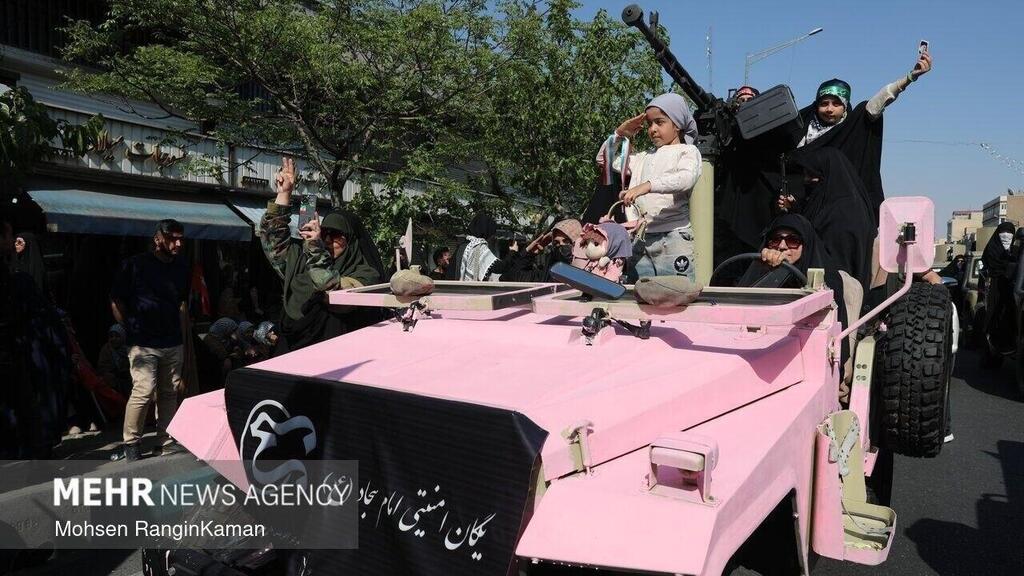
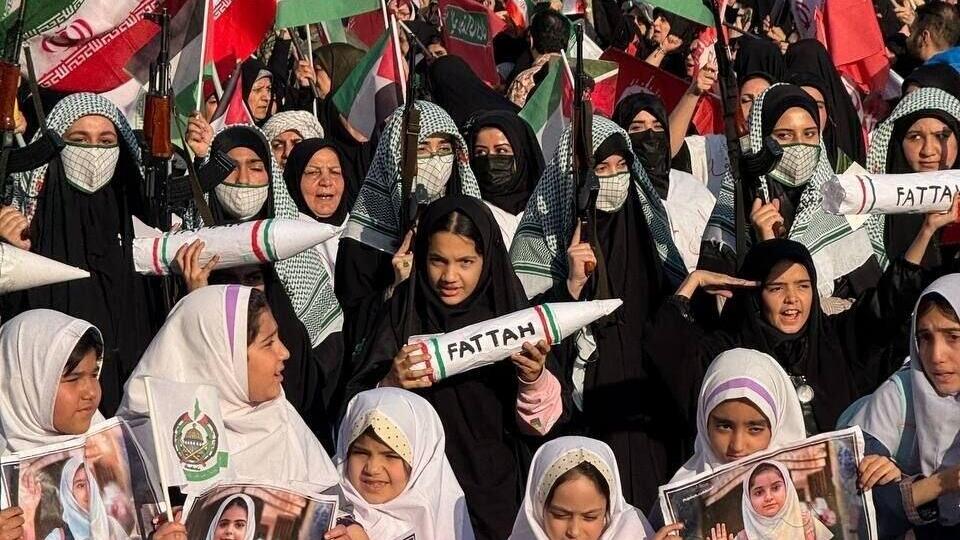
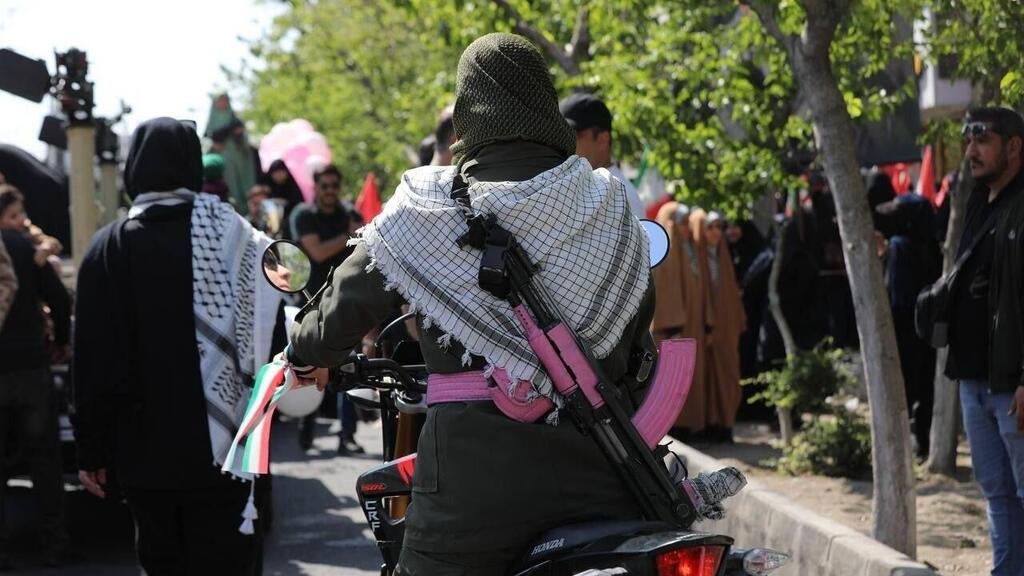
In recent days, images circulated in Iran showing women described in reports as regime supporters posing with drones, weapons and pink-painted jeeps. “I believe these are women who genuinely support the regime, but I don’t think there are many of them,” Eilam Gindin said. “I thought it was meant to show, ‘Look, women have high status in Iran and claims of discrimination are false,’ but it turns out to be a kind of Korean-style ‘cuteness’ — an attempt to make war look cute, with pink missiles and slogans.”
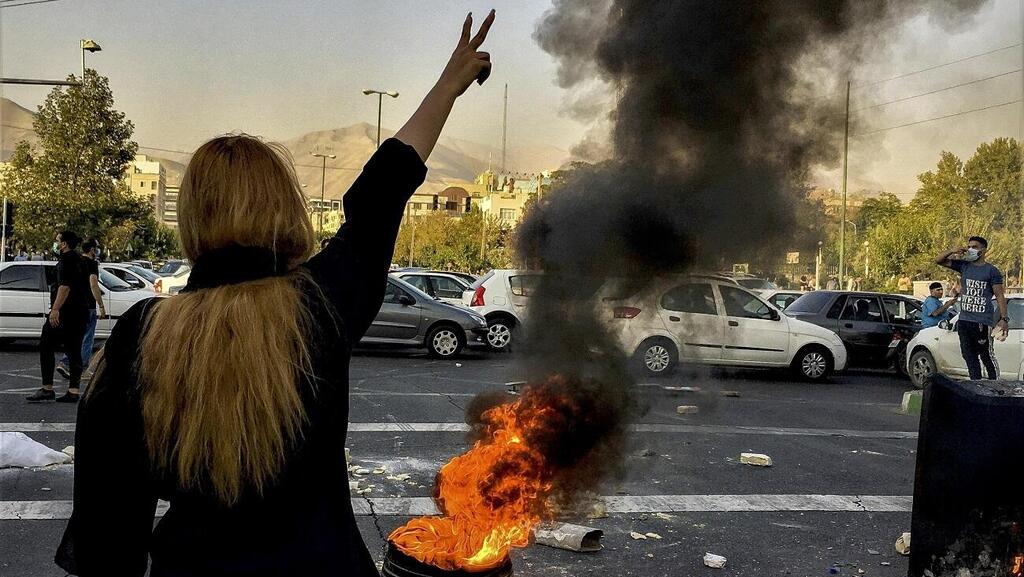
The hijab protests in Iran in 2022
(Photo: AP)
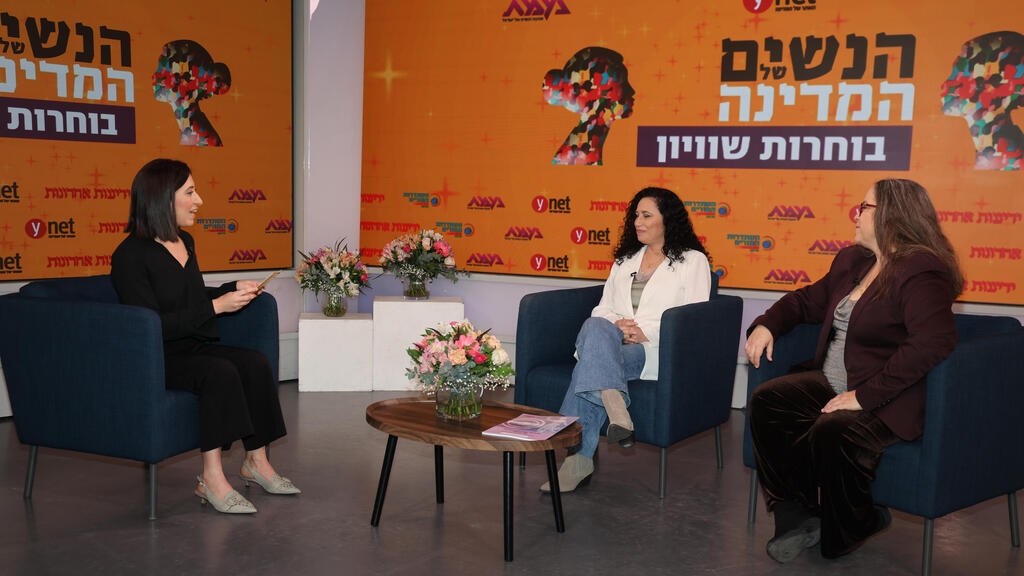
Women of the State conference
(Photo: Yariv Katz)
Jahanforooz, who immigrated from Iran to Israel at age 12, recalled the period around the 1979 Islamic Revolution. “When I was 8 or 9, the revolution took place. In the streets, some women already wore head coverings and some did not. Once the regime changed, we began going to school with head coverings — everyone, including my mother and neighbors. It became a dress code and a social norm,” she said. “The hijab was a very serious issue, as the regime became Islamic and radical. Given the circumstances, we all adopted more ‘modest’ clothing and headscarves.”
On current enforcement, Eilam Gindin said the situation reflects internal uncertainty within the regime. “We are in a situation where it is not clear who is in control. On one hand, they use propaganda featuring women with and without hijabs alongside pink weapons, and on the other, there are reports that fines are being imposed on women who do not wear head coverings,” she said.
Regarding the future of the protest movement and women’s rights in Iran, Jahanforooz expressed cautious optimism. “I want to believe that once the fog of war lifts, it will take time but this regime will change, and I hope the world will see the remarkable, educated, vibrant and intelligent women the Iranian people have to offer,” she said.
Eilam Gindin noted there is precedent for progress. “Until about a decade ago, there was no law against domestic violence in Iran. It was only enacted recently,” she said.