


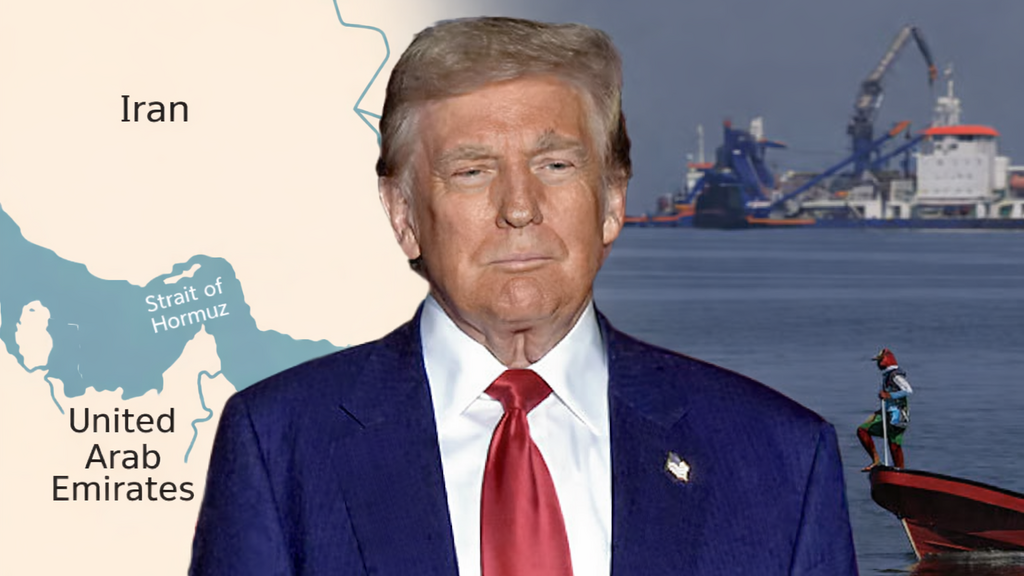
Iran escalated its threats Sunday after U.S. President Donald Trump warned he would “obliterate” the country’s power infrastructure if Tehran does not reopen the Strait of Hormuz within 48 hours.
Iranian officials warned that any strike on the country’s energy systems would trigger retaliatory attacks across the region, targeting critical infrastructure used by the United States, Israel and their allies.
“An attack on Iranian infrastructure will lead to a complete blackout of the region,” said Mohammad Reza Aref, vice president under President Masoud Pezeshkian.
Parliament Speaker Mohammad Bagher Ghalibaf added that energy and critical infrastructure across the Middle East would become “legitimate targets” and could be “irreversibly destroyed” if Iran’s power facilities are hit.
Iran’s military also warned that the Strait of Hormuz, a key global shipping lane through which roughly a fifth of the world’s oil supply passes, could be fully closed.
“The Strait of Hormuz will be completely closed and will not be reopened until our destroyed power plants are rebuilt,” a military spokesperson said.
At the same time, Iranian officials signaled a more selective approach. Pezeshkian wrote on X that the strait remains “open to all except those who violate our soil.”
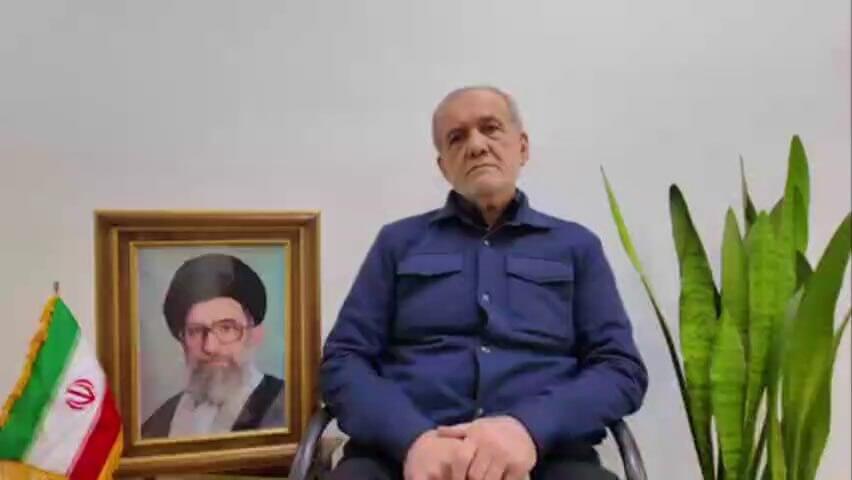
President Masoud Pezeshkian
In practice, vessels from countries considered friendly to Tehran, including China, India and Pakistan, have been allowed passage, while many others remain stalled amid security concerns.
The exchange of threats followed Trump’s warning that the United States would strike Iran’s electricity grid if the strait is not reopened, marking a sharp escalation after earlier signals of possible de-escalation.
The prospect of tit-for-tat strikes on civilian infrastructure has raised concerns of a broader regional crisis, with potential disruptions to energy supply, desalination systems and information networks.
Beyond the military escalation, Iran has also intensified efforts to shape public opinion online.
According to a report by The Guardian, Iranian-linked networks have shifted focus during the war to targeted messaging aimed at exploiting opposition to the conflict in the United States, particularly among Trump supporters.
The campaign includes AI-generated videos and memes mocking Trump and Prime Minister Benjamin Netanyahu, as well as fabricated footage depicting attacks on U.S. and Israeli assets.
Experts say the information campaign has become a central component of Tehran’s broader strategy, alongside military threats, as it seeks to influence global perception and deter further escalation.
At the same time, Iranian authorities are reportedly pressuring citizens abroad not to speak out against the regime, warning of possible consequences for them or their families inside Iran.
With tensions rising and both sides signaling readiness to escalate, the situation around the Strait of Hormuz remains a critical flashpoint for regional stability and global energy markets.