


United Torah Judaism MK Moshe Gafni has warned Sunday that the Israeli government is unlikely to survive past December if a law exempting ultra-Orthodox men from IDF military service is not passed within the first weeks of the Knesset’s winter session in November.
According to political sources, Gafni recently told associates, “Without a draft law, I don’t see this government making it through December.” The remarks signal growing impatience within Haredi factions, particularly among Gafni’s Degel HaTorah party, over the delay in legislating the controversial exemption.
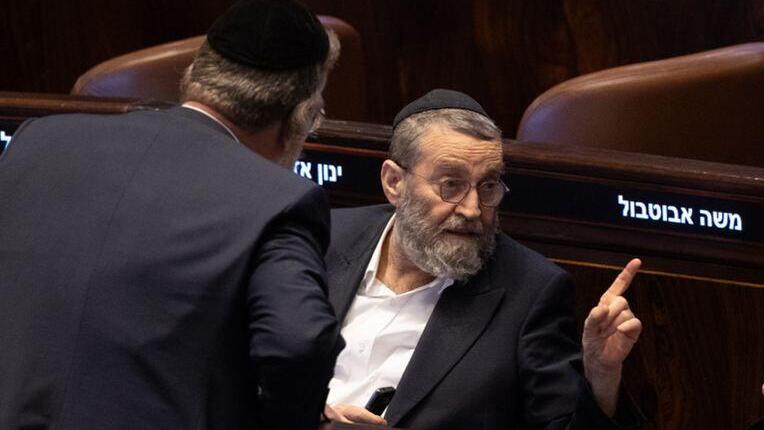
Despite the mounting pressure, Haredi leaders expressed satisfaction with the pace of legislative progress under Foreign Affairs and Defense Committee Chairman Boaz Bismuth, who held three hearings last week and is set to hold two more this week on the issue.
Gafni—who leads the Lithuanian faction within the Ashkenazi Haredi UTJ—has previously threatened to topple the coalition over the draft law, though his party’s moves have largely remained symbolic. This time, his warnings were delivered in closed meetings rather than public ultimatums, suggesting that the political leash the ultra-Orthodox parties are willing to extend may be shortening.
Prime Minister Benjamin Netanyahu is aware that the draft crisis could erupt as the Knesset returns from its summer recess. With election season looming and limited flexibility with Haredi partners, Netanyahu is reportedly preparing for possible early elections while simultaneously seeking to delay them as long as possible. Senior Likud ministers are already ramping up their primary campaigns.
Gafni and his party may ultimately determine when the standoff explodes. A split within the ultra-Orthodox bloc—encouraged by Netanyahu—has left Agudat Yisrael’s Gur faction, led by MK Yitzhak Goldknopf and his powerful advisor Moti Babchik, pursuing a more hardline approach. They have long pushed to dissolve the coalition over the unfulfilled draft law, though their votes alone are insufficient to bring down the government.
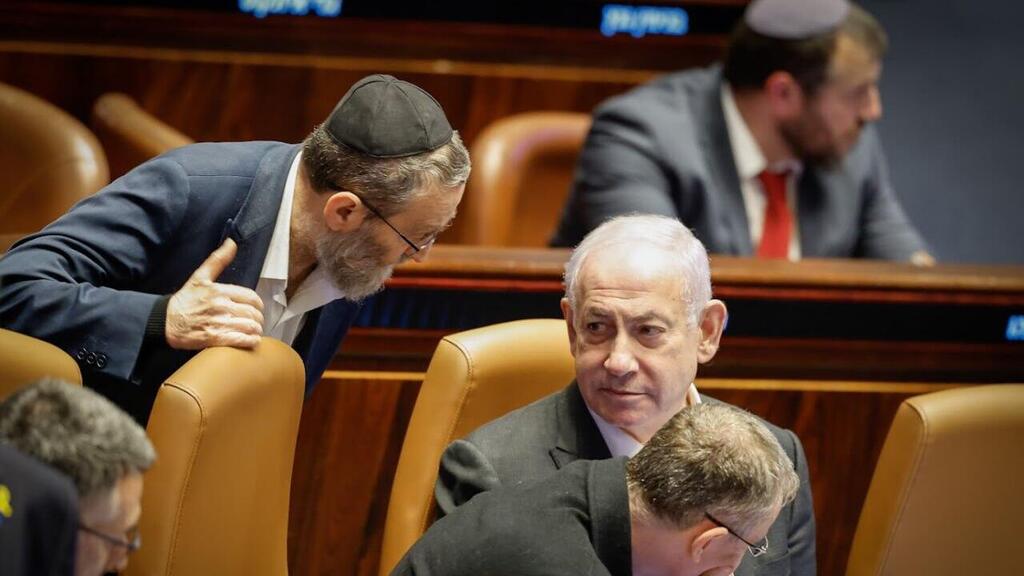
Moshe Gafni, Benjamin Netanyahu
(Photo: Noam Moskowitz, Dani Shem Tov)
Last week, under Netanyahu’s pressure, Gafni agreed to abstain from a vote on additional defense funding in exchange for budget promises and progress on the draft bill, which includes funding provisions for the Haredi community. Goldknopf, by contrast, refused to cooperate, maintaining his hardline stance.
Goldknopf and Babchik met with MK Bismuth last Wednesday to demand inclusion in negotiations over the draft legislation and insisted that decisions not be made solely by Gafni’s and Shas leader Aryeh Deri’s representatives.
Still, most Haredi leaders are not eager to collapse the government. They recognize they have limited political alternatives, and their coalition threats are largely performative. Shas remains flexible but often aligns with Gafni’s camp due to public pressure. Ultimately, the decision rests with Degel HaTorah’s rabbis, who will determine when “enough is enough.”
This week, the Foreign Affairs and Defense Committee will hold two more sessions—on Monday and Wednesday—to continue deliberations. Committee legal adviser Miri Frankel said last week that a revised, evolving version of the bill would be introduced, rather than rehashing previous drafts. She also suggested the law be implemented as a temporary measure for several years to assess whether the ultra-Orthodox community meets enlistment targets—a proposal that opposition members criticized as an irresponsible experiment.