

A mission from the Ministry of Health and the Ministry of Foreign Affairs — “Spirit of Hope” — is treating victims of the powerful Hurricane Melissa, the “storm of the century” that hit the country. In recent days Israel’s medical teams have operated side‑by‑side with local medical staff, assisting hospitals to cope with heavy burden and stabilize the health system that was severely damaged.
“There are hospitals that have simply been wiped out,” Dr. Sefi Mendelovich, deputy director‑general of the Ministry of Health, told ynet. “We were in a place called Black River, and saw a very large hospital that had simply collapsed. The storm took everything, and left only standing walls. It’s a very hard event to witness.”
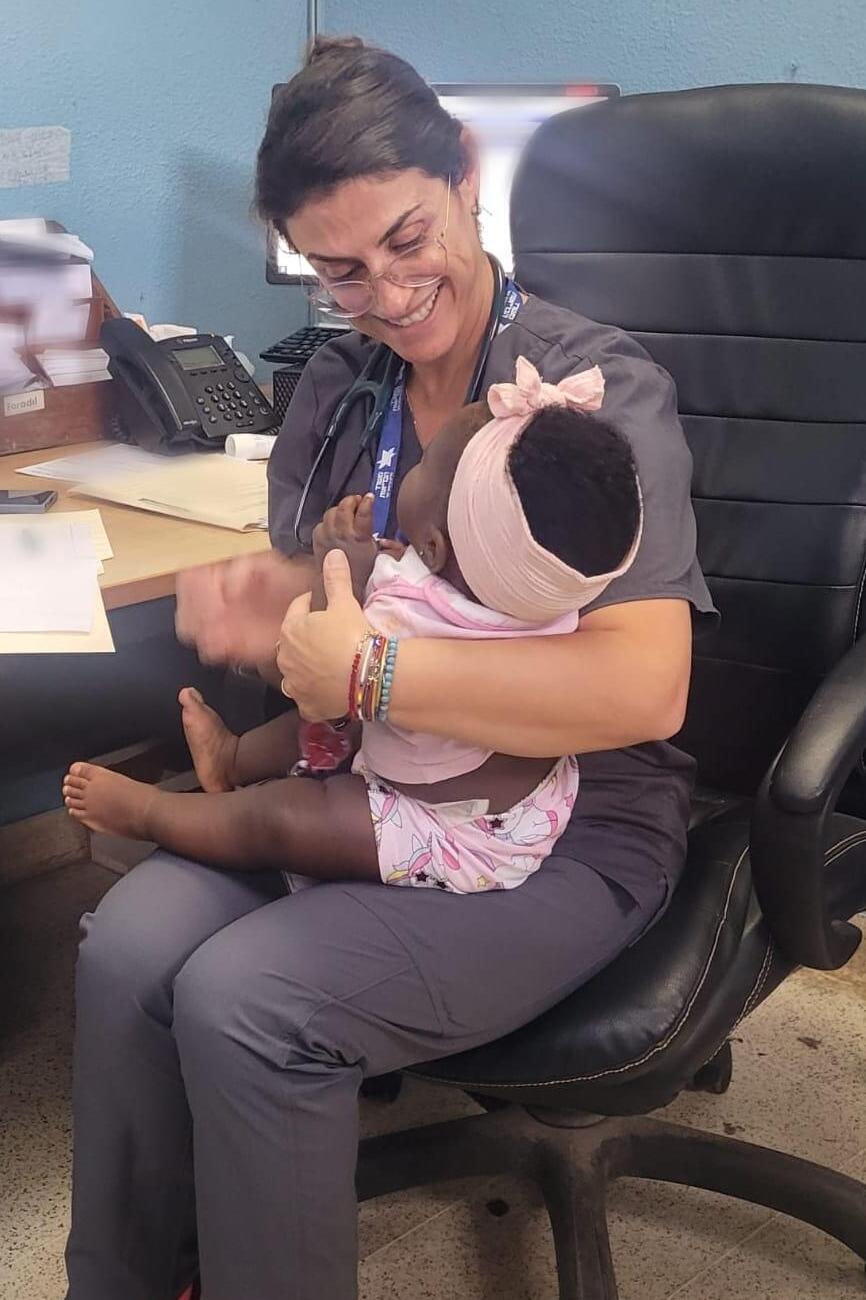
On Tuesday the death toll in Jamaica rose to 45 in the disaster, and 15 are still missing. Tens of thousands have been evacuated from their homes, and many have nowhere to return.
The Israeli mission, led by Mendelovich and under the medical direction of Professor Ofer Marin, director of Shaare Zedek Medical Center, departed last week following a request from the Jamaican government, which reached out to Israel immediately after the disaster. First Mendelovich and Marin arrived as an advance team for assessment and field review. Later the rest of the delegation joined.
The mission includes about 30 doctors, nurses and representatives from most hospitals in Israel. “The request came from the Jamaican government; they know Israel’s reputation,” Mendelovich says. “Our concept is that we’re not coming to teach them what’s best, but are trying to assist where needed; that’s the philosophy.”
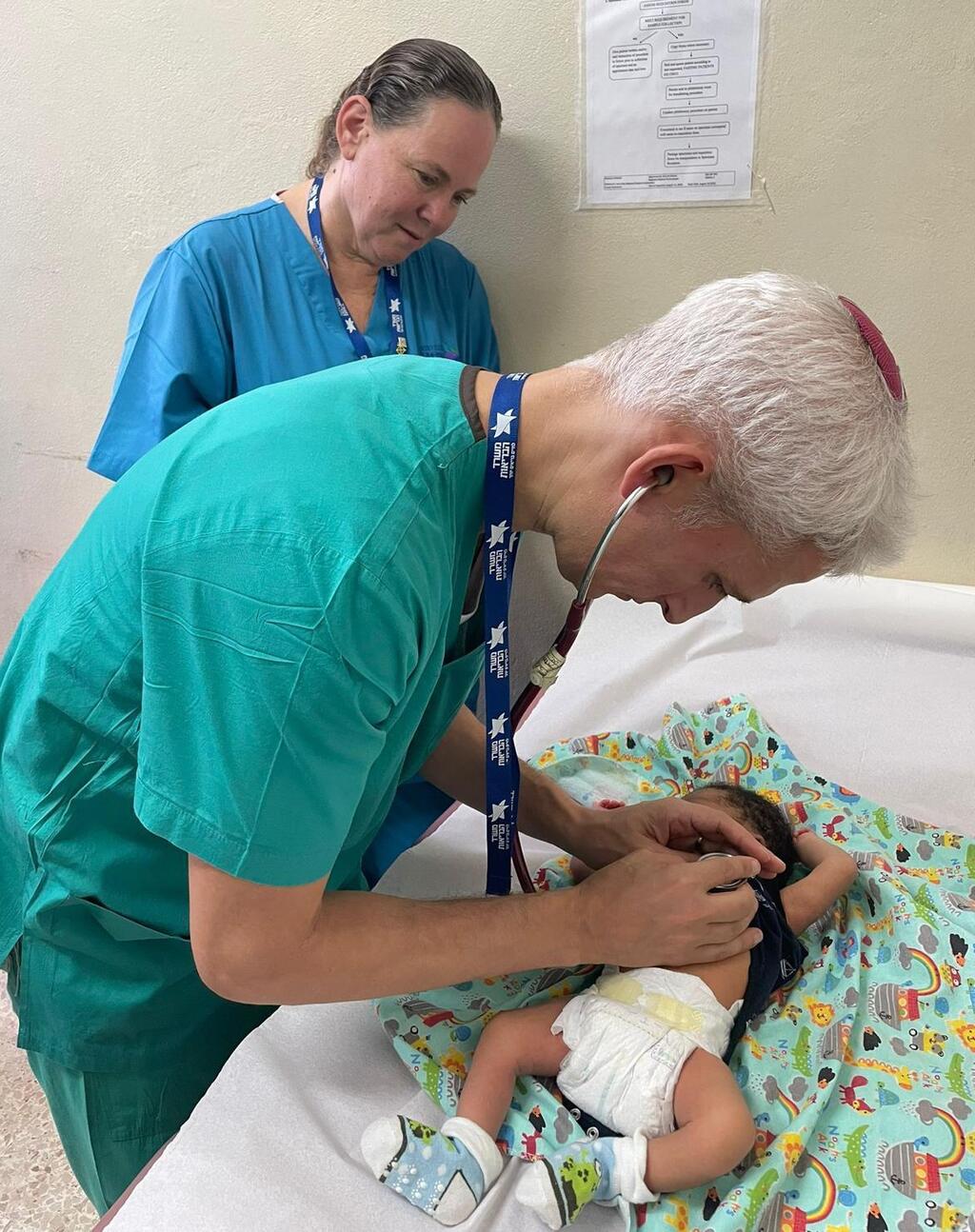
Dr. Sefi Mendelovich examines a patient
(Photo: Ministry of Health )
“The more modest you come, the more they want and embrace your help. If once the approach was very condescending, today it is humble,” he adds. The mission is expected to return toward the end of next week.
After the collapse of hospitals in the disaster area, the Israeli teams arrived at two local hospitals, one in the north and one in the south, which provide assistance to hurricane victims and citizens left without medical care. The teams were deployed across various departments: emergency rooms, inpatient wards, surgical theatres and delivery rooms.
“The storm damaged about 100,000 houses, and many have nowhere to receive health services, so there’s been a very large overload on the remaining hospitals outside the area, which are on the brink of collapse. The two hospitals where we are working have almost doubled their patient load since the storm, because people have nowhere else to go,” explains Mendelovich.
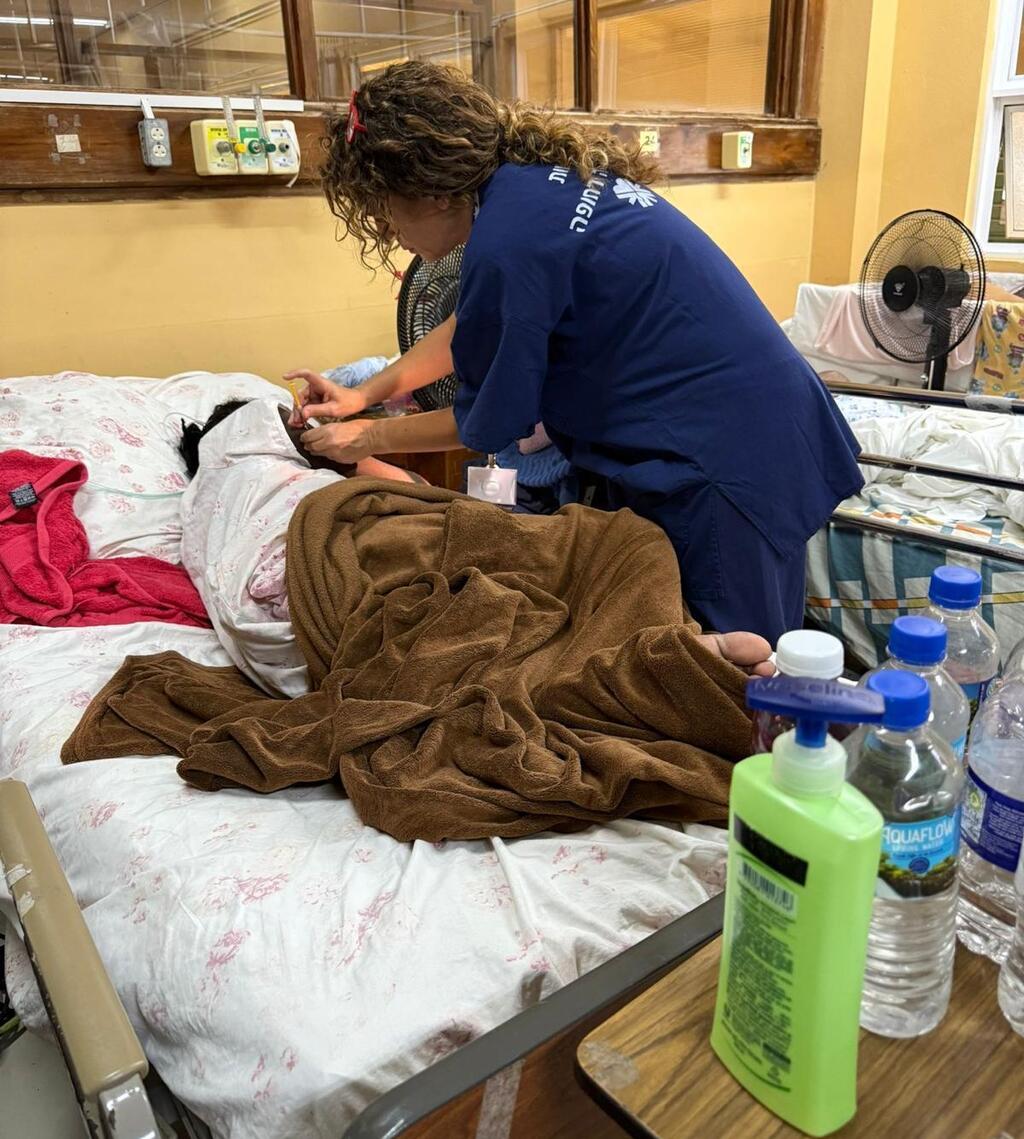
The Israeli delegation was well-reveived
(Photo: Ministry of Health )
He said that the mission team is helping across a wide span of medical treatment areas. “We are seeing both local patients with routine illnesses, and patients coming from the storm‑hit areas who were directly harmed. For example, hundreds of thousands of people don’t have electricity, and we encountered people with diabetes who had no refrigerator for their insulin, and arrived with serious complications because they hadn’t injected the medication for several days.”
Another case he describes is of a dialysis patient, who, due to the disaster, had not received dialysis for a week. “Her potassium levels ran wild, and she arrived here needing resuscitation and we managed to save her.” In addition, Israeli teams are also treating routine trauma cases, including road accidents and violence incidents.
According to Mendelovich, unlike previous missions of the Health Ministry to disaster‑ravaged areas, this mission’s distinguishing feature is full integration with local teams and the speed with which the teams were embedded in work at the hospitals. “They trust the staff so much that yesterday for the first time the Israeli nurses entered the normal rota of the wards, and the Jamaican nurses, who have been working nonstop since the storm, were finally able to take time off.”
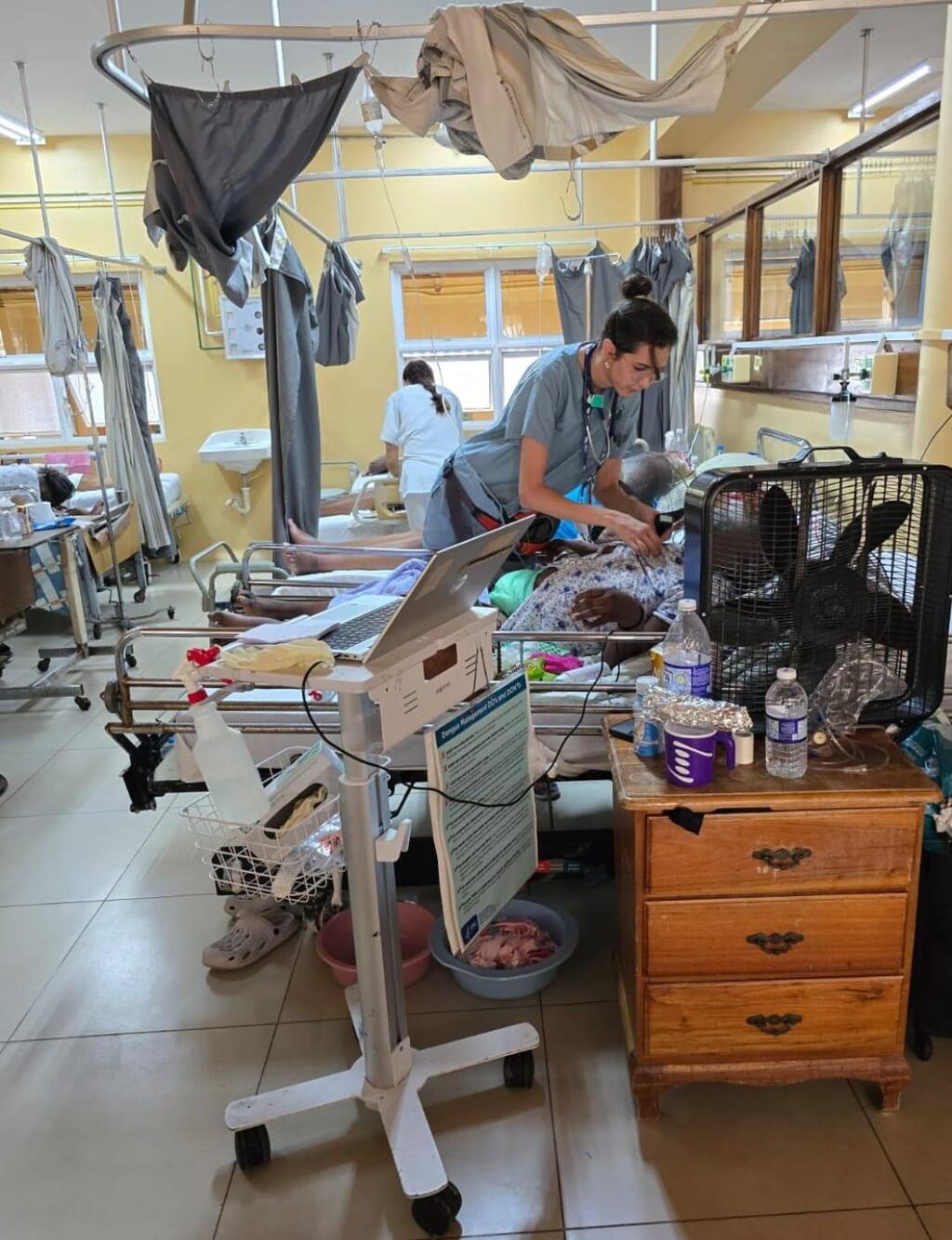
Mission is working in full integration with local teams
(Photo: Ministry of Health )
Despite Israel's image having suffered during the war years, Mendelovich reports that the Israeli team is receiving very warm treatment. “As with all previous missions, we came with close security, but that’s only for due‑diligence. We are receiving excellent treatment. People who hear we are from Israel say, ‘well done’. We have not received negative responses. We have no fears, and I’m glad to say the worries we had have not materialized.”
The mission includes doctors, emphasizing emergency medicine disciplines, as well as family doctors, specialists in internal medicine, pediatrics, general surgery, orthopedics and a women’s health physician.
“One of the interesting and challenging things is the different way medicine is practiced compared to Israel,” Mendelovich says. “Here there is more reliance on clinical judgement. For example, in the two hospitals where we are working there is no CT scanner, and there are only two ventilators in the emergency department. Meaning that in Israel the thought when a child arrives with head injury is whether to scan; here that’s irrelevant, and the clinical judgement sharpens. Also regarding ventilators, you have to think who is most appropriate and who most needs ventilation. On the one hand it is very frustrating, and on the other you understand that this is the reality and do what you can.”
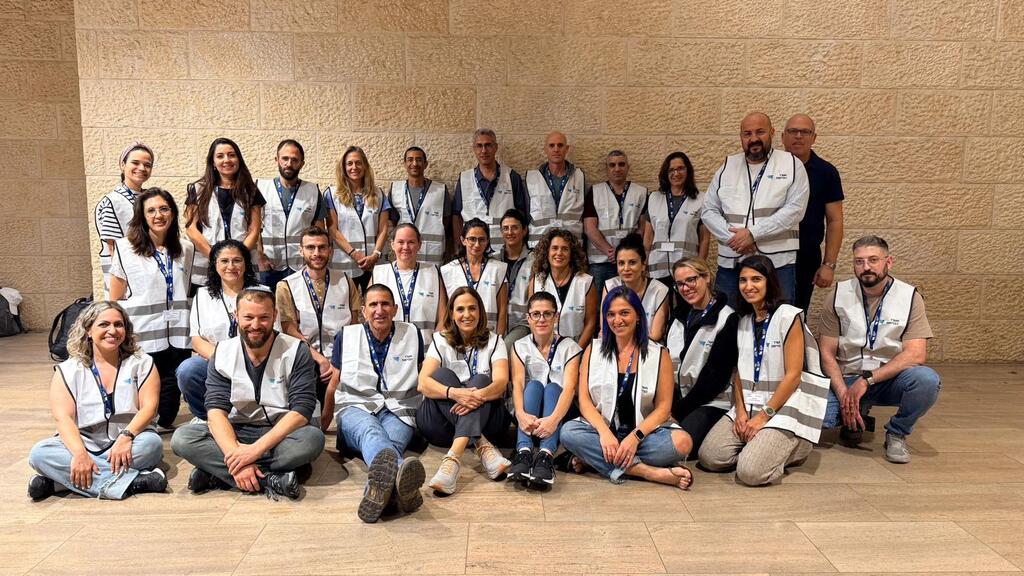
Israeli aid delegation following Hurricane Melissa in Jamaica
(Photo: Ministry of Health )
The main difficulty for the mission is not physical, but psychological—it stems from the great frustration of medical teams who cannot provide the care they learned and are accustomed to delivering in Israel. “You see someone you know would have a very good chance of survival in Israel but here does not, and it is very hard mentally,” he says. “People used to disaster missions know this, but for some this is their first mission, and it’s not simple.”
Mendelovich adds that the mission also provides an important lesson about Israel’s health system. “Every time I’m on such a mission I learn that despite all the difficulty and complexity we must appreciate every minute and second of our health system in Israel, and the amazing medical teams who every time move me. As a doctor I learn to return to basic clinical senses. Sometimes in day‑to‑day this is lost because of the abundance of technology, and here you see doctors doing excellent medicine under very hard conditions, beyond the disaster.”
He emphasizes the hard work of the medical teams operating together in the field. “This is a very complex logistical operation, and I want also to say a big thank‑you to Prof. Marin, who brings lots of experience and is professionally leading the mission in an inspiring way.”
Marin adds: “It is moving to see again how the State of Israel can extend a hand: fast, professional and warm, even at a distance of over 10,000 km. We were privileged to touch patients, save lives, and certainly represent our country with honor. A great Israeli pride.”