

A Qatari citizen was killed amid escalating military activity in the Gulf, Qatar’s Interior Ministry said, as planned U.S.-Iran technical talks in Switzerland were frozen and the dispute over control of the Strait of Hormuz became the central obstacle to diplomacy.
The ministry did not say which military action caused the death, but the incident came as the United States and Iran exchanged new strikes around the strategic waterway.
According to the Qatari statement, coastal and border security authorities opened a search after a vessel carrying two people failed to return on schedule Saturday evening. Marine patrols were launched immediately, and the vessel was located on Sunday morning.
Qatar said the citizen was found dead after being hit by shrapnel from “military operations in the region.” Another person, an Arab national, was wounded and taken for medical treatment. Officials said his condition was stable.
The death added a human toll to a crisis already threatening to derail efforts to preserve a fragile interim understanding between Washington and Tehran. The Wall Street Journal reported that technical talks between the United States and Iran, which were expected to take place in Switzerland with mediators present, have been frozen following the latest developments.
The suspension came only days after Washington and Tehran had been discussing a communication channel designed to reduce the risk of renewed regional escalation.
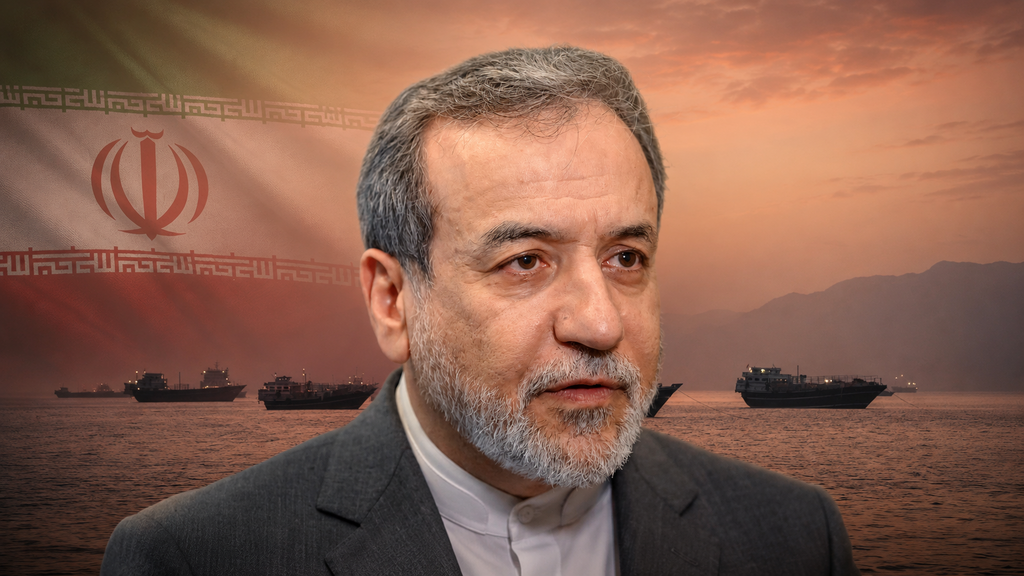
At the center of the crisis is a sharp dispute over how to interpret the U.S.-Iran memorandum of understanding and who controls traffic through the Strait of Hormuz. Iranian Foreign Minister Abbas Araghchi said that, under the understandings reached with President Donald Trump, responsibility for managing movement through the strait belongs exclusively to Tehran.
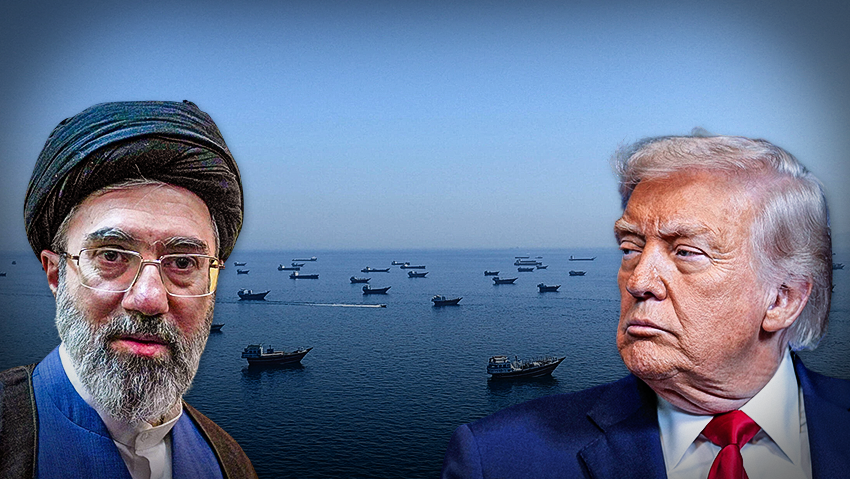
Mojtaba Khamenei and Donald Trump
(Photo: Hamed Jafarnejad/ISNA/WANA (West Asia News Agency) via REUTERS, AP/Alex Brandon, REUTERS/Stringer)
“No country or other entity has responsibility or authority in this matter,” Araghchi said, according to Iranian state media.
Washington rejects that interpretation, arguing that the agreement does not grant Iran control over the strait and that navigation through the international waterway must continue without obstruction.
According to the Journal, the agreement gives Iran responsibility for helping ensure the safe reopening of the strait and the passage of commercial vessels, but also requires military obstacles to be removed and maritime traffic to resume immediately.
In practice, the disagreement over those clauses has become the focus of the latest confrontation. Iran attacked a ship that tried to pass near the coast of Oman, apparently seeking to avoid the route Tehran is trying to impose near its own shores. The United States responded with strikes on Iranian communications sites, drone facilities and missile-related infrastructure along the coast of the strait.
U.S. Central Command said American forces struck 10 military targets in Iran overnight, the second consecutive night of strikes, after what it described as “continued Iranian aggression against commercial shipping” near the Strait of Hormuz.
CENTCOM said Iranian forces launched a drone that hit a tanker carrying more than 2 million barrels of crude oil. It said the U.S. strikes targeted surveillance infrastructure, communications systems, air defense sites, drone facilities and mine-laying capabilities.
Iran denied the U.S. accusations, blamed Washington for violating the understandings between the sides and retaliated with strikes against U.S. bases in Bahrain and Kuwait.
Iran’s Revolutionary Guard Corps warned that U.S. bases in the region would “experience hell” and said vessels that violate Iranian instructions in the Strait of Hormuz would now be “handled with greater force.”
After the latest U.S. strikes, Trump again threatened Iran on Truth Social.
“U.S. Military aircraft attacked Missile and Drone storage sites in Iran, along with Coastal Radar sites, following a violation of the Ceasefire Agreement, again!” Trump wrote.
He added: “Maybe they will never learn! There may come a time when we can no longer be reasonable and will have to militarily finish the job we started so successfully. If that happens, the Islamic Republic of Iran will cease to exist!”
The escalation has placed the planned U.S.-Iran talks in immediate doubt. Qatar and Pakistan had helped bring representatives of Washington and Tehran together earlier this month, but the latest violence has exposed how differently the two sides interpret the interim arrangement.
Tehran sees the agreement as recognizing its authority over Hormuz. Washington says the waterway must remain open as an international passage for commercial shipping.
The death of the Qatari citizen also complicates the role of Gulf states, which have tried to contain the crisis while avoiding becoming direct casualties of the confrontation. Qatar has been one of the key mediators in the diplomatic effort, but now finds one of its citizens killed in the same escalation those talks were meant to prevent.
For now, the Strait of Hormuz has become the main test of whether the US-Iran framework can survive. If the two sides cannot agree on who controls the passage, the frozen talks in Switzerland may be only the first diplomatic casualty.