


‘We hope and believe that 2026 will be the year of Latin America, a year that will look different diplomatically, one in which we see a positive change in the relations of the continent’s countries with Israel,’ Amir Ofek, deputy director general for Latin America and the Caribbean at the Foreign Ministry, told Ynet, ahead of the renewal of diplomatic relations between Israel and Bolivia after a 16-year break.
In the background is a meeting in Washington between Foreign Minister Gideon Saar and his Bolivian counterpart, Fernando Aramayo, where the two are expected to sign an agreement restoring ties. A day after the election of Bolivian President Rodrigo Paz in October, Saar spoke with the president-elect in what was among the first diplomatic calls he made after Paz’s victory. Saar told him Israel wanted to open a new chapter and fully renew diplomatic relations, while Paz said he intended to lead Bolivia toward reopening to the world and renewing ties with Jerusalem.
Gallery
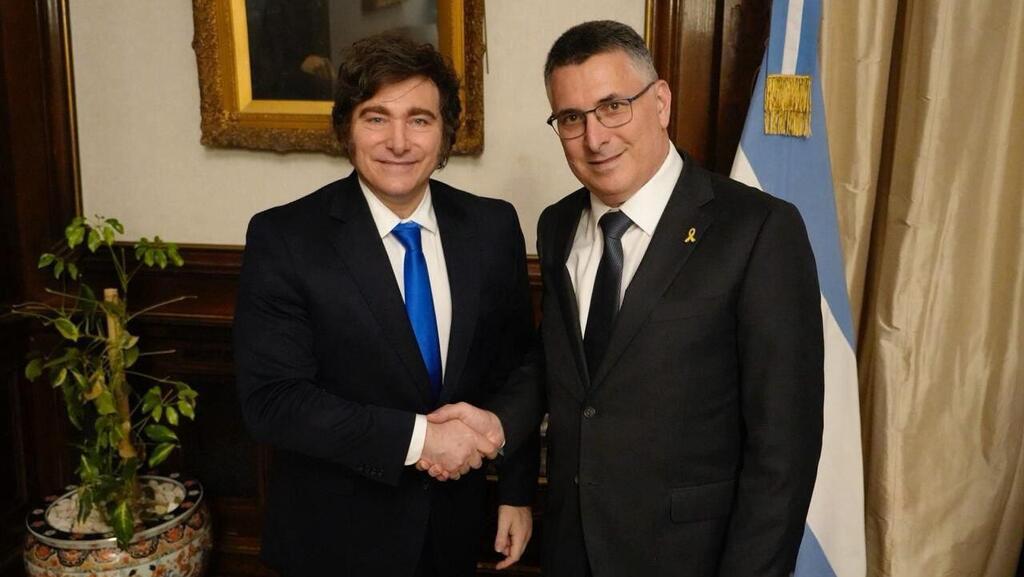
Minister Sa’ar and Argentine President Javier Milei, 'A shifting trend that matters to the United States, but also to Israel'
(Photo: Office of the Argentine president)
In November, Foreign Ministry Director General Eden Bar-Tal represented Israel at Paz’s inauguration in Bolivia. During that visit, the Israeli delegation met the country’s small Jewish community, which has been hoping for a fresh start in relations between Bolivia and Israel.
Early this month, Bolivia announced it was canceling its visa requirement for Israelis, a move expected to put the country back on the map for Israeli travelers in the region. After intensive talks in recent weeks, the two foreign ministries agreed on the text of an accord and a joint statement. Bolivia’s finance and economy minister, Jose Gabriel Espinoza, will also attend the Washington meeting.
Over the past 20 years, Bolivia has been governed by the far-left MAS party. After it came to power, ties between La Paz and Jerusalem deteriorated until Bolivia formally severed relations in 2009 following Israel’s “Operation Cast Lead” in the Gaza Strip. At the same time, Bolivia strengthened its relations with Iran. Since then, there have been no official ties, apart from a short period in 2019 when relations were renewed under an interim government after the ouster of President Evo Morales. Relations were frozen again once a new government was sworn in, and since October 2023 they have again been officially severed.
Still, Bolivia has a long history of close relations with Israel and the Jewish people. It opened its gates to Jews fleeing the Holocaust and voted in favor of establishing the State of Israel at the United Nations in 1947. It was also among the first countries to recognize Israel.
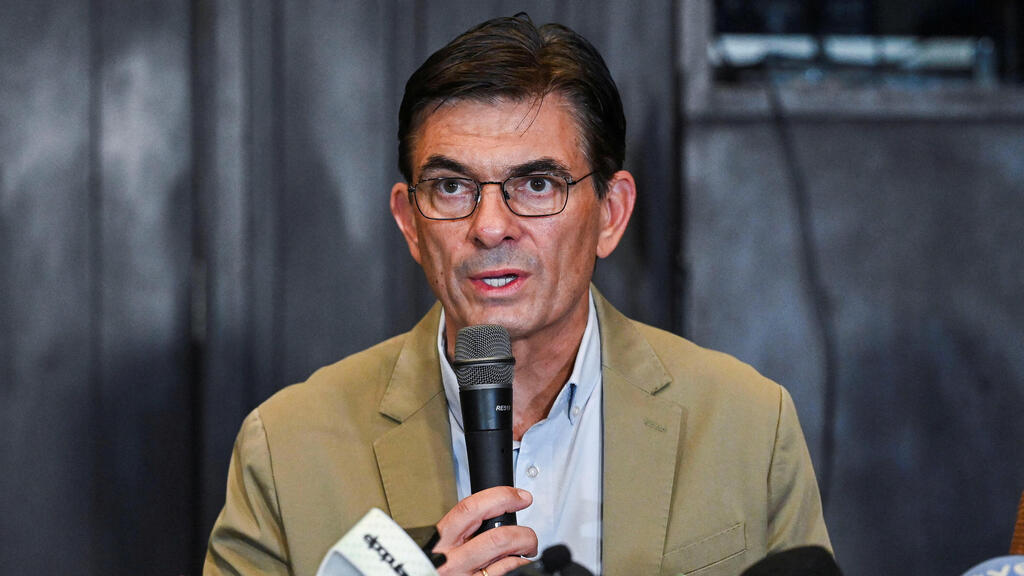
Bolivian President Rodrigo Paz. Relations are being renewed after a long freeze
(Photo: Claudia Morales/ Reuters)
Ofek noted that Saar already declared at the Foreign Ministry’s ambassadors conference that 2026 would be the year of Latin America, and that the ministry would prioritize advancing ties with the continent. Saar has already visited Paraguay and Argentina, two of Israel’s closest friends in the region. ‘We have very strong friendships on the continent today,’ Ofek said.
He added, ‘Just yesterday we signed a free trade agreement with Costa Rica, and they announced their intention to open a branch of their embassy in Jerusalem in 2026 with diplomatic status. That is another step up in our good relationship with Costa Rica. Ecuador’s president has visited Israel once and its foreign minister twice, and Quito has designated Hamas, Hezbollah and Iran’s Revolutionary Guard as terrorist organizations. Ecuador also opened an innovation office at the Hebrew University of Jerusalem, which also has diplomatic status.’
The Ecuadorian and Costa Rican offices in Jerusalem will join three Latin American embassies already based in the capital: Guatemala, Paraguay and Honduras. In spring 2026, Argentine President Javier Milei announced about two weeks ago, Argentina will open an embassy in Jerusalem, becoming the fourth country from the continent to inaugurate an embassy in the capital.
Hostile presidents expected to be replaced?
Ofek also said the Foreign Ministry expects leadership changes in several Latin American countries in 2026 that could affect ties with Israel. In Chile, polls suggest right-wing candidate Jose Antonio Kast is expected to win elections on Sunday, and Israel hopes this will dramatically improve Santiago’s relations with Jerusalem. The expectation comes amid a diplomatic crisis between the countries under current leftist President Gabriel Boric, who is seen in Israel as hostile. Boric has taken significant steps against Israel, including recalling Chile’s ambassador, accusing Israel of ethnic cleansing, declaring an arms embargo, banning imports from Judea and Samaria, and upgrading Chile’s diplomatic representation to the Palestinian Authority. Chile maintains an embassy in Israel, but it is not staffed by an ambassador.
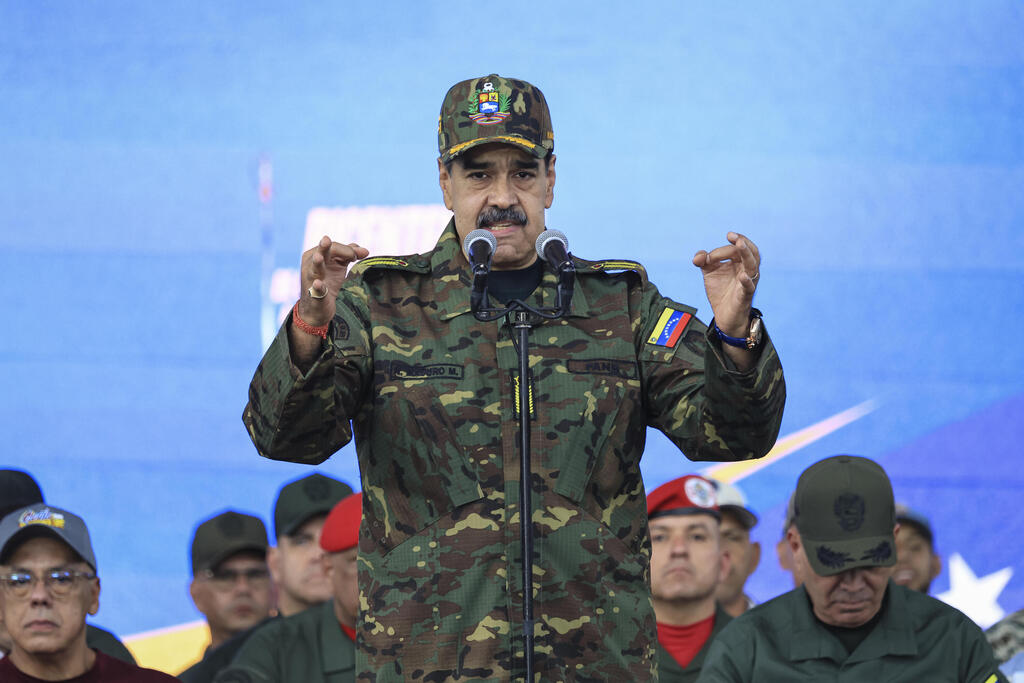
'His days are numbered,' Venezuelan President Nicolás Maduro
(Photo: Jesus Vargas/Getty Images)
Another country where change may be coming is Venezuela. Tensions between Caracas and Washington are at a peak, and U.S. President Donald Trump has threatened to invade Venezuela, citing his hostility toward President Nicolas Maduro. Trump has said Maduro has ‘only a few days left.’ If power changes hands, Israel says it has very good ties with the opposition, led by Nobel Peace Prize laureate Maria Corina Machado, and maintains close contacts with many figures. Israeli officials believe that if Maduro falls, Venezuela will quickly renew relations with Israel.
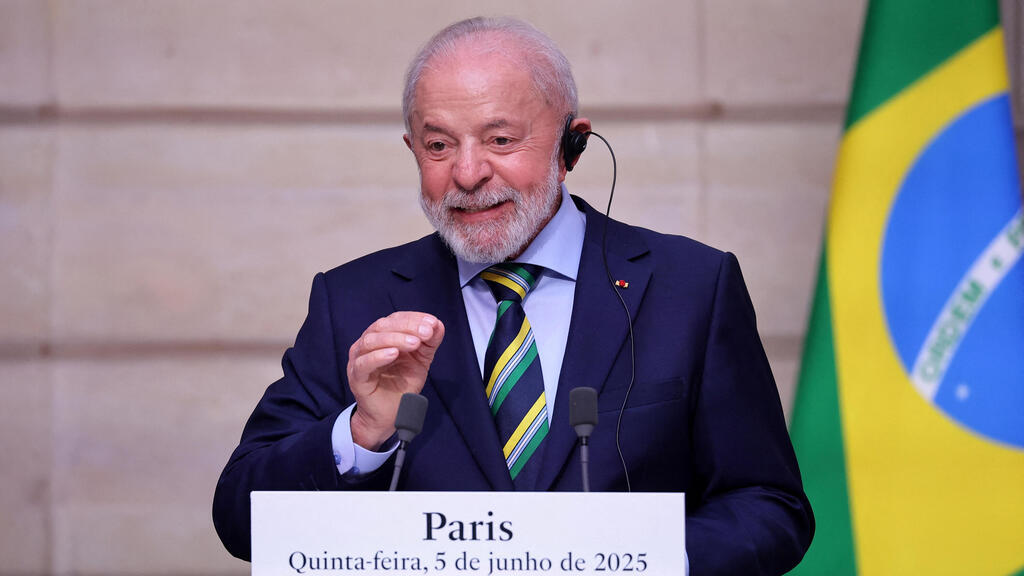
Will be 81 by the next election, Brazil’s President Luiz Inácio Lula da Silva
(Photo: Christoph Petit Tesson/ Reuters)
In Brazil, the continent’s largest and most important country, elections will be held in October 2026. President Luiz Inacio Lula da Silva, who has taken a sharply anti-Israel line, has already announced plans to run again, even though he will be 81 on election day.
It remains unclear who will run for the Brazilian right after former President Jair Bolsonaro, seen as a strong Israel supporter and Trump ally, was sentenced to 27 years in prison for an attempted coup. His son Flavio may be a contender. The younger Bolsonaro, now a senator, said last weekend that his father told him from prison that he supports him as the right’s candidate. If the right returns to power, ties with Israel are expected to improve. Brazil currently has no ambassador in Israel, and it has refused to accept an Israeli ambassador in Brasilia.
Colombia, where ties with Israel have also been strained, will soon head to elections. Parliamentary elections are set for March 2026 and presidential elections for May. President Gustavo Petro, who is openly hostile to Israel and even proposed forming an international army ‘larger than the U.S. military’ to ‘liberate Palestine,’ is barred under the constitution from running for a second consecutive term. Israel is also watching for a political shift there that could restore relations to a better place.
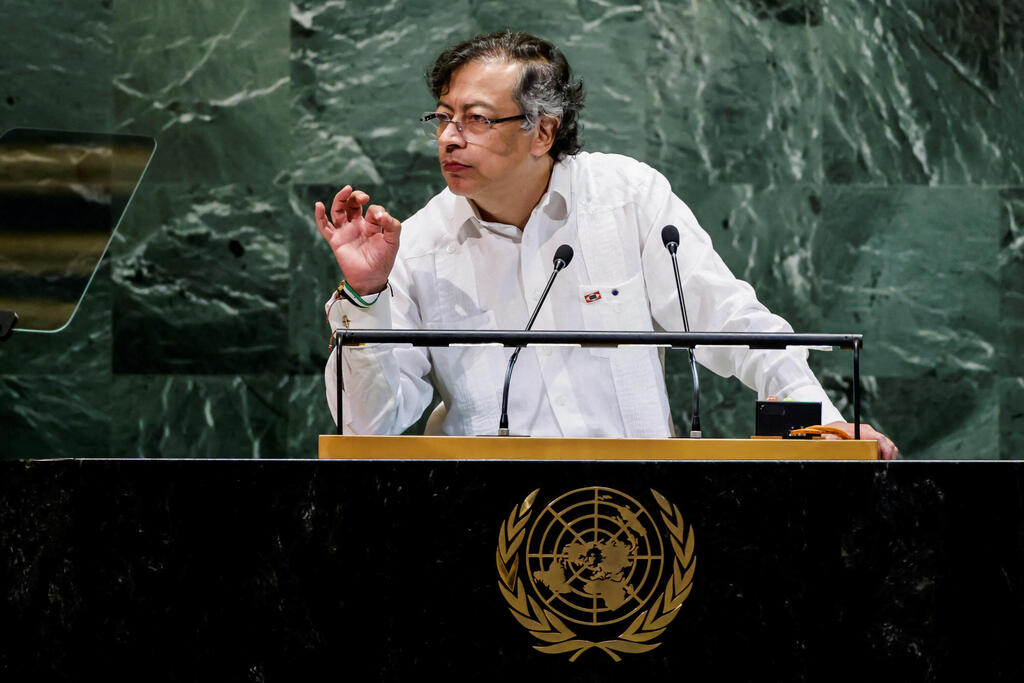
Colombian President Gustavo Petro, called for “army to liberate Palestine” but is barred from second consecutive term
(Photo: Eduardo Munoz/ Reuters)
In Honduras, two leading presidential candidates have declared an intention to warm relations with Israel, in contrast to a third left-wing candidate who is considered critical of Israel. The front-runner is right-wing candidate Nasry ‘Tito’ Asfura, the son of Palestinian immigrants who arrived in Central America in the 1940s. The second is 72-year-old TV host Salvador Nasralla, the son of Lebanese immigrants. Both were born in Honduras, and the country is awaiting official results.
Israel also maintains a very warm relationship with Panama, the only country in the region that has not recognized a Palestinian state. Friendship between Jerusalem and Panama City has been stable for years.
‘The Latin American arena is undergoing changes that affect ties with Israel, and in most cases the ties are improving. We are very optimistic about the coming year,’ Ofek said. He credited Saar’s expanded budget for enabling intensive outreach in Latin America. ‘My department and our embassies managed to bring 55 delegations during 2025. That is an unprecedented number, with exposure to many millions of people in Latin America. It is very important. We hope to keep it going next year as well.’
Saar echoed that outlook. ‘I see the beginning of change in Latin America,’ he said. ‘There is a trend of change and it is very important to the United States, but also to Israel, because friends of the United States are usually also friends of Israel. We will invest major efforts in strengthening and deepening our relations in South America. There is significant progress in many fields, and we will continue it.’