

Russian President Vladimir Putin on Friday addressed for the first time European concerns that Russia could escalate its confrontation with Western European countries, categorically rejecting the possibility. At the same time, Putin offered a pessimistic assessment of prospects for progress toward a ceasefire in Ukraine, blaming a massive Ukrainian attack on Moscow during Russia's parliamentary "elections."
Responding to warnings voiced in Europe over the past week about the possibility of a direct military confrontation with Russia, Putin said: "Many in Europe say they expect an attack by the Russian Federation and therefore must prepare for military action, for war with Russia. I want to emphasize once again that we are not preparing for any military action against Europe. We have no such plans. Most importantly, there is no reason for it."
Gallery
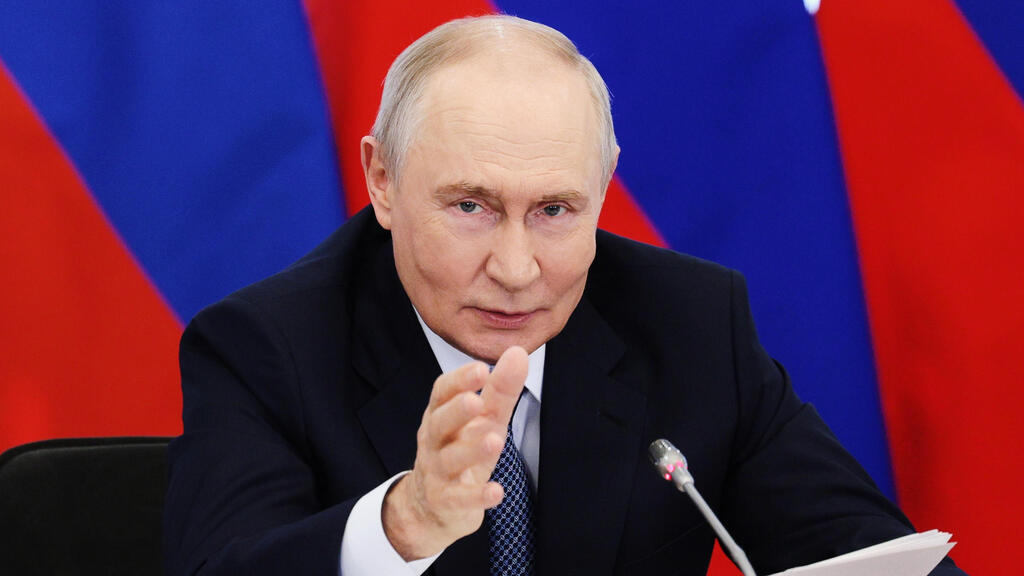
Russian President Vladimir Putin
(Photo: Gavriil Grigorov, Sputnik, Kremlin Pool Photo via AP, File)
Putin nevertheless heightened tensions with the Baltic states by mocking a statement by Estonian Defense Minister Martin Herem, who said his country must be prepared to repel any attack and "destroy anyone who crosses the border."
"This is a provocation," Putin said. "The circus has already left, but the clowns remain."
Putin's remarks came hours after Russia's state-run RIA Novosti news agency removed an opinion column in which the author threatened another Baltic state, Lithuania, with a blitzkrieg and nuclear strike. The column was removed after several hours, with the agency saying it did not conform to its editorial position or the official policy of the Russian Federation.
One scenario raised in the West this week is that Russia and its ally Belarus could attempt to seize the Suwalki Gap, the strip of territory between Poland and Lithuania that separates Belarus from the Russian exclave of Kaliningrad and provides the Baltic states' only land connection to the rest of NATO.
The deleted column was written by commentator Alexander Nosovich after Lithuania's parliament moved this week to advance a proposal that would lift the country's ban on stationing nuclear weapons on its territory.
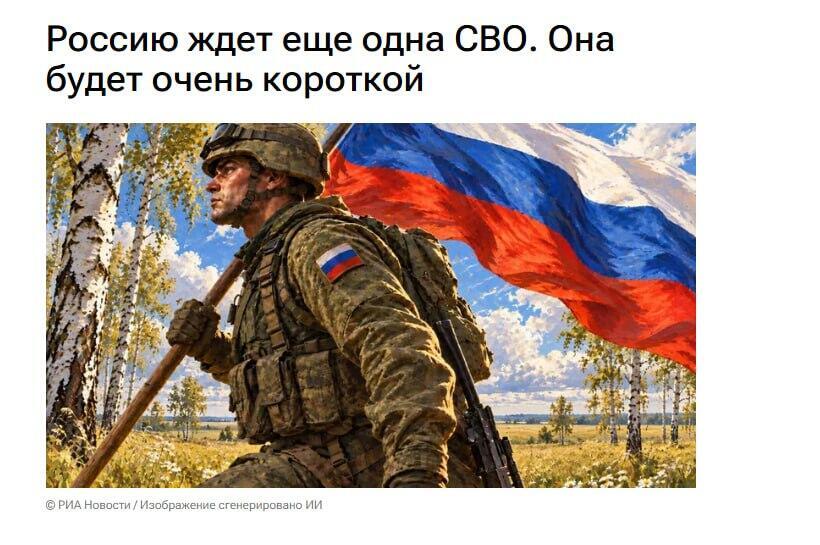
The column that sparked alarm
(Photo: Screenshot from the RIA Novosti website)
The column, headlined "Russia is in for another special military operation. It will be very short," said in part: "European countries continue to push the issue of moving unconventional weapons to Russia's borders and have chosen a country willing to become a nuclear depot."
Nosovich went on to threaten Lithuania with an invasion and even a nuclear strike.
"Russia can even afford to forgo deploying ground troops. Just missiles with the appropriate warheads," he wrote. "The solution is not merely quick, it is lightning-fast. Don't think too much about seconds."
Elsewhere in the column, Nosovich described Lithuania as "a suicidal country with no brains whatsoever," a "useful idiot" and "a small but proud kamikaze in Russia's near abroad."
Shortly after publication, however, the column was deleted. Anyone visiting the original link on RIA Novosti's website encountered an editor's note saying: "The article by freelance author Alexander Nosovich was removed from the website because it did not correspond to the editorial board's views, editorial policy or the official policy of the Russian Federation."
Before it was removed, the threatening column circulated on social media and caused alarm among parts of the Lithuanian public. An official Lithuanian military spokesperson issued a statement seeking to reassure the public: "In light of Russia's propaganda statement, we remind you that Russia routinely tries to intimidate its neighbors using hostile rhetoric. This is a common Russian practice, and no additional action should be taken as a result of these remarks."
Over the past roughly 35 years, Russia has lost much of its strategic position around the Baltic Sea. The former Soviet republics of Estonia, Lithuania and Latvia joined NATO in the early 2000s. About two decades later, Finland and Sweden abandoned decades of military nonalignment and joined the alliance. Russia's Baltic Sea coastline now includes the Kaliningrad exclave, whose land connections to the rest of Russia require transit through neighboring countries.
'Ukraine as cannon fodder'
Turning to the war in Ukraine, Putin said Friday that before there could be progress toward a settlement, Kyiv must "feel the power of Russia's retaliatory strikes" following Ukraine's massive drone attack on Moscow this week.
The Ukrainian attack came on the final day of Russia's parliamentary "elections," in which Putin's United Russia party won as expected.
"Polling stations were attacked," Putin said. "One of the attacks targeted a school where there was a polling station. They began attacking the homes of regional election commission chairs. In one case, a regional commission chair was wounded, her husband was wounded and her child was wounded. In another case, unfortunately, it ended in tragedy and an election commission chair was killed. We must make Kyiv understand that strikes deep inside Russian territory will only make the situation worse."
Addressing the role of Western European countries in the war in Ukraine, Putin said: "They want Ukraine to continue serving as cannon fodder, as a tool in the struggle against Russia."
Putin also showed no willingness to accept a proposal to halt reciprocal attacks on energy facilities in Russia and Ukraine.
"They have no means to counter our advanced weapons or to end the blockade we have imposed on their Black Sea coast," he said. "They need to remember that they are the ones who started all of this."