

German Chancellor Friedrich Merz faced sharp criticism Thursday after Berlin failed to win a seat on the UN Security Council, a defeat his foreign minister linked in part to Germany’s stance alongside Israel despite mounting international criticism over the war in Gaza.
Foreign Minister Johann Wadephul said the loss was tied both to Russia’s extensive efforts to block Germany’s election because of its support for Ukraine and to Berlin’s relative support for Israel.
Germany had sought one of two seats allocated to a group of mostly Western European states, hoping its diplomatic push for a stronger voice in the international community would secure it a place on the council. To win, it needed at least 127 votes in the UN General Assembly. Hours before the vote, Berlin still believed it would reach that threshold.
Instead, Germany received only 104 votes. Portugal was elected with 134 votes, and Austria with 131.
The UN Security Council is the United Nations’ most powerful body, with authority to pass major decisions on matters including the legality of wars and international sanctions. It has 15 members: five permanent members, the United States, Russia, China, France and Britain, and 10 rotating members elected for two-year terms.
The five new members elected this week will replace Denmark, Greece, Pakistan, Panama and Somalia on January 1.
Wadephul acknowledged that the result was a real disappointment for Germany, a European economic power that has previously served on the council six times.
“It may also have cost us votes that Germany must always bear a special responsibility toward Israel when it comes to the Middle East conflict,” he told reporters. “Germany has always taken a clear position on certain issues, and those are positions not all member states share.”
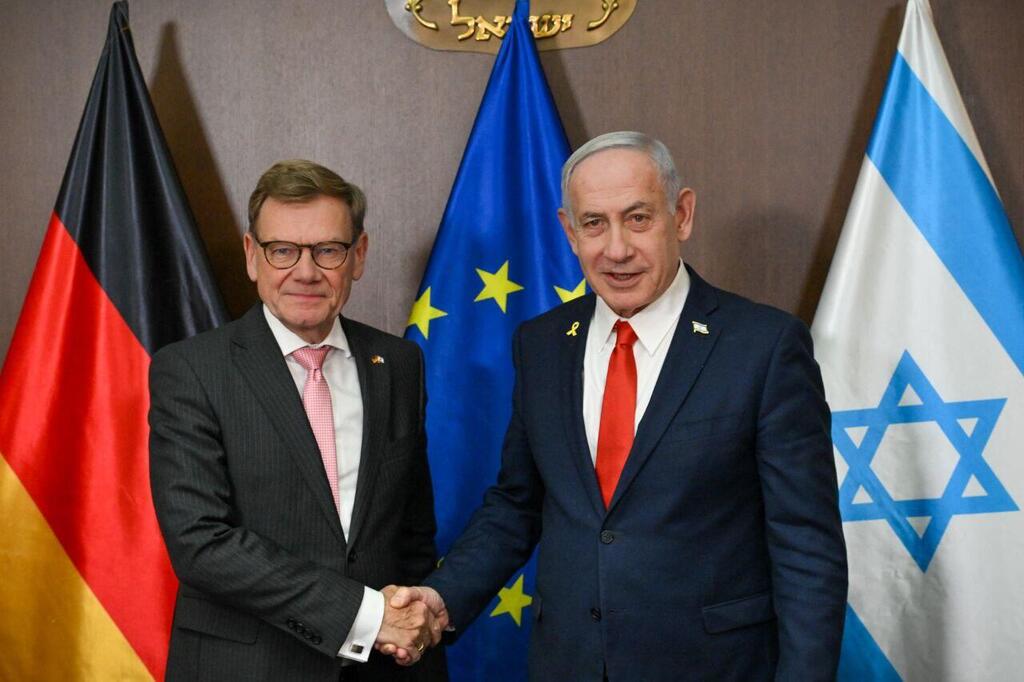
Netanyahu meets with German Foreign Minister Johann Wadephul
(Photo: Kobi Gideon/ GPO)
Germany is traditionally considered Israel’s closest friend among Europe’s major powers. After the October 7 massacre and the outbreak of the war in Gaza, the government in Berlin repeatedly stood by Israel.
As the death toll in Gaza rose and international criticism intensified, Germany also sharpened its tone toward Jerusalem. At one point, Merz suspended certain arms shipments to Israel. Even afterward, however, Germany continued to shield Israel from severe European Union sanctions and, unlike France and Britain, refrained from recognizing a Palestinian state.
Following his Israel remarks, Wadephul signaled that the defeat would not change Germany’s policy.
“Germany will fulfill its responsibility even if it voices criticism of the Israeli government on certain issues,” he said.
In a statement after the vote, Merz said Germany would remain a firm supporter of the international system and congratulated Austria and Portugal.
“We did not achieve our goal, but this result does not change the tasks we face at the United Nations,” Merz said. “Germany remains a reliable pillar of the multilateral system.”
Merz, an unpopular chancellor whose government depends on a coalition with the center-left Social Democrats, is already facing deep political difficulties at home and has struggled to advance his economic agenda. On foreign policy, however, he has generally received more favorable reviews, particularly for his efforts to unite the West around support for Ukraine.
The Security Council defeat triggered criticism from both sides of the opposition.
The Greens called it an “embarrassing defeat” and said responsibility lay with Merz and his foreign minister, who had traveled to New York for the vote. The far-right Alternative for Germany, or AfD, which often criticizes Germany’s extensive support for Ukraine and its efforts to isolate Russia, said the failure was no accident, but “the result of years of unrealistic foreign policy that isolates Germany on the international stage.”
Alice Weidel, one of the AfD’s leaders, wrote in a pointed post on X that the vote reflected Germany’s national decline.
“Embarrassment follows embarrassment,” she wrote. “Merz intended to bring our country back onto the international stage when he began his term as chancellor, but now Germany finds itself without a seat on the UN Security Council.”
Merz also faced criticism from within his own coalition. The Social Democratic Party said the vote was “not just a bump in the road, but a warning sign.”
Adis Ahmetovic, the party’s foreign policy spokesman, said Berlin was paying the price for what was perceived as hypocrisy because of its restrained criticism of allies, including Israel and the United States.
“Anyone who claims to be a guardian of the rules-based international order cannot apply double standards when it comes to international law,” he told Der Spiegel.