

Two Iranian officials, including a member of the Islamic Revolutionary Guard Corps, have acknowledged plans to target American diplomats and government personnel, defending the potential attacks as retaliation for the killing of Iranian officials and their relatives by the United States and Israel, The New York Times reported Saturday.
The officials, who spoke anonymously because they were not authorized to discuss the matter publicly, confirmed recent U.S. intelligence warnings about Iranian plots to assassinate Americans. They argued that the deaths of dozens of Iranian officials and some family members in U.S. and Israeli strikes made Americans "fair game" for retaliation.
The acknowledgment marks a significant development after Washington warned that Iranian assassination plots targeting American personnel in the Middle East and elsewhere had reached advanced stages. The Times noted, however, that it remains unclear whether Tehran has the operational capability to carry out such attacks.
The Iranian officials described the targeting of U.S. diplomats and personnel as part of a broader expansion of potential targets if another round of fighting erupts. Iranian leaders have already publicly threatened attacks against civilian infrastructure, energy facilities and undersea communications cables in the event of renewed U.S. or Israeli strikes.
The revelations follow an intelligence memorandum dated October 23 and sent to Secretary of State Marco Rubio by Director of National Intelligence Jay Clayton, warning that Iran had substantially increased efforts to target American personnel overseas.
The memo, first reported by Axios, said potentially lethal plots had progressed to advanced stages in the Middle East and other countries. It did not identify specific targets or disclose the methods being considered.
According to The New York Times, American intelligence officials are particularly concerned about threats against U.S. ambassadors in the Middle East and senior officials inside the United States. Some intelligence has suggested Iranian operatives may already be present on American soil, although officials cautioned that Tehran's ambitions to conduct assassinations abroad have often exceeded its actual capabilities.
The warnings have prompted the State Department to reduce staffing at several diplomatic missions across the Middle East. Nonessential personnel and family members have been ordered to leave Saudi Arabia, while further reductions have been reported at American embassies in Jordan, Lebanon, Qatar and the United Arab Emirates.
Assassination threats amid preparations for renewed strikes
The Iranian officials' acknowledgment comes as both Washington and Tehran increasingly anticipate another major military confrontation.
According to the Times, senior U.S. officials believe President Donald Trump is leaning toward another round of strikes inside Iran, although he has indicated that military action would not take place before the November 3 midterm elections.
U.S. Central Command has prepared an expanded list of potential targets, including energy infrastructure and facilities critical to Iran's economy, according to an official familiar with the planning who spoke to the newspaper.
Iranian officials, meanwhile, appear convinced that the United States and Israel are preparing a third major assault against the country in 16 months. They have warned that any renewed offensive would trigger a broader and less predictable response.
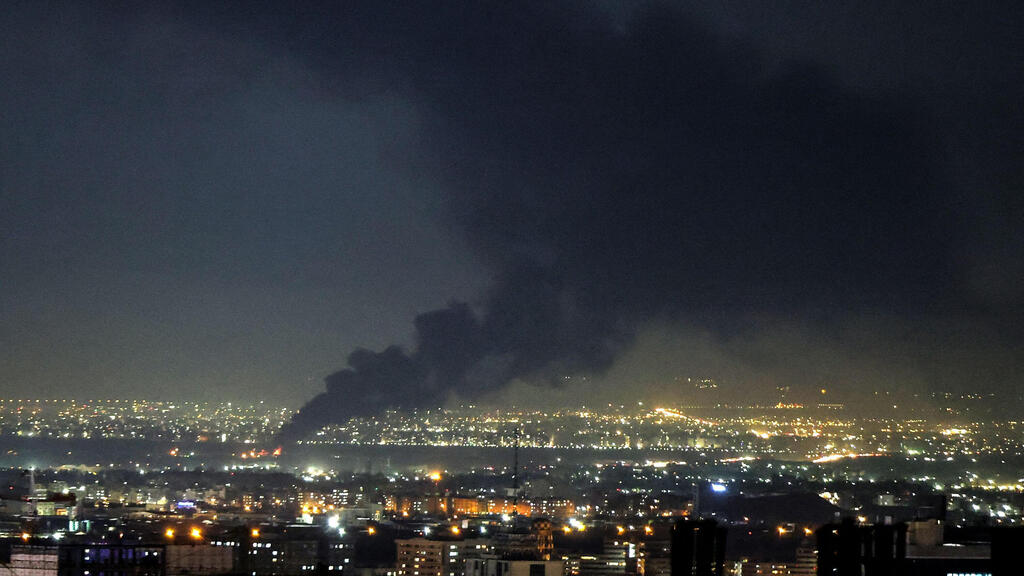
Airstrike in Tehran earlier this year
(Photo: Atta Kenare/AFP)
U.S. intelligence has also identified Iranian discussions about conducting assassination operations in response to future American or Israeli attacks, as well as possible retaliation for previous strikes. Western officials have cautioned that an attack on even a single American diplomat or senior official could set off a much wider confrontation.
Iran has a long history of pursuing assassination operations abroad, including through networks linked to its Revolutionary Guard. However, American officials noted that some previous attempts involved poorly equipped or inexperienced hired attackers who were arrested before carrying out their missions.
In Tehran, the prospect of another confrontation has prompted increasingly explicit warnings from senior figures.
Mahdi Mohammadi, a senior adviser to parliament speaker Mohammad Bagher Ghalibaf, who also serves as Iran's chief negotiator, said Iran was preparing for an unconventional phase of the conflict.
"We are in a surprise phase of the war, and we will not fight a classic war," Mohammadi wrote on social media, warning that Iran would pursue an aggressive, asymmetrical campaign aimed at its adversaries' strengths and vulnerabilities.