

Hamas is seeking to secure a continued role for its police force and civil servants in Gaza’s future governance, even as negotiations advance over a ceasefire deal that would require the group to disarm and hand over control of the territory, according to Palestinian and regional sources.
The issue emerged as a Hamas leadership delegation met Monday in Ankara with Turkish Foreign Minister Hakan Fidan, underscoring the group’s efforts to rally regional backing while navigating mounting international pressure over Gaza’s postwar administration.
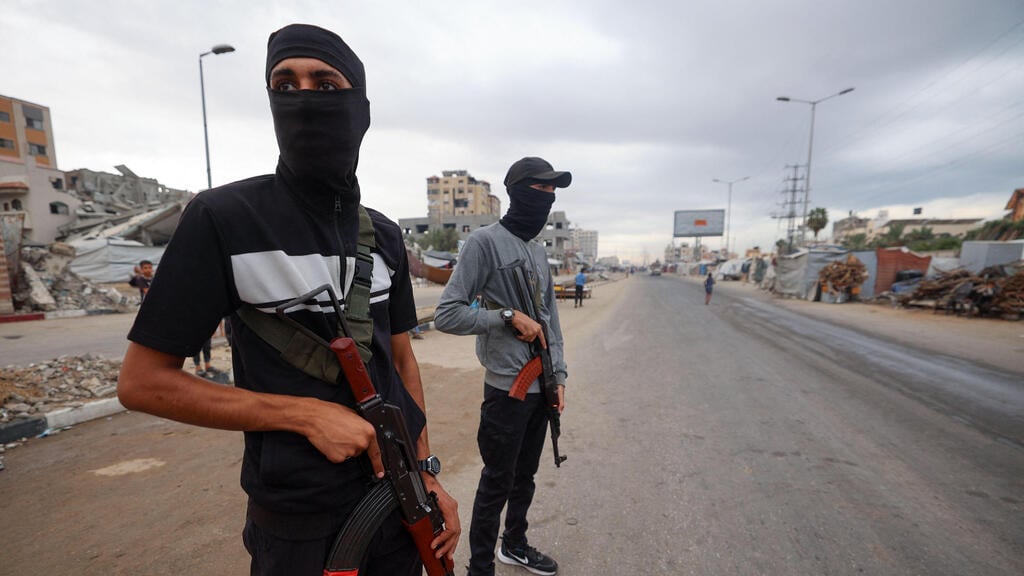
According to sources familiar with the talks, Hamas wants roughly 10,000 police officers and tens of thousands of civil servants currently employed by its Gaza administration to be absorbed into a new U.S.-backed Palestinian governing body, a demand Israel has firmly rejected.
The meeting in Ankara, led by Khalil al-Hayya, Hamas’ senior leader in Gaza, focused on efforts to sustain the ceasefire, implement the next phase of the agreement and address humanitarian needs in the enclave, according to a Hamas statement. The delegation briefed Fidan on what it described as Hamas’ full compliance with the first phase of the deal, including the transfer of all bodies of Israeli captives, while accusing Israel of repeated violations.
Hamas also discussed plans for the second phase of the agreement, which calls for the establishment of a national administrative committee to govern Gaza, the reopening of the Rafah crossing and expanded aid deliveries. Turkish officials reiterated Ankara’s support for Palestinian rights and said Turkey would continue humanitarian and diplomatic efforts in Gaza.
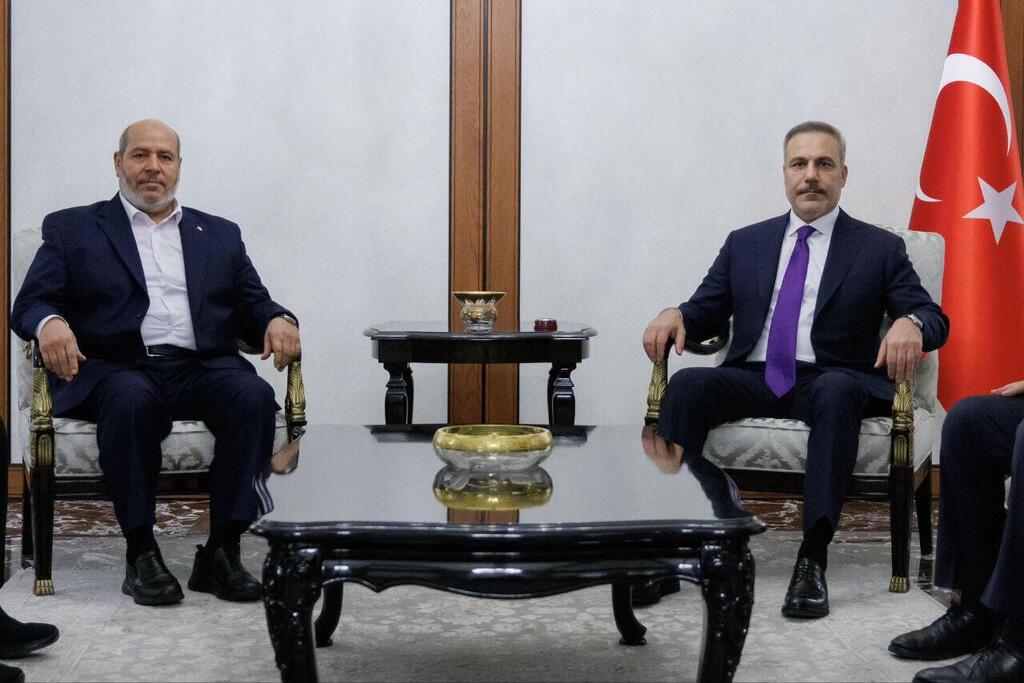
Khalil al-Hayya Chairman of the Hamas Political Bureau, and Turkish official
(Photo: Hamas)
At the same time, significant gaps remain between Hamas, Israel and the United States over Gaza’s future.
Under a 20-point ceasefire framework brokered by U.S. President Donald Trump, governance of Gaza is meant to be transferred to the National Committee for the Administration of Gaza, a technocratic Palestinian body operating under U.S. oversight and explicitly excluding Hamas. The deal also ties further Israeli troop withdrawals to the dismantling of Hamas’ armed capabilities.
In a letter circulated internally and seen by Reuters, Hamas urged more than 40,000 civil servants and security personnel to cooperate with the new administration, while assuring them the movement was working to preserve their jobs. Sources said Hamas expects its police force to continue operating on the ground during the transition, patrolling areas where the group still retains control.
Israeli officials have repeatedly ruled out any role for Hamas-affiliated personnel in Gaza’s future, arguing that allowing the group’s security structures to remain would undermine demilitarization. Prime Minister Benjamin Netanyahu has said the next phase of the deal centers not on reconstruction but on “demilitarization of the Strip and disarming Hamas.”
Washington has also made clear that armed groups designated as terrorist organizations will not be permitted to participate in governance. A document shared by the White House outlines plans for the immediate decommissioning of heavy weapons and the gradual registration and neutralization of personal arms as a new security force takes shape. A U.S. official said Hamas fighters could be offered some form of amnesty under the process.
Hamas, however, says it has yet to receive a concrete disarmament proposal. Two Hamas officials told Reuters the group has agreed in principle to discuss disarmament with mediators and other Palestinian factions but insists that any such move must be linked to a broader political process leading toward Palestinian statehood.
“Hamas has spoken about the possibility of neutralizing arms in the context of a long-term truce,” a Palestinian official familiar with the talks said, adding that the group believes weapons should ultimately fall under the authority of a future Palestinian state.
Turkey, alongside Qatar and Egypt, is seen as one of the key regional actors involved in mediation efforts. Hamas praised Ankara’s humanitarian assistance and diplomatic engagement, while Turkish officials stressed their continued support for Gaza’s civilian population.
Despite the diplomacy, officials on all sides acknowledge that the fate of Hamas’ security forces and weapons remains one of the most contentious obstacles to implementing the ceasefire and shaping Gaza’s postwar future.