

The U.S. State Department on Monday removed Syria from its list of countries designated as state sponsors of terrorism, the U.S. Treasury Department announced. The move was first announced earlier this year, subject to congressional review.
As early as June 2025, U.S. President Donald Trump issued an executive order easing sanctions on Damascus, following counterterrorism measures taken by Syria’s new government under President Ahmad al-Sharaa. Then-U.S. Secretary of State Marco Rubio approved the move and said al-Sharaa had provided assurances that his country would no longer support acts of terrorism in the future.
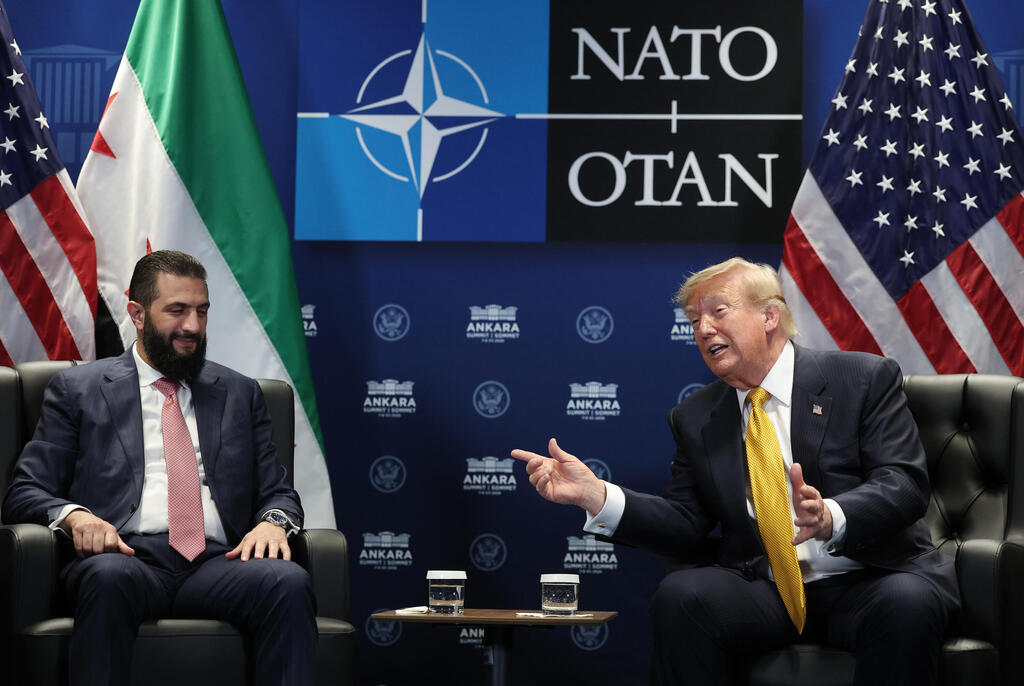
U.S. President Donald Trump with Syrian President Ahmad al-Sharaa at the NATO summit in Turkey
(Photo: Win McNamee/Getty Images)
“Lifting sanctions on Syria will unlock international trade and investment, give Syria a chance to rebuild, and open up a new chapter for the Syrian people,” Rubio said at the time.
Trump and al-Sharaa met last month at the NATO summit in Ankara, where the U.S. president handed his Syrian counterpart a letter saying: “I promised to remove all barriers stopping you from rebuilding your country, and very soon, you will finally be able to do so. We have U.S. companies ready to invest in Syria and help make your country greater and more prosperous than ever before.”
Being designated a state sponsor of terrorism carries restrictions on U.S. foreign assistance, defense exports and certain financial transactions. By signing the executive order, Trump paved the way for an end to Syria’s isolation from the international financial system.
Several Saudi companies are now planning investments worth billions of dollars as part of Riyadh’s efforts to support Damascus’ reconstruction, while other Gulf states have also pledged financial assistance.
Since the Assad regime was overthrown in late 2024, the new government led by al-Sharaa has received widespread international support. In recent months, al-Sharaa has worked consistently to strengthen his standing. He traveled to Europe for meetings with German Chancellor Friedrich Merz and then-British Prime Minister Keir Starmer, and hosted Ukrainian President Volodymyr Zelenskyy and French President Emmanuel Macron in Damascus.