

Signs of a shift in Iran’s position, but the sides remain far apart on several core issues: The Wall Street Journal reported, citing people familiar with the matter, that while Iran’s new proposal to end the war contains hints of certain compromises, it remains far from the U.S. position on reopening the Strait of Hormuz and on the nuclear program.
Even after those limited concessions, U.S. President Donald Trump said he was “not satisfied” with the offer.
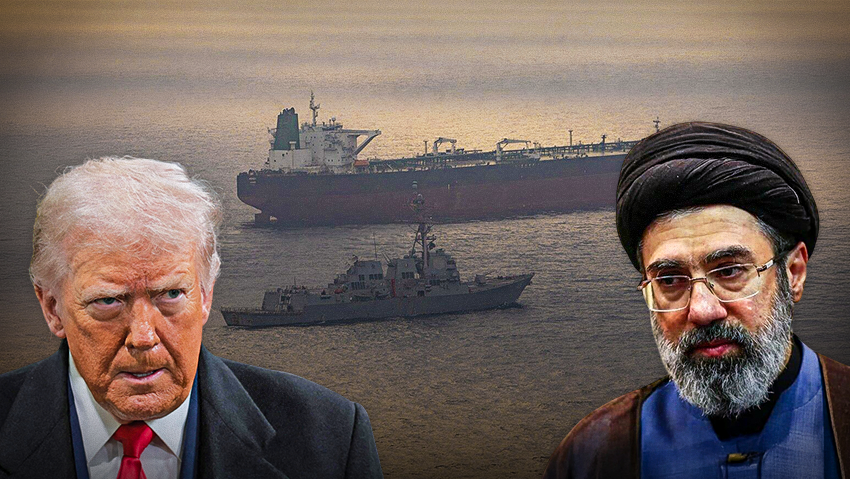
According to the sources, Iran’s proposal goes one step further by offering to discuss Tehran’s conditions for reopening Hormuz if the United States guarantees an end to its attacks and the blockade it has imposed on Iranian ports. Previously, Iran wanted the United States to end the blockade as a precondition for talks and demanded that Washington agree to end the war before the sides discussed management of the strait and the nuclear program.
In addition, under the new proposal, issues related to Iran’s nuclear program could be discussed in exchange for the removal of U.S. sanctions. Iran signaled to mediators that it is willing to hold talks in Pakistan early next week if Washington agrees to the proposal.
US President Donald Trump
(Video: X)


Despite those limited compromises, Trump said he was not satisfied with the proposal delivered by Tehran.
“They’re asking for things that I can’t agree to,” he said.
Trump said U.S. officials spoke with the Iranians on Thursday about the offer and raised the possibility that Tehran may never agree to a negotiated settlement to end the war.
“They’ve made strides, but I’m not sure if they ever get there,” he said.
Washington has made clear that Tehran must allow ships to pass through the Strait of Hormuz without preconditions. An Iranian official, however, said Iran’s mistrust of the United States is deep, and that Tehran “does not understand” why the Americans did not attend the last round of talks in Pakistan.
Trump also laid out the two options before him in his characteristic style.
“There are options,” he said. “Do we want to go and just blast the hell out of them and finish them forever, or do we want to try and make a deal — those are the options.”
He added that his preference, on a “human basis,” is not to resume strikes, and confirmed he was briefed overnight on military options by the commander of U.S. Central Command, Adm. Brad Cooper.
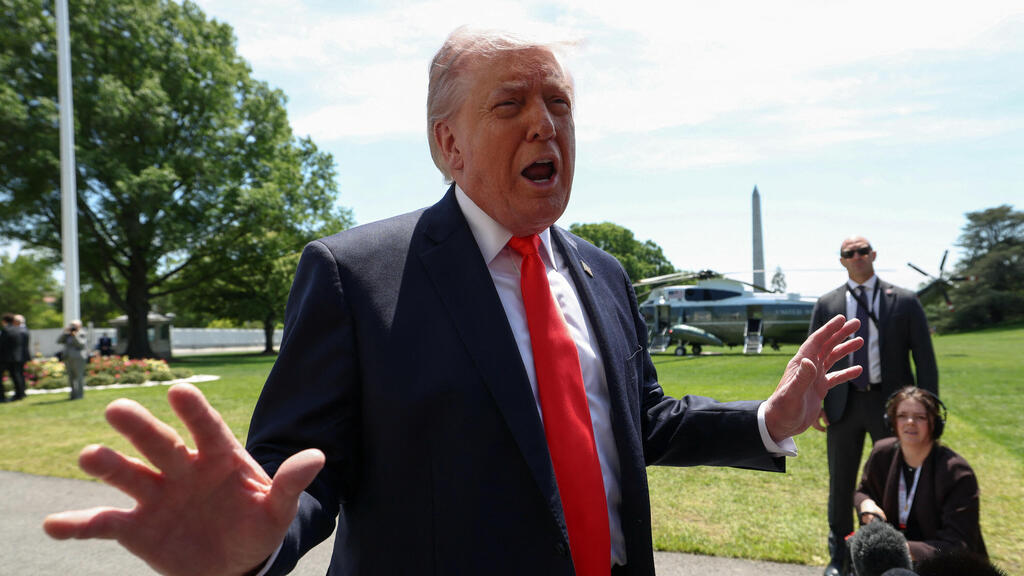
US President Donald Trump
(Photo: Kevin Lamarque/ Reuters)
A senior member of Iran’s parliament, Mehdi Rahimi, denied Trump’s account.
“As long as there is a naval blockade, there will never be negotiations on the nuclear issue,” he said. “The negotiations were not conducted by phone, as Trump claims, but through Pakistan and sometimes through exchanges of messages with Foreign Minister Abbas Araghchi.”
Araghchi, who recently visited Pakistan twice, said that “Tehran is ready for diplomacy if the United States changes its excessive demands, threatening rhetoric and provocative actions.”
According to him, Iranian forces are “fully alert and prepared to decisively defend the Iranian nation against any threat.”
Axios reported that Cooper briefed Trump for about an hour on new operational plans for strikes in Iran. According to an earlier report, U.S. Central Command had prepared a plan for a “short and powerful” wave of strikes against Iran, likely including infrastructure targets, in hopes of breaking the deadlock in the talks and bringing Tehran back to the negotiating table with greater flexibility on the nuclear issue.
CENTCOM has also prepared a plan to take control of part of the Strait of Hormuz in order to reopen it to commercial shipping, an operation that could include ground forces. Another option previously discussed, and that may have come up in the briefing, is a special forces operation to extract about 450 kilograms, or 992 pounds, of uranium enriched to 60% that is held by Iran.
Since declaring a ceasefire on April 7, Trump has not appeared eager to renew the war. After threatening to destroy Iranian civilization, he has repeatedly chosen diplomacy. Still, he is seeking to increase economic pressure on Iran’s regime in order to force it to yield to his central demand: dismantling its nuclear program.