


Amid fears of losing votes within Prime Minister Benjamin Netanyahu's political bloc, Likud campaign manager Zvika Brot met Monday with Moti Leitner, chairman of the independent Haredi Public party, and offered him a government position overseeing a budget of hundreds of millions of shekels in exchange for withdrawing from the October 27 election, sources told ynet.
Leitner's party is not affiliated with Shas or United Torah Judaism (UTJ), the two established ultra-Orthodox parties that have traditionally dominated Haredi representation in the Knesset. Instead, it presents itself as an alternative for working Haredim, those who serve in the military and members of ultra-Orthodox communities who feel unrepresented by the existing political leadership.
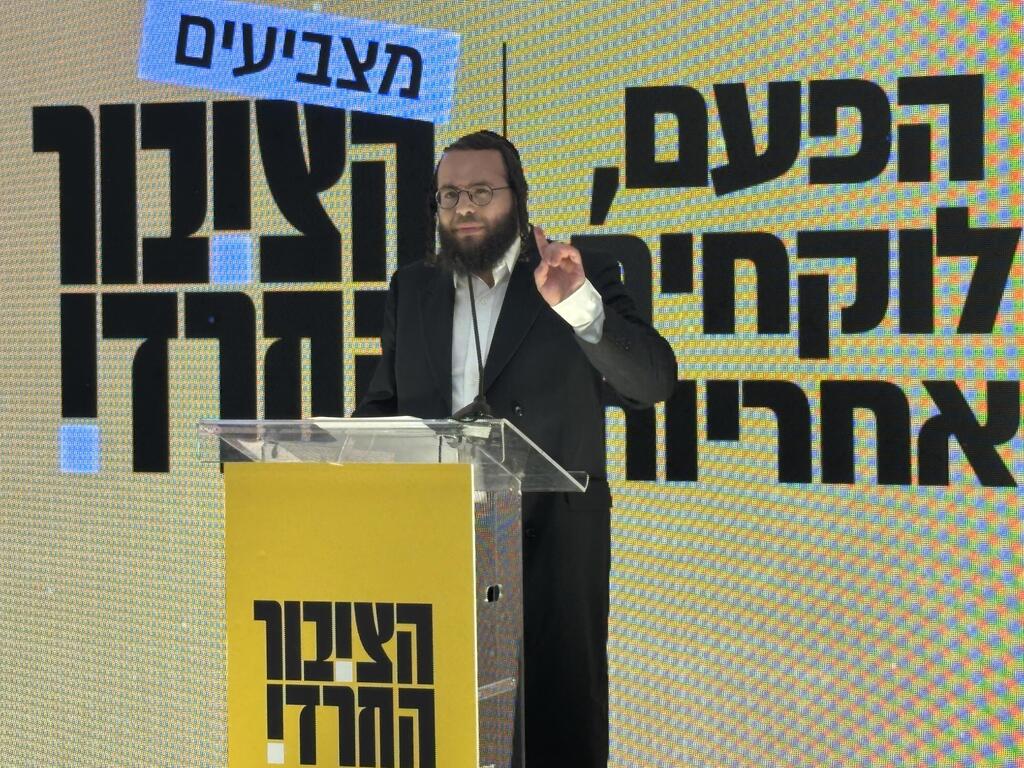
Moti Leitner, chairman of the independent Haredi Public party
(Photo: Gil Yohanan)
The distinction goes beyond party affiliation. Leitner advocates protecting full-time Torah scholars from conscription while requiring Haredi men who are not studying to undertake military, civilian or national service. His party also supports introducing mathematics and English into Haredi schools and increasing ultra-Orthodox participation in the workforce, positions that challenge longstanding policies associated with Shas and UTJ.
The party has also broken with the established Haredi parties by placing women on its Knesset candidate list. Dr. Nechumi Yaffe, a researcher specializing in Haredi society, is ranked third, while Ziva Glantz, an advocate for core curriculum studies in Haredi schools, holds fourth place. Neither Shas nor UTJ includes women among its Knesset candidates.
Despite these differences, Leitner remains politically aligned with the Israeli right and has expressed support for a Netanyahu-led government. His independent candidacy nevertheless poses a potential problem for Likud: If the Haredi Public party attracts votes from Netanyahu's supporters but fails to cross the electoral threshold, those votes will not translate into Knesset seats, potentially weakening the bloc.
The pressure on Leitner to withdraw began last Thursday. On Monday morning, he rejected the proposals presented to him, but Brot and other Likud representatives insisted on meeting him later that evening and arrived for further talks.
During the meeting, Brot offered Leitner a position that would involve managing projects for the ultra-Orthodox community, with responsibility for a budget totaling hundreds of millions of shekels. The appointment would depend on Netanyahu succeeding in forming the next government.
Both Likud and the Haredi Public party deny that the proposed position would be a ministerial or deputy ministerial appointment. Instead, it is believed to involve a government project director role focusing on initiatives for the Haredi community.
The arrangement was developed by Omer Rahamim, campaign manager for Religious Zionism party chairman Bezalel Smotrich, who has been representing him in the negotiations. The proposed responsibilities include establishing state-run Haredi educational institutions and promoting the integration of ultra-Orthodox Israelis into the labor market.
Those proposals overlap with central elements of Leitner's own political platform, particularly his push for educational reform and greater economic participation among Haredim. However, the negotiations also expose the tension between his independent political ambitions and the influence of the established ultra-Orthodox parties within Netanyahu's coalition bloc.
Leitner continues to insist that he intends to remain in the election until the end. Nevertheless, he has left open the possibility of an agreement, making clear that he would not accept promises of a future government position without guarantees that Shas and UTJ would not obstruct the arrangement.
The negotiations reflect Likud's broader efforts to consolidate support before the election and prevent votes from being lost to smaller parties that may fail to enter the Knesset. For Leitner, the decision is whether to continue his independent challenge to the established Haredi leadership or accept a government role that could allow him to pursue some of his policy goals without winning a seat in parliament.