


Despite worsening traffic, rising air pollution and the growing cost of owning a car, Israelis remain unwilling to give up their private vehicles. That is the difficult truth the Transportation Ministry has come to understand late: without efficient, high-frequency public transit, the country will stay stuck on the roads.
A new survey by the Center for Governance and the Economy at the Israel Democracy Institute, led by Daphna Aviram-Nitzan and Eitan Ben Elia, shows that most Israelis avoid buses and trains and prefer private cars. The survey, which examined public attitudes toward reducing car use, found only a modest increase in public transit use and wide gaps between sectors and regions. The bottom line is bleak: most Israelis would like to rely on public transit, but it is not accessible or convenient enough to make that possible.
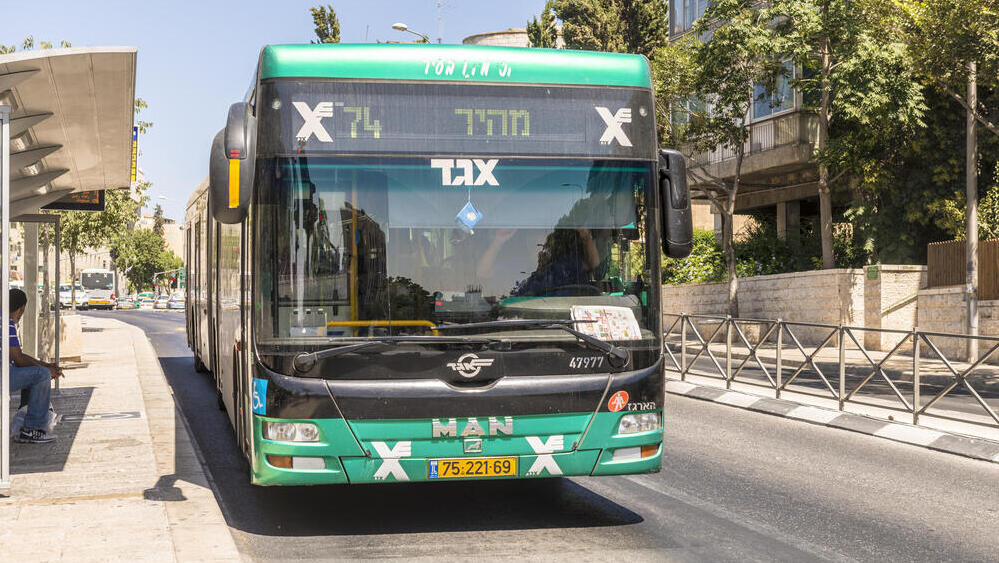
“Riding the bus isn’t a realistic option,” said Udi Peleg, a Tel Aviv resident who commutes daily between the Dan region, Jerusalem and Haifa. “The frequency is very low and I don’t trust buses to arrive on time. The train is sometimes an option, but its frequency is low too, especially to Jerusalem, with only two trains an hour. And without public transit on Shabbat, I can’t give up the car.” According to the survey, many feel the same.
The survey, conducted among more than 1,000 Hebrew- and Arabic-speaking respondents, found that 69 percent of Israelis use private cars, 24 percent rely mostly on public transit and 7 percent use other options. Public transit use is highest among those up to age 24, with 43 percent in that age group forgoing cars. In Tel Aviv and Jerusalem, 33 percent of residents use public transit, compared with 18 to 23 percent in other regions.

Udi Peleg from Tel Aviv
The gaps between Jewish and Arab communities are significant. In the Arab community, 80 percent travel by private car, compared with 66 percent in the Jewish community. Only 13 percent of Arab respondents use public transit, compared with 26 percent of Jewish respondents. Sustainable modes such as bicycles or scooters are used by 9 percent of Tel Aviv residents, 2 percent in Jerusalem, 4 percent in the center, 1 percent in Haifa, 7 percent in the north and 5 percent in the south.
The findings also show that just 35 percent of Israelis are willing to reduce their use of private cars, while 44 percent are not prepared to do so. Despite infrastructure gaps, the Arab community showed greater openness to reducing car use, with 46 percent willing, compared with 33 percent among Jewish respondents. Higher-income households also prefer cars: among those earning more than NIS 20,000 a month, about half are unwilling to cut back.
Age also plays a role. Among those age 25 to 44 – a group likely to face even worse congestion as car use continues to rise – willingness to shift to buses or trains was lowest. By contrast, among those 65 and older, more respondents were willing to switch than opposed.
Still, there is a positive takeaway if the Transportation Ministry and the government act to improve public transit. According to the survey, several factors could persuade Israelis to drive less. The most significant is improved frequency: 50 percent said that would help them reduce car use. Another 41 percent said better access to public transit near their homes and workplaces would make a difference. Only 22 percent said nothing would lead them to drive less.
Here, the gaps between Jewish and Arab communities again appeared. In the Jewish community, the top factor was frequency (51 percent), while in the Arab community, the most important factor was proximity to public transit (47 percent). Among those who already do not rely on private cars, the main motivator was improved accessibility (36 percent), followed by the lack of financial viability in driving (32 percent).

Avia Koner, from Rehovot, commutes to Ra'anana for work every day
The Transportation Ministry hopes that as major transit projects advance in the coming years, behavior will change. These projects include the expansion of Israel Railways lines, the light-rail system and the Dan region metro. Ministry officials expect these to significantly increase public transit ridership.
For now, though, commuters are left waiting. Avia Koner, a resident of Rehovot, said she has convenient access to public transit but still faces a long, exhausting commute to her workplace, making a car the preferable option. “Until recently I lived on Herzl Street in Rehovot, only minutes from the train and many bus stops. But public transit to my job in Ra’anana is infrequent in the morning and almost impossible in the evening,” she said. “I would prefer public transit to save fuel and time and avoid sitting in traffic for 50 minutes. The problem is that I simply don’t have that option.”