

It happened almost simultaneously, in two different countries — turning what initially appeared to be a series of isolated victories into a clear regional trend.
Last week, Colombia confirmed the narrow victory of right-wing candidate Abelardo de la Espriella, who campaigned on a promise of a tougher approach to crime and a sharp break from the leftist presidency of Gustavo Petro. This week, Peru also finalized its election results: Keiko Fujimori, the conservative candidate and daughter of former president Alberto Fujimori, was declared the winner after an exceptionally close race.
Gallery
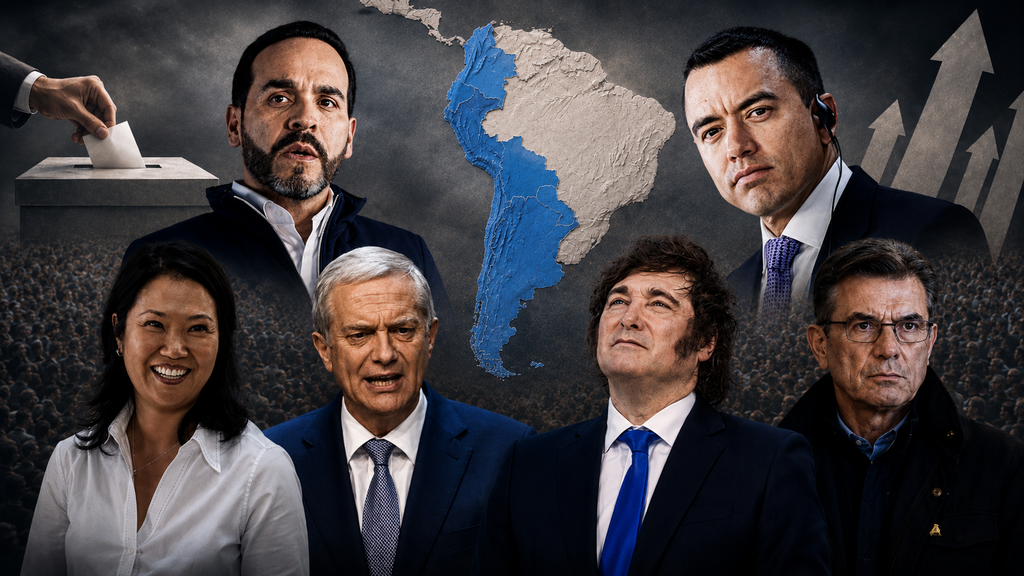
Top left clockwise: Abelardo de la Espriella, Daniel Noboa, Rodrigo Paz, Javier Milei, José Antonio Kast, Keiko Fujimori
(Photo: AP Photo/Evan Vucci, Eitan ABRAMOVICH / AFP, REUTERS/Sara Aliaga, JOAQUIN, REUTERS/Adriano)
Those victories followed right-wing wins in Argentina, Ecuador, Chile and Bolivia, marking another stage in South America's political shift.
Not long ago, the region was talking about a new "Pink Tide" — the return of the left to power across its largest countries. Luiz Inácio Lula da Silva in Brazil, Gabriel Boric in Chile, Gustavo Petro in Colombia, Alberto Fernández in Argentina and Luis Arce in Bolivia created the sense that the pendulum was swinging back to the left after the years of Jair Bolsonaro in Brazil, Mauricio Macri in Argentina and other conservative governments.
But within just a few years, the picture has changed dramatically. More and more voters are turning to conservative, libertarian, right-wing populist or simply anti-establishment candidates, largely drawn by promises to restore public security, crack down on crime, reform struggling economies and confront entrenched political elites.
This is not a uniform rightward shift, nor is the political right the same in every country. The common denominator is a deep sense among voters that their governments are failing to provide security, economic stability or confidence in public institutions.
Here's a look at the political landscape across the continent.
Argentina: The man with the chainsaw who became a regional symbol
The political shift began, at least symbolically, in Argentina.
Javier Milei, a television economist known for his abrasive, almost anarchic style, was elected president in November 2023 after campaigning on a promise to "blow up" the country's political establishment. He defeated Peronist Economy Minister Sergio Massa by a wide margin as Argentina's inflation rate approached 150% and poverty deepened.
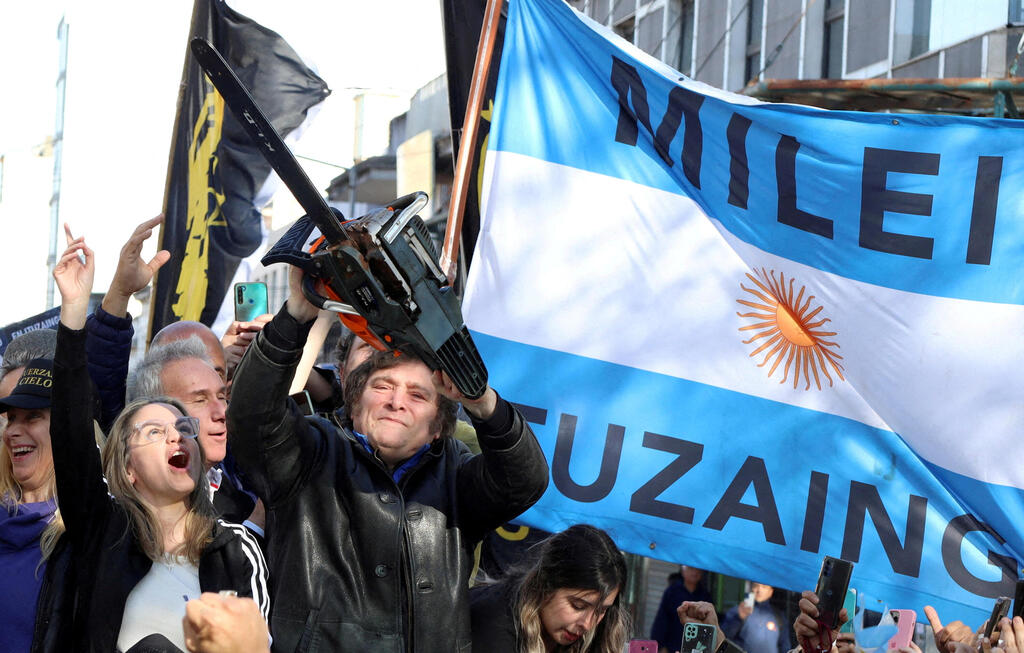
Javier Milei
(Photo: REUTERS /Cristina Sille)
Milei quickly became an icon of South America's new right: anti-socialist, pro-market, pro-American, combative on social media and willing to portray painful spending cuts as necessary treatment for a sick country. His signature prop — a chainsaw symbolizing cuts to government spending — has become an image embraced by other candidates across the region.
For many in South America, Milei demonstrated that candidates can win not despite their radical rhetoric but because of it: speaking the language of public anger, portraying the political elite as the enemy and promising shock therapy.
His victory did not remain an isolated event. In Argentina's 2025 midterm elections, Milei's party posted strong gains, expanding its congressional representation and giving him greater room to pursue his economic agenda. Although he remains far from commanding a comfortable majority, the result was widely seen across the region as evidence that Argentine voters were not yet prepared to punish him at the ballot box for his austerity policies.
At the same time, Argentina also illustrates the limits of the rightward wave. Milei faces declining approval ratings, the high social costs of austerity measures and, in recent months, corruption allegations that have begun to undermine his anti-establishment image.
Chile: A sharp reversal after the Boric era
Chile was once one of the strongest symbols of the young progressive left following Gabriel Boric's election in 2021.
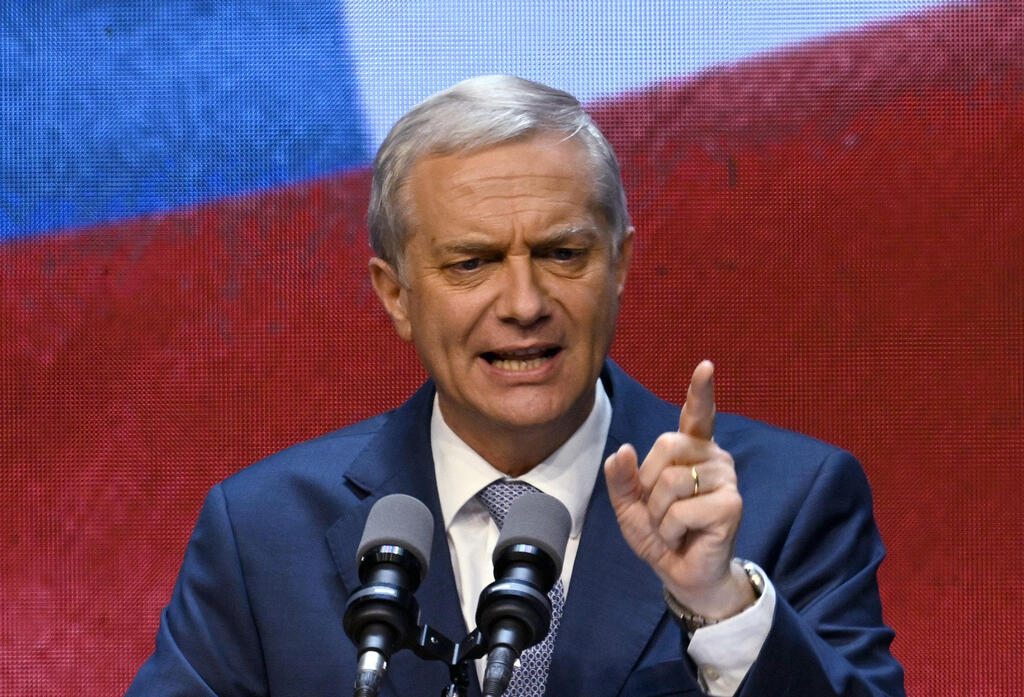
José Antonio Kast
(Photo: Eitan ABRAMOVICH / AFP)
But by the end of 2025, the political pendulum had swung back. Conservative leader José Antonio Kast won the presidential runoff with about 58% of the vote, defeating left-wing candidate Jeannette Jara. It marked Chile's most significant shift to the right since the country's return to democracy in 1990.
Kast's victory was driven by more than economic concerns.
He successfully capitalized on two dominant issues: crime and immigration. In Chile, long considered safer than many of its neighbors, rising crime and growing public anxiety became defining campaign issues. Immigration — particularly from Venezuela — also emerged as a divisive topic, with Kast promising stricter border controls, deportations of undocumented migrants and a stronger security presence.
His victory also reflected the collapse of the constitutional and social reform movement that emerged from Chile's massive 2019 protests.
Boric came to office promising sweeping change, including an expanded welfare state, a new constitution and greater social justice. But the constitutional process became bogged down, public enthusiasm faded and the right successfully framed the election as a choice between ideological experimentation and order, security and economic growth.
Even after his victory, however, Kast faces a divided Congress, underscoring that a strong presidential mandate does not necessarily translate into legislative power.
Colombia: The end of Petro's left-wing experiment
Colombia made history in 2022 by electing its first left-wing president, Gustavo Petro.
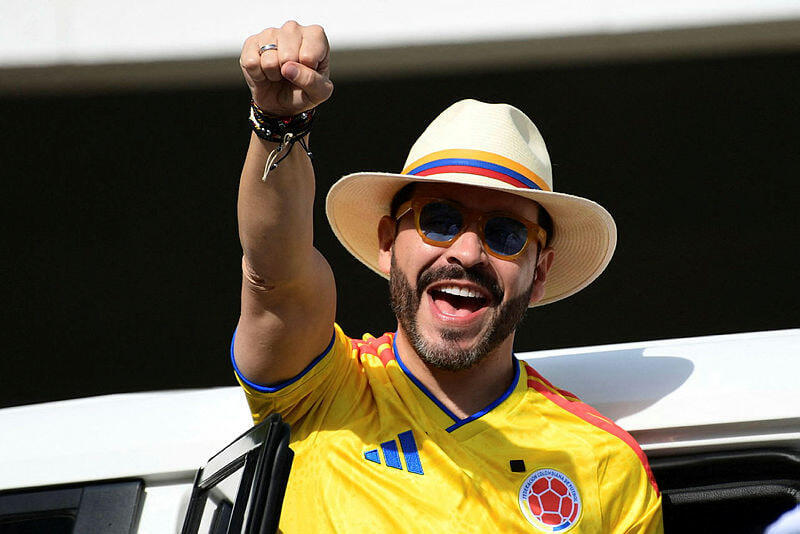
Abelardo de la Espriella
(Photo: Jaime SALDARRIAGA / AFP)
Four years later, voters made a dramatic reversal. Conservative lawyer Abelardo de la Espriella, known as "The Tiger," narrowly defeated left-wing Sen. Iván Cepeda in the presidential runoff, winning about 49.7% of the vote to Cepeda's 48.7%.
His victory was widely interpreted as an endorsement of his promises — echoed by U.S. President Donald Trump — to crack down on crime and strengthen the economy.
De la Espriella is perhaps the clearest example of "Trump-style" conservatism in South America: a wealthy, outspoken candidate who presents himself as an outsider while combining nationalist rhetoric with promises of a hard-line security agenda.
He has pledged to dismantle criminal organizations, strengthen the military, reduce the size of government and reverse parts of Petro's "Total Peace" strategy toward armed groups.
But like Milei and Kast, he is likely to discover that governing is harder than campaigning on public anger. His movement holds only a small presence in Congress, meaning he will need to build alliances to pass legislation.
Colombia's left offered social reforms, peace negotiations and structural change. The right offered what many voters viewed as a more immediate answer to fear: soldiers, police, tougher sentencing and a clear distinction between "law-abiding citizens" and their enemies.
In a country shaped for decades by guerrilla warfare, drug cartels and political violence, that message found a receptive audience.
Peru: Fujimori family stages comeback — by the slimmest of margins
Keiko Fujimori, the daughter of former president Alberto Fujimori, was officially declared the winner of Peru's presidential election this week after an exceptionally close race and three weeks of vote counting. She received 50.135% of the vote, compared with 49.865% for left-wing rival Roberto Sánchez — a margin of about 50,000 votes out of roughly 18 million cast.
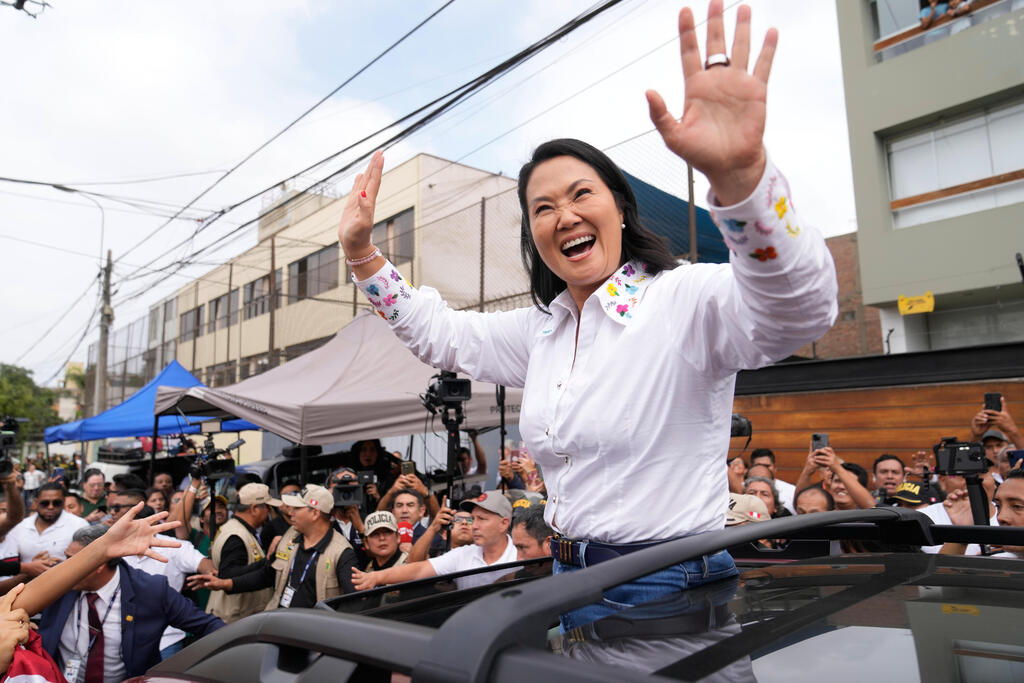
Keiko Fujimori
(Photo: AP Photo/Martin Mejia, File)
Sánchez refused to concede, alleging electoral fraud without providing evidence. He led protests and appealed to the Inter-American Commission on Human Rights, the regional body that monitors human rights across the Americas.
The result is an important victory for Peru's political right, but it also underscores just how deeply divided the country remains. Fujimori campaigned on promises to restore order, crack down on crime and rebuild effective governance after years of political turmoil. Sánchez, meanwhile, drew strong support in rural areas and among voters who felt ignored by Lima's political elite.
Either way, the fact that the election was decided by less than three-tenths of a percentage point suggests Peru's political crisis is unlikely to end with the inauguration. Since 2016, nine presidents have resigned, been impeached or otherwise left office.
Ecuador: Fighting gangs helps propel a young conservative president
In Ecuador, the shift to the right has been driven above all by concerns over public security.
Once considered relatively stable, the country has in recent years become a major battleground for drug cartels and criminal gangs, particularly around its ports and the city of Guayaquil.
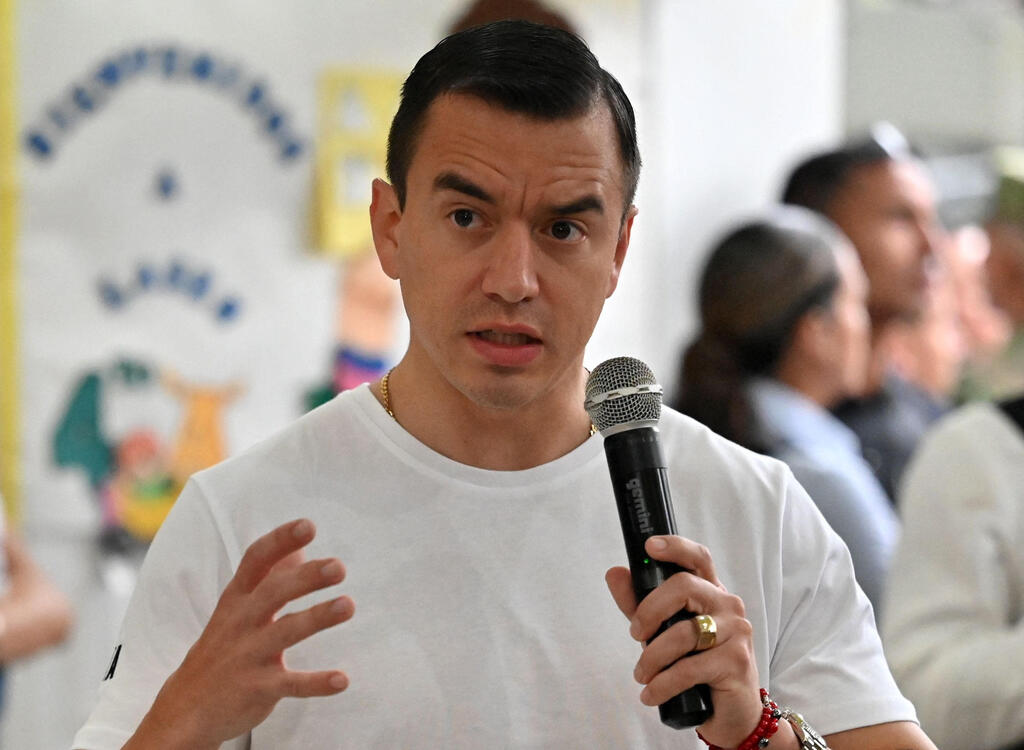
Daniel Noboa
(Photo: MARCOS PIN / AFP)
Daniel Noboa, the 38-year-old heir to a banana-exporting fortune, was first elected in a snap election in 2023 before winning a full presidential term in 2025.
In the April 2025 election, Noboa defeated left-wing candidate Luisa González, an ally of former President Rafael Correa, by 56% to 44%. Ecuador's electoral council declared him the winner, while international observers rejected opposition claims of fraud.
For Noboa, the election amounted to a referendum on his security agenda, which has included declaring states of emergency, deploying the military to the streets, passing tougher criminal laws and portraying gangs as an internal enemy.
Human rights organizations have warned that Ecuador's increasingly hard-line security policies could undermine civil liberties. But so far, Noboa has successfully turned the language of the "war on crime" into one of his greatest political assets.
Bolivia: The end of the Morales era and the MAS movement
Bolivia may offer the clearest symbol of the decline of the region's old left.
For nearly two decades, the country was governed by the Movement for Socialism (MAS), the party identified with Evo Morales, who served as president from 2006 to 2019, and with a socialist, Indigenous-centered political model.
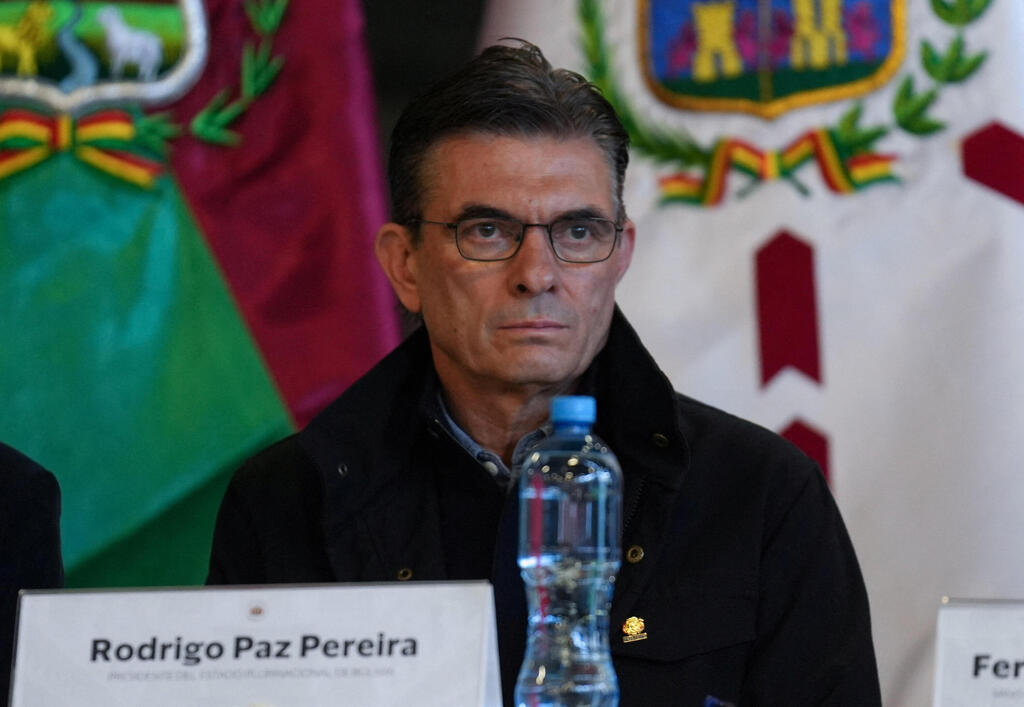
Rodrigo Paz
(Photo: REUTERS/Sara Aliaga)
After Bolivia's disputed 2019 election, Morales resigned and left the country. Conservative Jeanine Áñez then served as interim president before Luis Arce, Morales' political heir and the MAS candidate, won the 2020 election, returning the party to power.
But the alliance between Morales and Arce later collapsed into a bitter power struggle that deepened divisions within MAS and contributed to its defeat in the latest election.
Following a deep economic crisis marked by fuel shortages, inflation and continued infighting between Morales and Arce, Bolivian voters turned away from the party that had dominated politics for nearly two decades.
In 2025, centrist Sen. Rodrigo Paz defeated former conservative President Jorge "Tuto" Quiroga in the runoff with about 54.5% of the vote. Although Paz is not considered part of the far right, the fact that the election was contested between a center-right candidate and a conservative — with no MAS candidate advancing to the runoff — amounted to a political earthquake and effectively ended nearly 20 years of left-wing rule.
For years, MAS had been the engine of social change for many Bolivians, particularly Indigenous communities and low-income voters. But as the economy deteriorated and the party became consumed by internal conflict, even one of Latin America's most enduring political movements lost its electoral resilience.
Paz promised to preserve social programs while opening the economy to greater private-sector investment and closer ties with the United States, offering voters change without the shock of sweeping austerity.
Paraguay: The old right never really left
Not every rightward shift in South America represents a political upheaval.
In Paraguay, the conservative right has remained in power for most of the country's modern history. Santiago Peña, a conservative economist from the long-ruling Colorado Party, won the 2023 presidential election, extending his party's dominance.
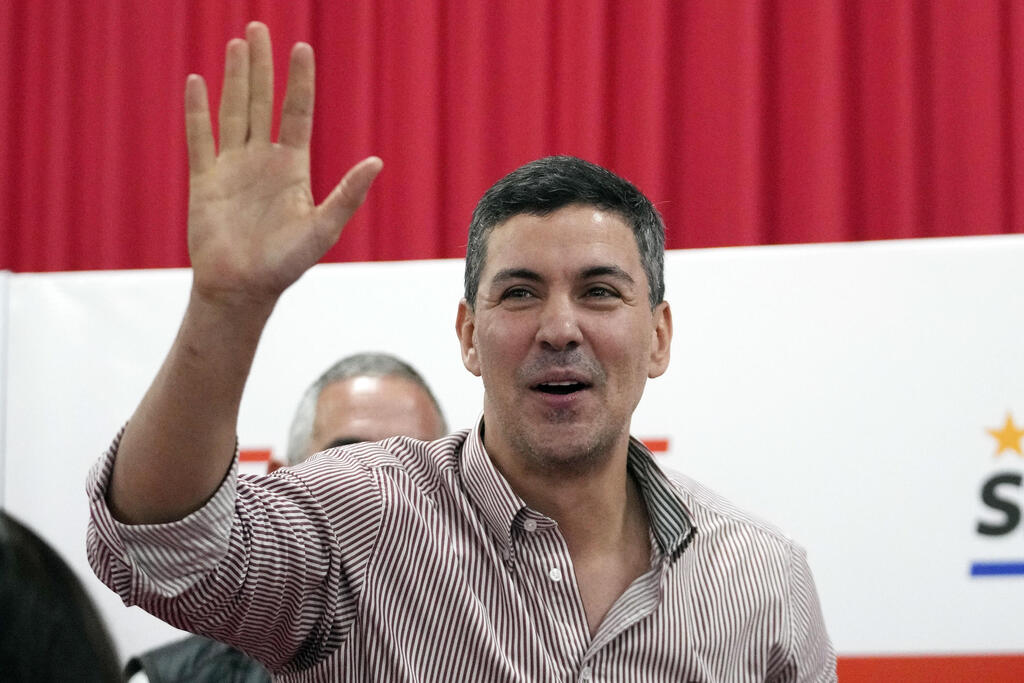
Santiago Peña
(Photo: AP)
Unlike Javier Milei in Argentina or José Antonio Kast in Chile, Peña did not campaign as an anti-establishment insurgent. Instead, he represents continuity — a conservative, pro-business political tradition that has remained largely intact.
Still, in the broader regional context, Paraguay forms part of the bloc of right-leaning governments that has reinforced South America's broader political shift. Unlike countries where left-wing governments lost power after one or two terms, Paraguay's conservatives never needed to stage a comeback — they simply managed to stay in power.
Brazil: The biggest prize still up for grabs
Brazil remains the biggest test of South America's rightward shift.
Luiz Inácio Lula da Silva, the standard-bearer of the Latin American left, returned to office in 2022 after narrowly defeating Jair Bolsonaro. But ahead of October's presidential election, Brazil's right is attempting to unite behind Flávio Bolsonaro, the former president's son, after Jair Bolsonaro was sentenced to 27 years in prison for attempting a coup.
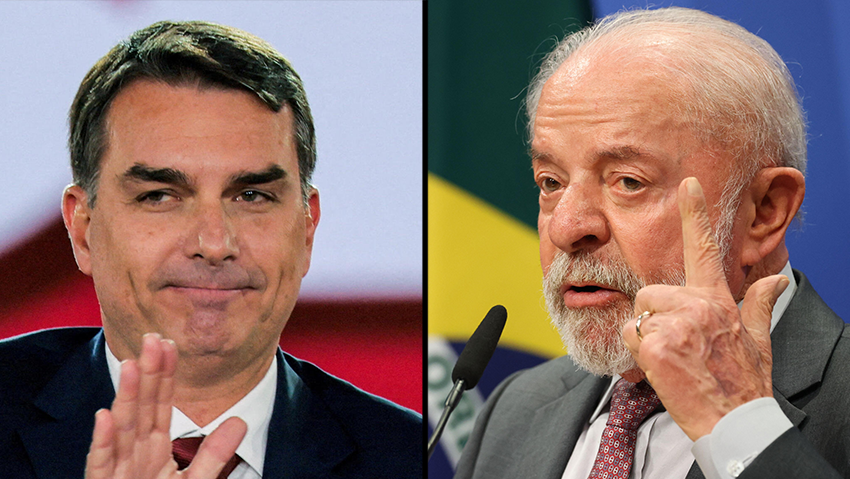
Flávio Bolsonaro, Luiz Inácio Lula da Silva
(Photo: Odd ANDERSEN / AFP, REUTERS/Daniel Cole/File Photo)
For now, the polls still favor Lula. A survey by AtlasIntel published this week showed him leading Flávio Bolsonaro in both the first round and a potential runoff. Other polls released in recent weeks have shown a similar advantage.
Even so, Brazil reflects many of the broader regional trends. Right-wing candidates, including Flávio Bolsonaro, have increasingly embraced the "Bukele model," drawing inspiration from El Salvador President Nayib Bukele, who turned an aggressive crackdown on gangs into a powerful political brand.

Nayib Bukele
(Photo: Marvin RECINOS / AF)
In Brazil, candidates are proposing to classify organized crime groups as terrorist organizations, build more prisons and impose harsher criminal penalties. The message is aimed at attracting independent voters frustrated by rising crime, even though Brazil's security challenges are far more complex than those facing El Salvador.
If Lula wins, Brazil would prevent South America from becoming an almost entirely right-leaning political map. If he loses, it would mark a far more consequential turning point than the victories in Chile or Bolivia. South America's largest country and biggest economy would return to "Bolsonarismo" at a time when many of its neighbors have already shifted to the right.
Uruguay: The exception that shows the pendulum still swings
Amid talk of a regional shift to the right, Uruguay offers an important reminder that South America is not moving as a single political bloc.
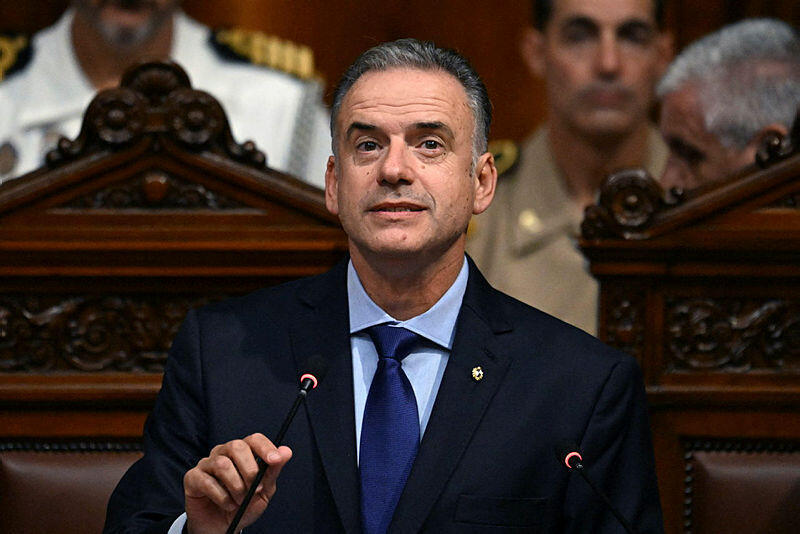
Yamandú Orsi
(Photo: AFP)
In the 2024 election, center-left candidate Yamandú Orsi of the Broad Front coalition defeated center-right candidate Álvaro Delgado, returning the coalition that governed Uruguay for 15 years until 2019 to power.
Uruguay's result does not invalidate the broader trend — it refines it.
Voters across South America have not necessarily become ideologically conservative. More often, they are punishing whoever happens to be in power. Where conservatives governed, as in Uruguay, the left can return. Where the left governed, as in Chile, Colombia and Bolivia, the right has benefited from a backlash.
The story is not simply that South America is moving to the right. It is that voters are increasingly losing patience with governments that fail to provide security, economic growth and confidence in public institutions.
Venezuela: The example every right-wing candidate invokes
Venezuela is not a typical example of the political right winning elections. Rather, it has become the cautionary tale on which much of the region's right has built its message.
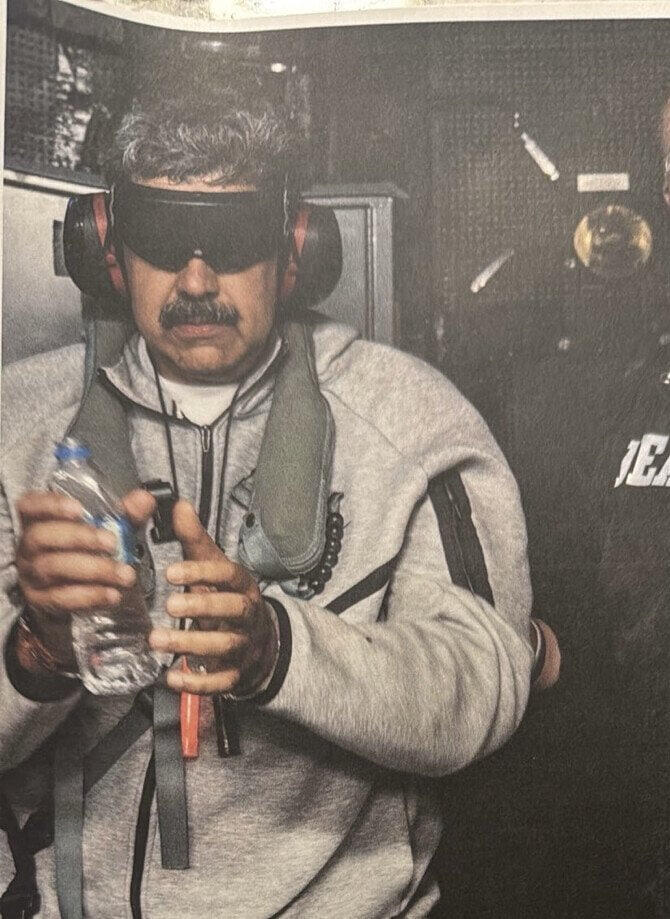
Nicolás Maduro captured by US forces
The country's 2024 presidential election triggered an international crisis. Venezuela's electoral authority declared Nicolás Maduro the winner, but the opposition claimed victory for Edmundo González, and the United States recognized González as the legitimate winner. Maduro's victory was announced despite opinion polls indicating the opposition had prevailed.
Since then, Maduro has been captured by the U.S. military and is now imprisoned in New York. He has been replaced by Vice President Delcy Rodríguez.
For conservative candidates across South America, Venezuela has become far more than a neighboring country in crisis. Milei in Argentina, Kast in Chile, Fujimori in Peru and de la Espriella in Colombia have all, in different ways, warned against the risk of "Venezuelization" — economic collapse, mass migration, rising crime, political repression and a socialist state that has lost control.
The wave offers no guarantee of stability
South America has experienced dramatic political swings before, from left to right and back again.
The same voters who propelled conservative candidates to power out of frustration could just as quickly turn against them if promises of greater security and economic improvement go unfulfilled.
Milei is already experiencing growing political pains. Kast may encounter resistance from a divided Congress. Paz will inherit a deep economic crisis. De la Espriella would take office with a weak legislative coalition. Fujimori could begin her presidency with nearly half the country convinced the election was stolen from them.
In any case, South America's political right is enjoying its strongest moment in years.
But this is not necessarily a deep ideological revolution. In many countries, it is a protest vote — against crime, inflation, corruption and left-wing governments that failed to meet expectations, or simply against whoever happened to be in power at the wrong moment.