

There is a ceasefire in Iran, but a deal still appears far off, and it is unclear whether the talks expected this weekend in Pakistan will move the sides any closer.
In Lebanon, Israeli strikes have been reduced under instructions from U.S. President Donald Trump, but Hezbollah rocket barrages continue. As Islamabad waits for the sides to arrive, here is a closer look at what is expected in the Pakistani capital.
Gallery
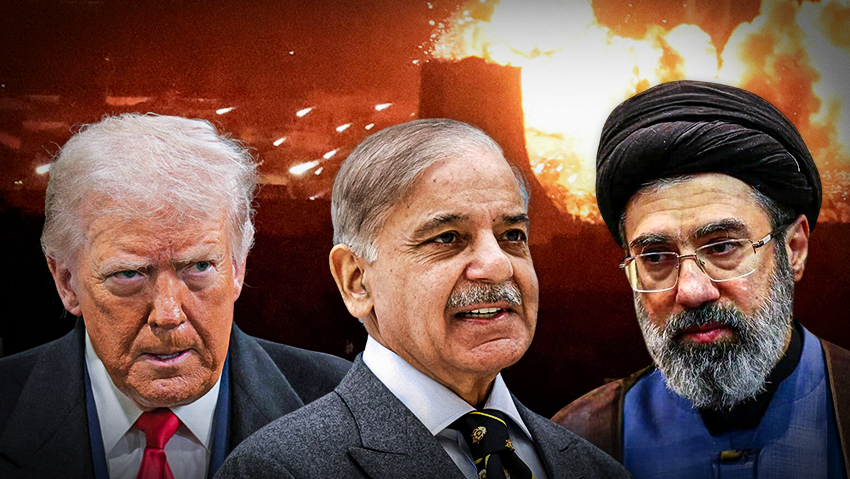
Donald Trump,Shehbaz Sharif, Mojtaba Khamenei
(Photo: Anna Moneymaker / AFP, ATTA KENARE / AFP, Sputnik/Alexander Kazakov/Pool via REUTERS)
Who is taking part in the talks?
Vice President JD Vance will lead the U.S. delegation, alongside Trump’s son-in-law Jared Kushner and the president’s special envoy Steve Witkoff. Vance is not considered one of the strongest supporters of the war within Trump’s inner circle. He has repeatedly voiced skepticism about military interventions and has spoken in the past against sending forces into a war with no time limit.
Iran has not officially announced its delegation, but local media reported that Parliament Speaker Mohammad Bagher Ghalibaf will lead it. Foreign Minister Abbas Araghchi is also expected to attend, along with senior officials from the Revolutionary Guards.
Delegations from Gulf states, including Qatar and Saudi Arabia, which absorbed hundreds of Iranian missiles and drones during the war, are also expected to arrive and may take part in side meetings.
What is on the agenda?
Trump referred to a “10-point proposal from Iran,” which he described as a “basis for negotiations.” But that 10-point list presented by Iran includes demands that the Americans strongly oppose.
Among them are recognition of Iran’s control over the Strait of Hormuz, compensation for war damage, an arrangement regarding uranium enrichment, an end to the war against Iran and its proxies, and a U.S. withdrawal from all its bases in the Gulf region.
At the same time, CNN reported that Trump and his team have a proposal of their own, one that includes 15 points.
What might the talks achieve?
Despite the uncertainty, sources familiar with the matter told CNN that U.S. officials prepared quickly over the past 24 hours for the talks. Despite the disputes, Trump told NBC that he is “very optimistic” a peace deal will be reached, and said private conversations suggest Iran’s leaders want peace.
Critical questions remain over the ceasefire and the basis for the talks. While Iran and Pakistan have stated that the ceasefire also includes Lebanon, the United States and Israel insist Lebanon is a separate issue.
Even after Prime Minister Benjamin Netanyahu said he is aiming for peace talks with Lebanon, he made clear those talks would be held under fire. Iranian President Masoud Pezeshkian said any peace negotiations would be “meaningless” if bombings continue in Lebanon.
What is Trump saying?
In contrast to his optimistic comments to NBC, Trump sounded very different in a series of posts on his Truth Social platform, returning to threats against Iran.
“The oil will start flowing again very soon. You’ll see that the oil will start flowing, with or without Iran’s help. For me, it makes no difference either way,” he wrote.
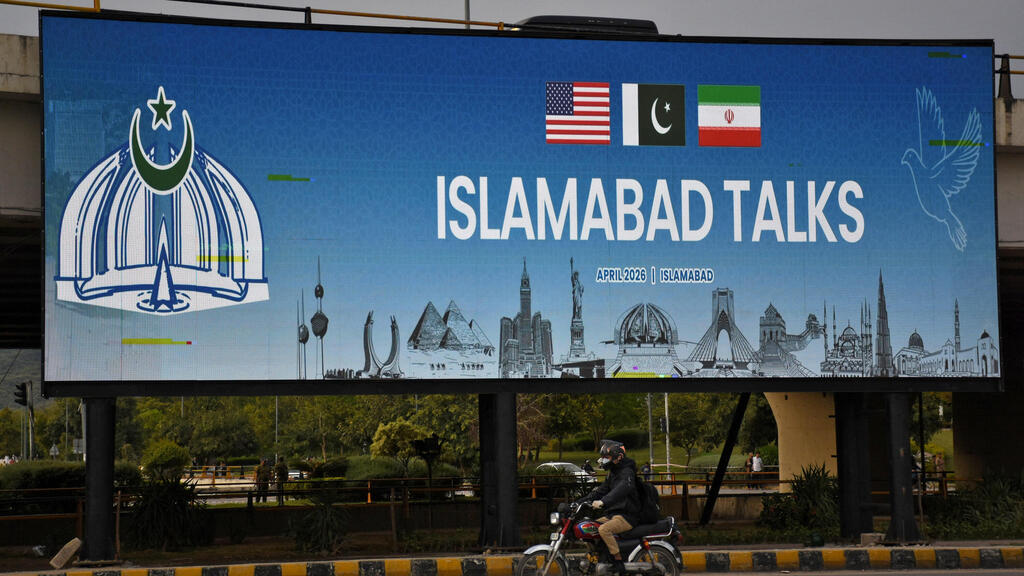
Pakistan
(Photo: Waseem Khan/Reuters)
Hours later, he published another post: “Iran is doing a very poor job, some would say disgraceful, in allowing oil to move through the Strait of Hormuz. That is not the agreement we have!”
He also attacked The Wall Street Journal, which reported that he had declared victory over Iran too early. “In fact, it is a victory, and there is nothing ‘premature’ about it!” he wrote.
Later, in an interview with the New York Post, Trump issued another threat, saying U.S. ships in the Middle East are rearming in case the negotiations fail.
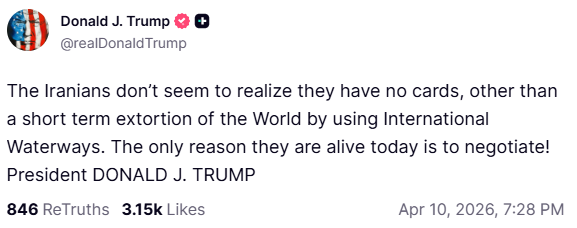
In another post, Trump said Iran was relying on what he called “a short term extortion of the World by using International Waterways,” an apparent reference to the Strait of Hormuz. He added: “The Iranians don’t seem to realize they have no cards ... The only reason they are alive today is to negotiate!”
What is happening in Islamabad?
A lockdown has been imposed on the streets of Islamabad as preparations for the negotiations intensify.
Pakistan is widely seen as one of the biggest winners of the war, both because, unlike nearly all of Iran’s neighbors, it was not hit by missiles and because of the decision to host the talks in its capital. Pakistani officials are insisting that the high-stakes talks will go ahead as planned over the weekend.
The Guardian reported that ahead of the first round, army troops and paramilitary Rangers were deployed and security was heightened across the capital. A holiday was declared on Thursday and Friday, and the streets were unusually empty.
Pakistani officials have remained largely silent about the arrangements for the talks because of security and diplomatic sensitivities, but said preparations are moving ahead at full speed.
“Our priority is for the talks to proceed smoothly,” one official said. “We do not want to be seen as spoilers. Our role is to facilitate and mediate. We will leave it to Iran and the United States to publicize any developments, if they choose.”
Still, on Friday evening, Pakistani Prime Minister Shehbaz Sharif said the moment was “now or never” when it came to the possibility of reaching a permanent ceasefire.
Where will the talks be held?
Because of the high security risks, Pakistani officials confirmed that three to four possible venues are being considered for the critical meeting between Iran and the United States.
The most senior officials are expected to stay at the luxury Serena Hotel in Islamabad, which may also host the talks. The hotel has been cleared of guests, and roads within a three-kilometer radius have been closed to traffic and placed under army control.
Other possible venues under consideration include the prime minister’s office, the Islamabad Convention Center or a secure military facility.