

Iran succeeded in improving its performance and penetrating Israeli air defenses during the recent "12-Day War" by adjusting its missile launch tactics and identifying weaknesses through "trial and error," The Wall Street Journal reported Wednesday, citing missile defense analysts who reviewed missile debris and open-source data.
According to experts, Tehran began launching more advanced, longer-range missiles from a "wider range of locations deep inside Iran." The regime managed to better time their attacks and spread out targets across Israel—despite the fact that most of the missiles and drones were intercepted. "As the war went on, Iran fired fewer missiles, but its success rate rose," the report noted, based on data analyzed by think tanks based in Israel and Washington.
Gallery
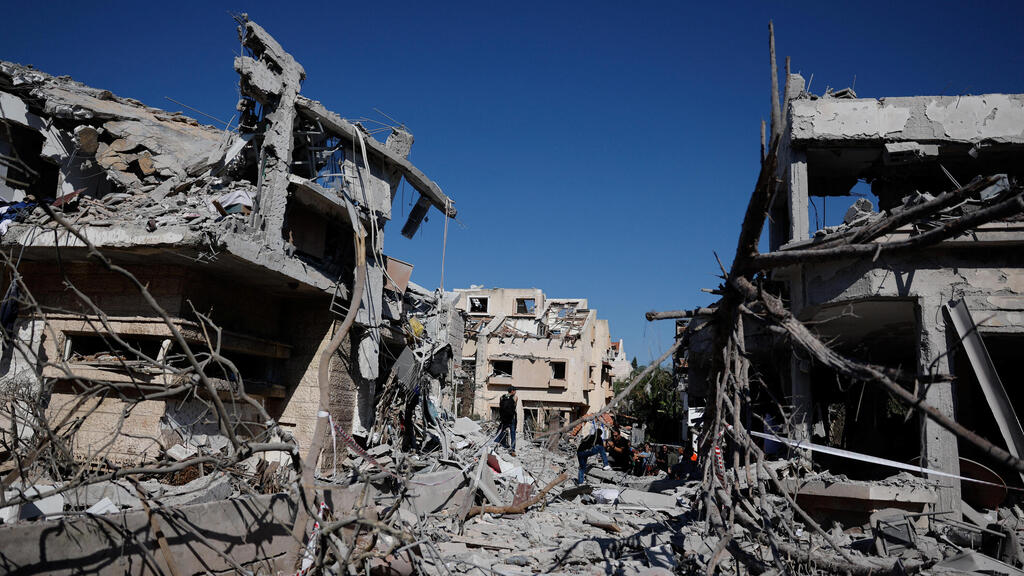
Damage caused by an Iranian missile in Rishon LeTzion during the 12-day war
(Photo: Ammar Awad/ Reuters)
In the first six days of the war, only 8% of Iranian missiles penetrated Israeli air defenses. But by the second half of the conflict, that rate had doubled to 16%, according to the Washington-based Jewish Institute for National Security of America (JINSA).
Mora Deitch, head of data analysis at Tel Aviv University's Institute for National Security Studies (INSS), clarified that these figures exclude failed launches and interceptions outside Israeli airspace. They also do not distinguish between failed interceptions and those Israel intentionally allowed to land in open areas.
JINSA’s analysis identified June 22—two days before the cease-fire—as Iran’s most successful strike, when 10 of 27 missiles launched struck targets in Israel. “The data suggests Iran successfully adapted 'how, when, and what' to fire,” said Ari Cicurel, JINSA’s associate director of foreign policy.
Get the Ynetnews app on your smartphone: Google Play: https://bit.ly/4eJ37pE | Apple App Store: https://bit.ly/3ZL7iNv
The WSJ emphasized that Israel’s air defense systems, including the Iron Dome—developed jointly with the U.S.—are among the most advanced in the world, but even the best systems aren’t impenetrable. “Any missile system, even a sophisticated one like Israel's, will leak eventually,” said Raphael Cohen, a senior political scientist at the RAND Corporation, which serves as a Pentagon think tank.
While the IDF reported interception success rates of 90%–95% during the war, post-ceasefire figures revealed an overall rate of 86%.
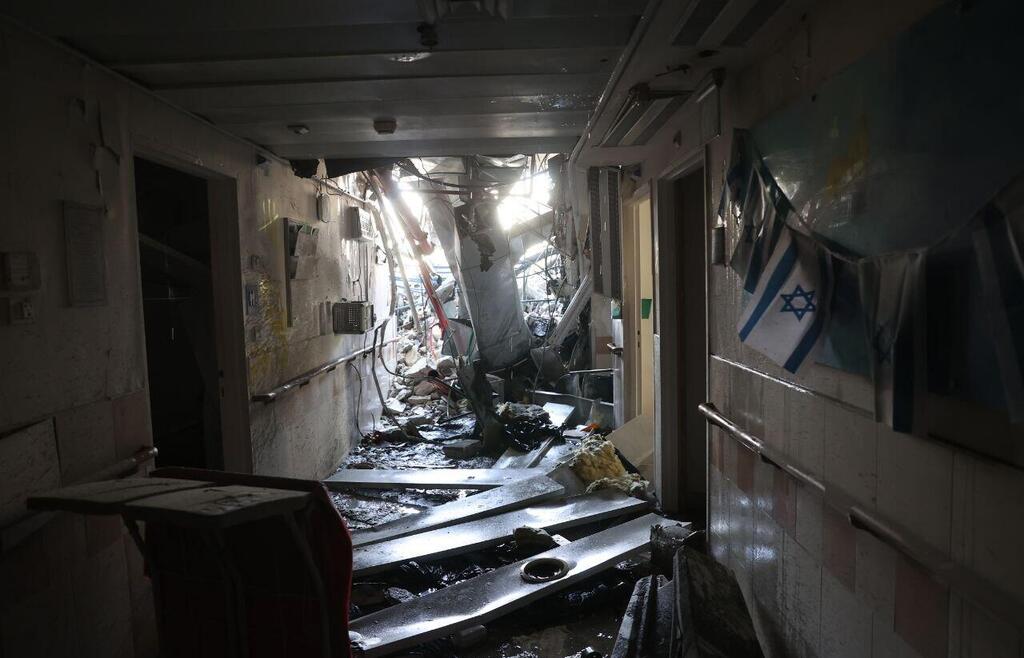
Damage caused at Soroka Hospital after an Iranian missile attack
(Photo: Alex Kolomoisky)
Israel’s successful targeting of Iranian missile launchers prevented Iran from using older, less accurate, short-range missiles. But this also prompted Tehran to deploy its more advanced, longer-range weapons earlier in the campaign.
Photos of missile debris indicate that Iran used its “Fattah-1” hypersonic missile in at least two Israeli locations. This missile descends sharply from outside the atmosphere at 10 times the speed of sound and carries a warhead that splits mid-flight—making it extremely difficult to intercept. Only Israel’s most sophisticated systems, like Arrow 3 and David’s Sling, can adjust mid-air to track such threats.
Iran also shifted tactics—from large nighttime barrages of 30 or more missiles to smaller daytime salvos from a wide range of launch sites. It altered firing patterns, targeted distant cities, and varied the intervals between attacks. Analysts noted that, as the war dragged on, Israel, facing fewer available interceptors and high operational costs, began prioritizing the interception of only the most threatening missiles.