


The standoff involving extremist settlers in the West Bank village of Qusra has become an unusual point of friction between Jerusalem and Washington, with Israeli officials familiar with the matter saying the U.S. administration is pressing Prime Minister Benjamin Netanyahu to publicly condemn the violence.
Netanyahu has so far refrained from doing so. Defense Minister Israel Katz issued a condemnation instead, and officials say his remarks came only after American pressure reached senior levels of the Israeli government. Very senior White House figures are also involved behind the scenes, according to those familiar with the contacts. “The Americans want to hear a public condemnation from Bibi, and they haven’t gotten it so far,” one Israeli official said.
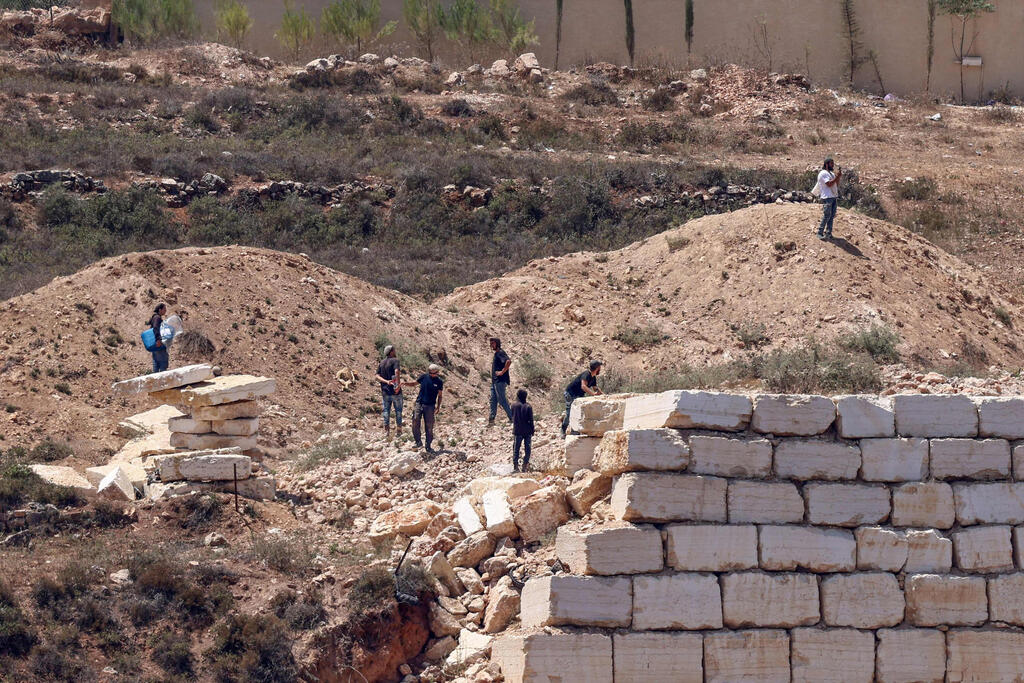
Footage from the siege in Qusra


The crisis began after settlers surrounded homes belonging to Palestinian families in Qusra, blocked access to them and disrupted water and electricity supplies. One of the homes belongs to a family with U.S. citizenship, making the affair especially sensitive for Washington.
U.S. Ambassador to Israel Mike Huckabee, one of the administration’s most outspoken pro-Israel figures, issued an unusually harsh condemnation Thursday, calling the acts “terror” and those responsible “Israeli terrorists.” He said the U.S. Embassy had intervened with Israeli authorities and demanded that the incident be addressed.
According to Israeli officials, Huckabee’s remarks were not an isolated reaction. Washington has been pressing Netanyahu directly to issue an unequivocal public condemnation, while the absence of such a statement has drawn attention both in Israel and among U.S. officials.
Katz, speaking at a ceremony marking the establishment of the settlement of Ganim, said: “Violent disturbances, I say unequivocally, we are against this.” He added that only the authorized Israeli bodies should exercise force and warned that such violence causes “very serious damage among our friends.”
Israeli officials believe Netanyahu is wary of personally confronting extremist settlers because of the political risk of a clash with the right and with coalition partners, and that this is why the message was instead delivered through Katz.
Washington, however, no longer views Qusra as a purely local incident. Israeli officials say the administration regards the involvement of an American citizen and Israel’s handling of the affair with particular severity. According to them, some in Washington see the response as ranging from negligence and gross mishandling to possible deliberate inaction.
The broader concern is that continued settler violence could ignite a large-scale uprising in the West Bank and complicate U.S. efforts to advance arrangements in Gaza, Lebanon and Syria.
An Israeli official familiar with the matter said the issue is especially damaging because it angers Israel’s closest allies. “They don’t accept that it can’t be enforced. Deal with it,” the official said, adding that the sensitivity increases significantly when U.S. citizens are affected.
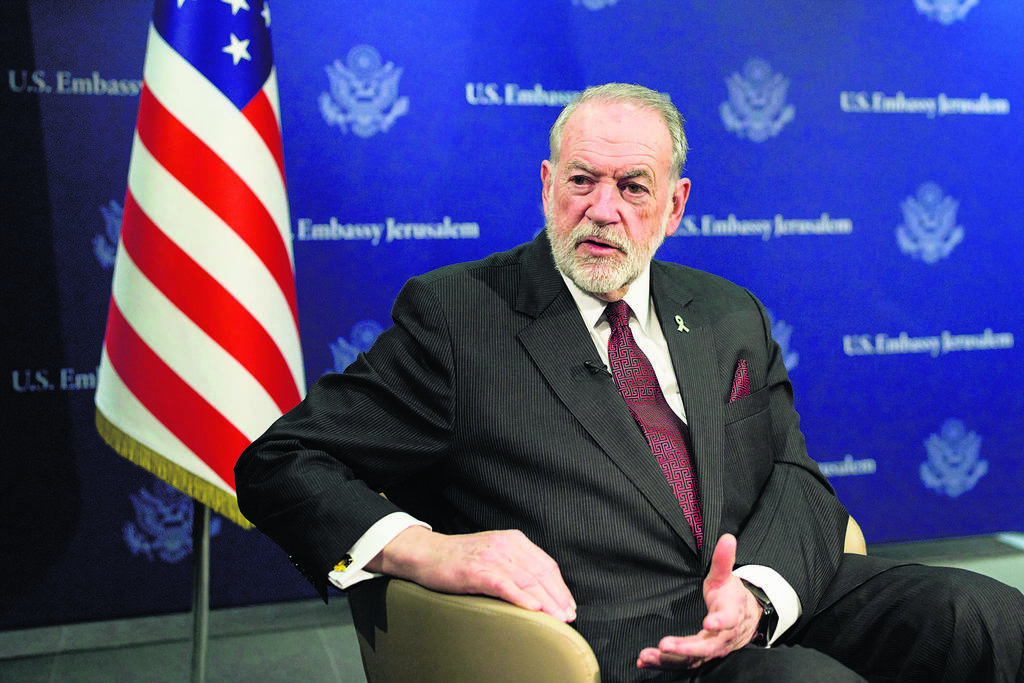
Mike Huckabee
(Photo: Ohad Zwigenberg/AP)
‘Not just criticism from the American left’
Israeli officials say the damage extends beyond relations with the current administration. One senior Israeli official warned that violence by settlers can no longer be dismissed as a concern limited to the American left, pointing to declining support for Israel among younger Republicans and growing unease even in traditionally sympathetic constituencies.
According to Pew data cited by the officials, 57% of Republicans aged 18 to 49 held an unfavorable view of Israel in April 2026, up from 50% a year earlier. Among Republicans aged 18 to 29, 64% expressed an unfavorable view.
Other figures published in July showed a sharp generational divide: only 42% of Republicans aged 18 to 29 viewed Israel favorably, compared with 83% of Republicans aged 65 and older. Among the younger group, 40% held a favorable view of the Palestinians.
The concern also extends to evangelical Christians, long a central pillar of U.S. support for Israel. “The ethos is compassion for the weaker party,” one Israeli official said. “Israel is perceived as a country that allows this, doesn’t prosecute them and gives them free passage.”
Another senior Israeli official said weak enforcement in settler violence cases also undermines Israel’s longstanding argument that outside intervention is unnecessary because Israeli institutions investigate themselves. If enforcement is not effective or transparent, the official said, that claim becomes harder to defend in the U.S. and international arenas.
The criticism is not limited to whether investigations are opened, but also to how they are perceived from abroad. Officials familiar with the matter say there is often insufficient transparency about whether suspects are investigated, what conclusions are reached and what action follows.
Palestinian residents, meanwhile, have described cases in which soldiers are present but do not intervene against rioters, saying they are not acting as police and that complaints should be directed to law enforcement.
That argument is especially sensitive because in areas under Israeli security responsibility, Israel is expected to maintain order and protect the Palestinian population. Since Palestinian police cannot enforce the law against Israeli citizens, responsibility remains with Israeli authorities.
Oded Revivi, the former mayor of Efrat, defended Huckabee and rejected attempts to portray his criticism as hostile to the settlement movement. “Don’t try to label Ambassador Huckabee, one of the greatest friends of the settlement enterprise in the United States, as a leftist,” Revivi said. “If a true friend like Huckabee has to bang on the table, all of us need to stop and ask how we lost our way and fix it immediately.”
Danny Ayalon, a former Israeli ambassador to the United States, also warned that Huckabee’s public intervention signals a deeper erosion of support among groups that once backed Israel almost automatically.
For Washington, the central question is now whether Israel can demonstrate that it enforces the law equally. Israeli officials say the Americans are not satisfied with statements alone. They want arrests, investigations, indictments and steps ensuring that suspects in violent attacks are not simply allowed to remain free.
The Qusra affair was further aggravated by a dispute over the possibility of removing Palestinian families from their homes. Officials familiar with the matter said American pressure was one of the reasons that move did not go ahead.
The message from Washington, they said, was clear: the victims cannot be the ones forced to pay the price for the violence.
For now, Huckabee remains the most senior American figure to speak publicly about the affair. But officials in Jerusalem believe that if Israel does not change its handling of settler violence, the criticism could rise to a higher level.
One senior Israeli official summarized Washington’s message this way: “There is no violence without someone responsible. Deal with it.”