

Nearly two years after the battle, the IDF has revealed details of one of Maglan’s most significant operations during the Northern Arrows campaign, when commandos advanced some 13 kilometers (8 miles) into southern Lebanon and fought their way through Hezbollah’s defenses in Khiam.
According to the military account, Maglan forces dismantled successive Hezbollah defensive and command positions and gained control of the town in less than two days.
“You don’t forget the cold of November nights in Lebanon, no matter how much time passes, even if you’re in the commandos,” recalled Lt. Col. Z., who commanded Maglan at the time.
“It was freezing,” he said. “I grew up on the ethos that you don’t fight in Lebanon during the winter because the conditions are simply too difficult. But during Northern Arrows, we had to reach Khiam at exactly that time.”
Gallery
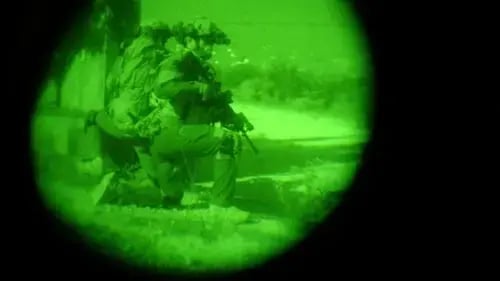
‘They never expected us’: The secret Maglan battle that broke Hezbollah’s command in Khiam
(Photo: IDF)
Maglan’s mission was to take control of the northern part of the town, neutralize Hezbollah command centers there and eliminate anti-tank capabilities that threatened Metula, roughly 13 kilometers to the south.
It was the unit’s final battle of the campaign after dozens of special operations.
“We came into it as veterans of three battles, but this one was different from all the others,” Z. said. “It combined depth with the front line.”
Maglan’s ‘secret sauce’
Lt. Col. A., a reservist who commanded Maglan’s detection-and-strike element, said the unit was selected because the mission required a combination of stealth, intelligence gathering, special operations and maneuver warfare.
“Traditionally, we stand on three legs: detection and strike, special operations and maneuver,” he said. “Khiam is a complex target at tactical depth that has to be reached covertly. Only when you use all the components correctly and add the ‘secret sauce’ does all the magic come together.”
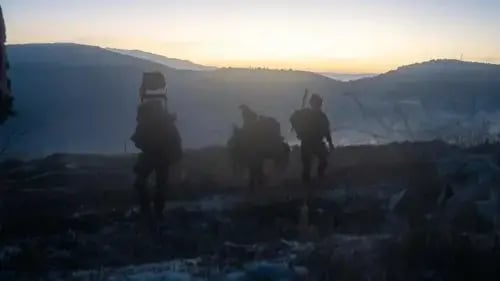
(Photo: IDF)
The detection-and-strike method, he explained, allows the same force that identifies an enemy to close the targeting cycle within seconds.
“It is a technique that lets us actively expose the enemy,” A. said. “The same team discovers the terrorists and closes the circle on them within seconds, with zero bureaucracy.”
The capability began developing inside the unit in the 1990s during operations including Grapes of Wrath and Accountability, relying on close coordination with the Israeli Air Force and advanced technology.
“It becomes part of your soul, hunting the enemy,” A. said. “It requires a rare combination of patience, terrain analysis, understanding and the fusion of intelligence.”
Four days of preparation around Khiam
For the troops who entered Lebanon, the depth of the operation was evident almost immediately.
“We hadn’t been out of regular service for very long when we were called up to Lebanon,” recalled Staff Sgt. G., a reservist in one of the teams. “We put on our gear, waited for the vehicles and crossed the border. It took 40 minutes to reach the drop-off point. I remember us looking at each other and saying, ‘Wow, we’ve gone really deep.’”
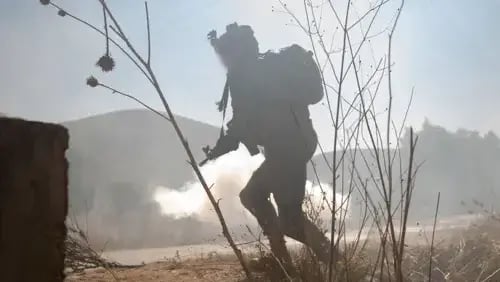
‘We waited for them to make a mistake’: Inside Maglan’s secret battle deep in Lebanon
(Photo: IDF)
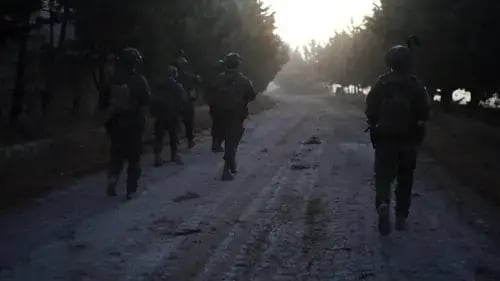
The area had proved difficult for the IDF during the Second Lebanon War. This time, commanders chose a different approach: drive as far as the terrain allowed and then continue on foot across the hills and mountains, with the goal of reaching northern Khiam in a single night.
Khiam lies between two mountain ridges, and at the time of the operation the surrounding areas were under Hezbollah control, according to the IDF.
“To deal with that, we deployed teams at different ranges on the hills around the town four days before the first ground entry,” Z. said.
After what G. described as an hours-long climb, the teams reached their positions and divided responsibilities.
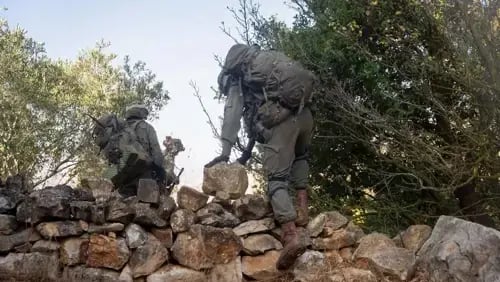
(Photo: IDF)
“We stopped at one point and began observing,” he recalled. “I sat with the Negev machine gun on my knee and noticed a wooded hill about 70 meters away.”
His squad commander told him another Israeli force was positioned behind the trees and that nobody should be moving between the two positions.
“As soon as he finished speaking, I saw three figures in the background,” G. said. “They were walking strangely and carrying weapons. There was no room for doubt. I cocked the Negev and opened fire.”
Other troops immediately joined the firefight.
“There was a special synchronization between us. We just did what we had practiced,” he said. “I remember the guys shouting throughout the encounter until we killed the other two as well.”
Only the next morning did he realize how close the Hezbollah terrorists had been.
“We passed the place where the encounter happened and suddenly understood that it hadn’t been anywhere near 70 meters,” he said. “They had been seven to 10 meters away from us, and even so we managed to take control of the situation very quickly.”
The first 36 hours
For Maglan’s commanders, the central challenge was turning intelligence collected before the operation into an accurate battlefield picture while events unfolded.
“You are constantly racing against time to locate and eliminate the right terrorist cell,” Z. said.
The IDF’s 7th Armored Brigade approached from the south, while commando forces operated from the north and west, supported by intelligence collection at both close and long range.
(Photo: IDF)
A. recalled one incident in which several Hezbollah terrorists were spotted fleeing from Khiam’s old quarter toward a nearby wadi.
“One of our forces locked onto them and eliminated them,” he said. “We could have said, ‘Mission accomplished, we’re done here.’ But what did the team do? We redeployed and concentrated effort on that point because the indication was correct. We waited, more terrorists appeared, we engaged them and they were eliminated.”
According to Z., Hezbollah repeatedly attempted to ambush the advancing troops but instead found its own forces being attacked.
“The enemy tries to surprise you, but finds itself surprised instead, and within 36 hours from the start of the battle it is defeated,” he said.
“They did not expect to encounter a force moving that sharply and precisely. We simply waited for the terrorists to make a mistake and attacked them with missiles, drones and additional capabilities until most of the local command chain had been eliminated.”
For A., the operation represented the culmination of decades of experience.
“Twenty-five years led me to this battle,” he joked. “When it ended, I said, ‘That’s it, I’m retiring at the top.’”
He said individual soldiers rarely grasp the full scale of an operation while it is underway.
“One soldier fired 12 mortar rounds, another encountered a terrorist face to face and a third was clearing houses in the town,” he said. “Only when they hear the full picture do they fall silent and understand the power of what they accomplished, step by step.”