

Japan’s Prime Minister Sanae Takaichi has drawn criticism after revealing that since taking office in October she has typically slept between zero and three hours a night.
Her post on X raised concerns over her health and ability to make decisions, while also reigniting a broader debate in Japan over a culture of excessive work hours, where long days at the office are often seen as a sign of dedication.
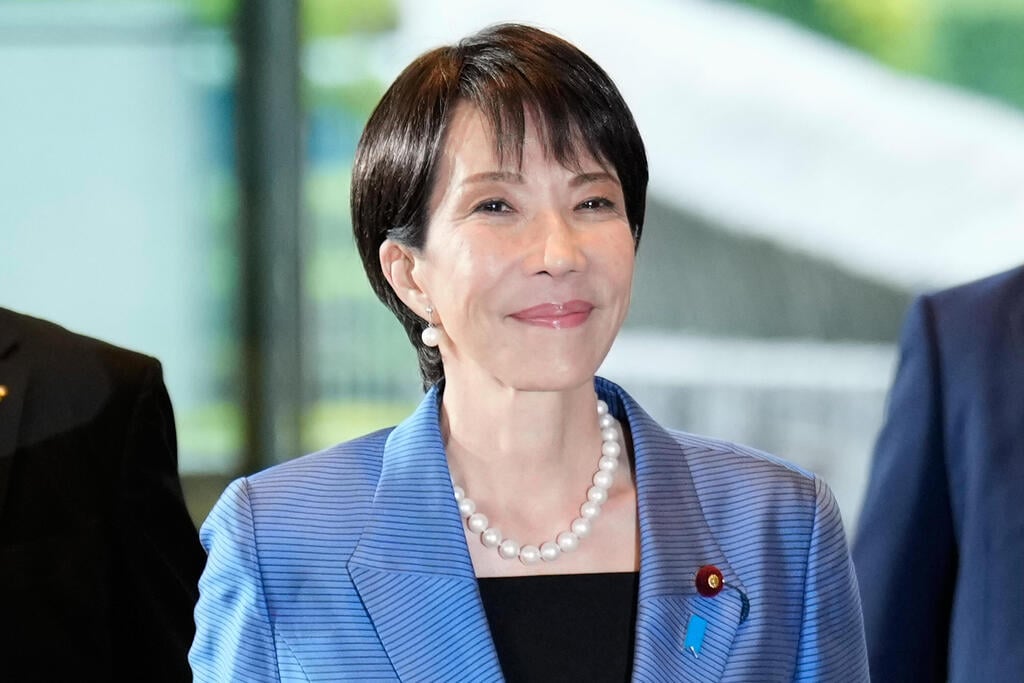
Takaichi wrote that since the beginning of the month she has spent her weekends reading “thick stacks of documents” from early morning until late at night. She said that during her most recent three-day holiday weekend, she reviewed final drafts of policy documents and went through several thousand emails that had accumulated in her inbox.
The prime minister published the post on Monday, the final day of Japan’s extended weekend. She wrote that she managed to sleep five hours, which she described as unusually long. “Since I became prime minister, zero to three hours of sleep has become the norm,” she wrote.
Takaichi also said she used part of her day off to deal with household tasks that had piled up over time. She said she ironed a stack of handkerchiefs and thin garments worn under her suits, repaired loose hems on skirts and reinforced buttons on jackets.
She added that the workload had become so overwhelming that she was almost out of clean clothing needed for work. “I am especially bad at ironing and it takes forever, so I kept putting it off, leaving me in a situation where I had almost no underlayers to wear with my suits,” she said.
The post was not received simply as evidence of Takaichi’s dedication to her role. Yuichiro Tamaki, leader of the Democratic Party for the People, said a leader’s job is not to personally handle every task, but also to know how to delegate responsibilities and focus on decisions only they can make.
Tamaki questioned whether Takaichi’s team was providing enough support and suggested she transfer even some household responsibilities to others so she could rest and make decisions “with a clear mind.”
A senior figure in Takaichi’s Liberal Democratic Party said the post reflected a sense of impatience and emphasized that the prime minister needs assistants she can rely on. An opposition lawmaker said it was unusual to see the leader of a country publicly highlight that she does not sleep.
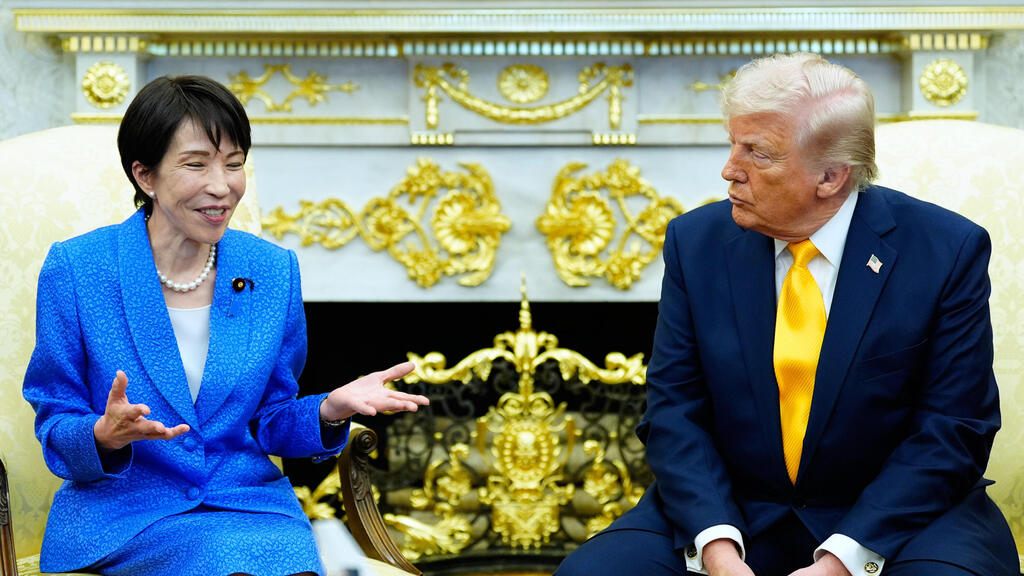
Trump and Takaichi
(Photo: AP Photo/Alex Brandon)
This is not the first time Takaichi’s working habits have raised concerns. In November, she told lawmakers she was sleeping around two hours a night, and four hours at most. Shortly before that, she summoned aides for a meeting at 3 a.m. ahead of a budget discussion scheduled six hours later.
Her approach also fits the political image she has cultivated over the years. Takaichi has repeatedly cited former British Prime Minister Margaret Thatcher as a major inspiration, adopting not only a conservative political stance but also the image of a leader who refuses to let exhaustion stand in the way.
When she was elected leader of Japan’s ruling party, Takaichi made clear how she intended to approach the role. She said she would abandon the idea of balancing work and private life and promised: “I will work, work, work, work and work.” She also urged members of her party to “work like horses.”
The phrase later became Japan’s phrase of the year, but also drew criticism from those who argued it glorified extreme working hours. Takaichi later clarified that she was not encouraging others to overwork, but rather expressing her own enthusiasm for the position.
The debate is particularly sensitive in Japan, where there is a specific term for death caused by overwork: “karoshi.”
For years, Japan has attempted to reduce excessive working hours and improve work-life balance, partly because of the impact of overwork on employee health, family life and the country’s low birth rate.
Critics of Takaichi argue that even if she is not asking the public to imitate her lifestyle, the message from the top of government could reinforce the very culture officials are trying to change.
The debate comes in a country that already struggles with sleep deprivation. A study published last year found that Japanese people sleep an average of about seven hours a night, 38 minutes less than the international average measured in the study.
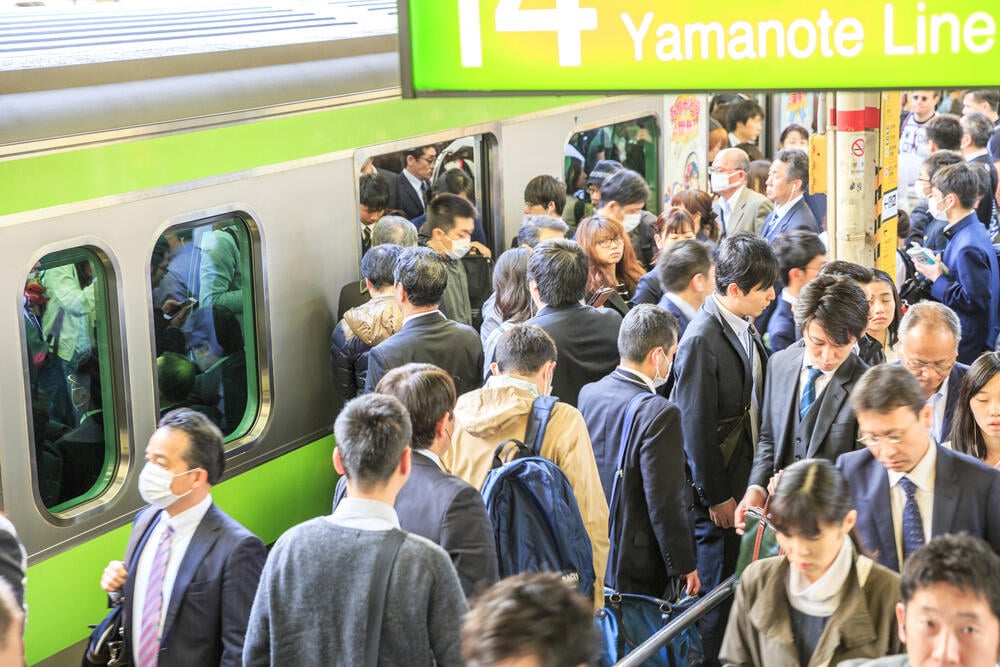
'Karoshi'
(Photo: shutterstock)
The criticism of Takaichi’s message has also gained attention because of her government’s policies. Shortly after taking office, she instructed the labor minister to examine easing restrictions on overtime work. Under current law, the standard limit is 45 hours of overtime per month and 360 hours per year, although special circumstances can allow higher limits.
Labor organizations warned that changing the restrictions could set back efforts to combat Japan’s extreme work culture.
Takaichi became prime minister in October and made history as the first woman to lead Japan’s government. Since then, she has built a reputation as an energetic and uncompromising leader.
But her latest comments have sharpened a question now being raised by both allies and opponents: Is working without rest proof of commitment, or a sign that even a prime minister needs to know when to stop?
The documents Takaichi said she had been reviewing were not minor matters. During that period, her government was finalizing its first economic roadmap, which includes a plan for more than 370 trillion yen ($2.3 trillion) in public and private investment through 2040.
The plan underwent last-minute changes after earlier drafts raised concerns that the government was seeking to pressure the Bank of Japan to avoid raising interest rates.
The disclosure of Takaichi’s limited sleep therefore came at a time when the prime minister was facing decisions with major implications for Japan’s economy.