


Not every soldier comes face to face with Hezbollah operatives — and certainly not to the point of capturing them. For Maj. A., a company commander in the Givati Brigade’s reconnaissance unit, that is exactly what happened.
“We went out on a mission in the al-Khiam area, which we already knew had been flagged by intelligence. The brigade had eliminated six operatives there two days earlier,” Maj. A. said, describing the incident in southern Lebanon earlier this week.
The structure where the operatives were staying was destroyed by the IDF
(Video: IDF Spokesperson’s Unit)


“We had intelligence about weapons and operatives, and we carried out searches with heavy covering fire. In one of the locations, we found a very large weapons cache. There were seven Kornet anti-tank missiles and launchers aimed toward Israel,” he said. “There were also full combat kits — uniforms, boots, small arms. A complete weapons depot prepared for fighting, set up inside a house taken over by Hezbollah operatives. We collected the items and concentrated them ahead of demolition.”
The large amount of materiel found by the troops made it clear they were operating in an active combat zone and that operatives could still be present. They continued searching a sixth location, entering under heavy fire for suppression.
“We entered the house, one team to the right and one to the left. One of my soldiers and I opened the corridor, and he immediately spotted a hand coming out from an inner room. We shouted ‘terrorist’ and called for him to come out.
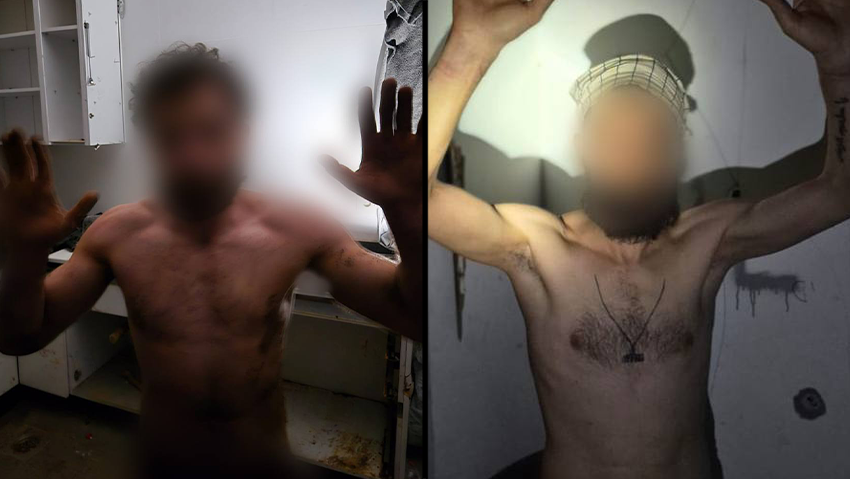
“He came out slowly and immediately said in English not to shoot. I asked if there was anyone else, and another operative came out with his hands up, unarmed. We asked if there were more people, and he said no. We began searching the room and found combat gear and new rifles — Kalashnikovs — along with personal equipment, uniforms and additional weapons.”
After being captured, the two were questioned on the spot. Givati troops found documentation on them identifying them as Hezbollah operatives. At that stage, the soldiers did not yet realize they were members of the Radwan force. They were later transferred to Israel for further interrogation, where Unit 504 intelligence officers extracted critical information for ongoing operations.
Givati Brigade troops in southern Lebanon: 'Very different from the Gaza Strip, but we trained for this'
(Photo: IDF Spokesperson’s Unit)
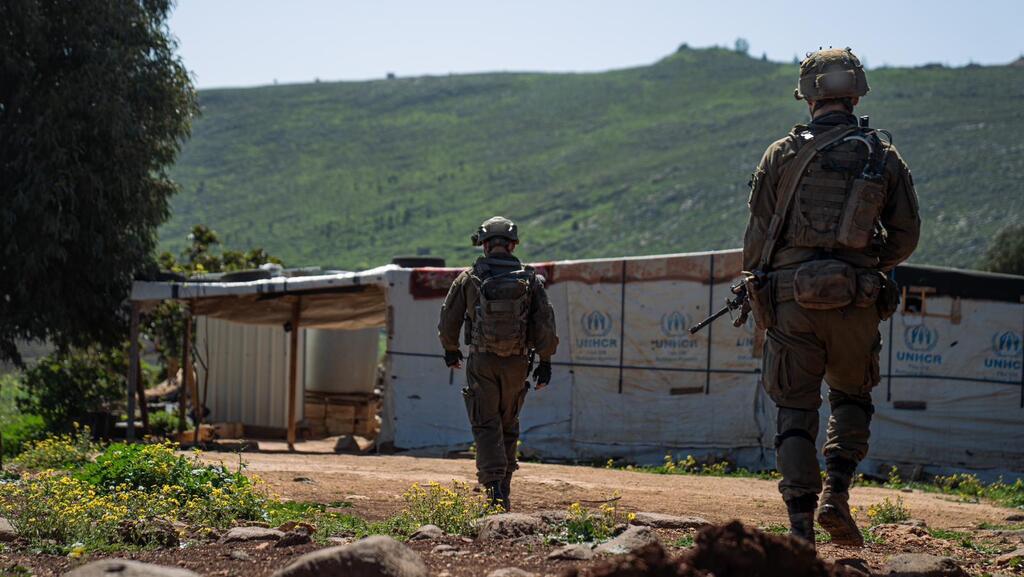
Givati troops have been operating for several weeks inside southern Lebanon, fighting in terrain unfamiliar to the brigade, which has primarily operated in the south.
“The fighting is very different from the Gaza Strip,” Maj. A. said. “The cold, the topography — in Gaza, everything is flat. Here you’re fighting in valleys and hills. But we trained for this. It’s also very unusual to see Hezbollah face to face, let alone capture them, especially Radwan forces.”
“Usually they are targeted from the air or in long-range engagements — that’s more common in Gaza,” he added.
Maj. A. also had a message for residents of northern Israel: “For me and my soldiers, it’s very clear. Behind us is Metula, and in front of us is Hezbollah. We are here to defend them. We will do it in the best way possible.”
The military said Tuesday that the two operatives, members of Hezbollah’s elite Radwan unit, were captured after troops identified armed terrorists preparing to fire an anti-tank missile from a position set up inside a structure. The forces detained the operatives and seized numerous weapons, including rifles, large quantities of ammunition, anti-tank launchers of various types and hand grenades.
The military said the operatives surrendered after identifying significant Israeli military activity in the area aimed at dismantling terrorist infrastructure. Overnight, troops destroyed the structure from which they had been operating.
An initial interrogation by Unit 504 indicated the operatives had arrived from Lebanon’s Bekaa Valley to southern Lebanon at the start of Operation Roaring Lion. The military added that “this case once again demonstrates that the Lebanese army failed to prevent the transfer of operatives and weapons south of the Litani River.”