

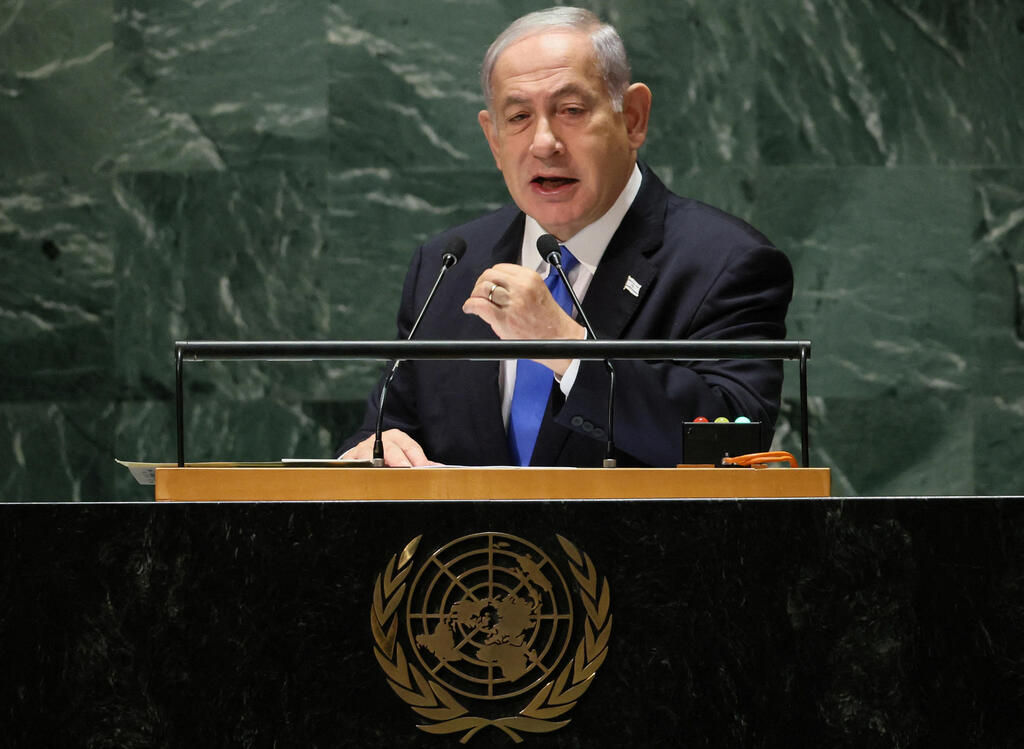
Prime Minister Benjamin Netanyahu is set to arrive in the New York area Thursday for an unusually brief visit to address the United Nations General Assembly, with few meetings with foreign leaders and no scheduled meeting with U.S. President Donald Trump as Israel faces intense international criticism.
Netanyahu is expected to spend only several hours in the United States, delivering his speech, holding a small number of diplomatic meetings and returning to Israel without staying overnight. The abbreviated schedule marks a departure from previous General Assembly visits, when Netanyahu used the annual gathering to meet numerous world leaders on the sidelines.
Israeli officials have made efforts to arrange meetings with leaders of countries considered friendly toward Israel, particularly in South America. Netanyahu is expected to meet Argentine President Javier Milei and Slovenian Prime Minister Janez Janša during the visit.
A meeting with Trump, however, is not scheduled. A senior U.S. official said the two leaders' schedules do not overlap, with Netanyahu expected to arrive after Trump has already left New York.
Netanyahu is traveling primarily to deliver his General Assembly address before quickly returning to Israel.
A hostile reception at the UN
The United Nations has long been a venue for sharp criticism of Israeli policy, but Israeli officials are preparing for a particularly contentious reception this year.
Officials expect some diplomats could walk out during Netanyahu's address, while others may stage protests inside the chamber, including by displaying signs accusing Israel of genocide. Israel rejects accusations that its actions in Gaza constitute genocide.
An Israeli official said images involving National Security Minister Itamar Ben-Gvir and incidents of Jewish extremist violence in the West Bank have further damaged Israel's standing internationally. The official said there was a perception abroad that Netanyahu had failed to restrain far-right members of his government.
Outside the UN, several demonstrations are planned around Netanyahu's appearance, involving Israeli anti-government activists, left-wing Jewish organizations and pro-Palestinian and anti-Zionist groups. Major Jewish organizations, meanwhile, organized a rally against antisemitism near the UN on Wednesday, a day before Netanyahu's address.
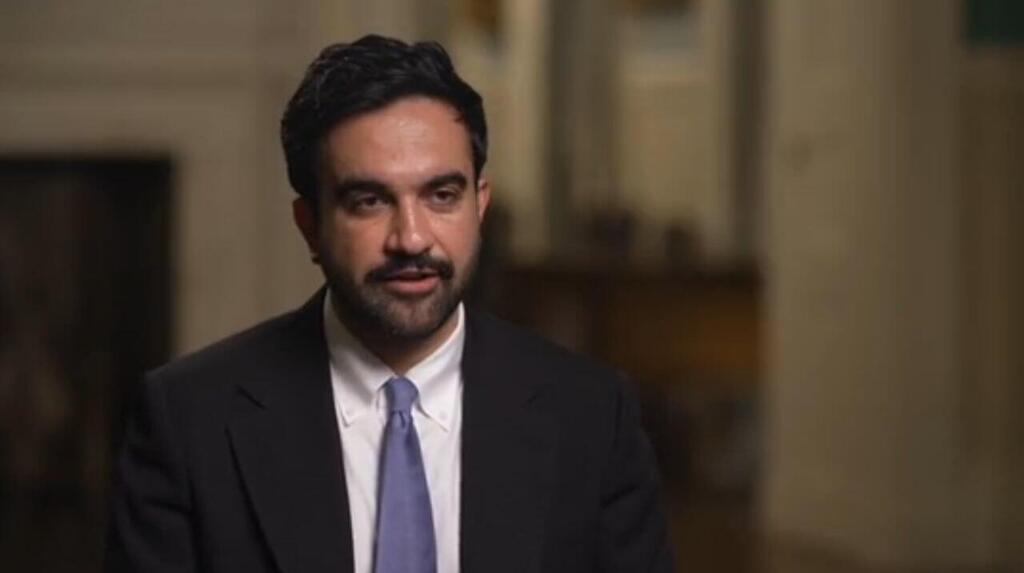
New York City Mayor Zohran Mamdani
(Photo: CNN)
The demonstrations come amid Netanyahu's escalating public confrontation with New York City Mayor Zohran Mamdani, who has accused the Israeli prime minister of war crimes and genocide, allegations Netanyahu rejects. Mamdani previously said he would seek Netanyahu's arrest based on an International Criminal Court warrant but later acknowledged that he lacks the authority to do so.
Netanyahu said this week that he intends to use his UN address to “tell the truth” about Israel and its military and respond to Mamdani's accusations.
Netanyahu expected to focus on Iran
Iran is expected to feature prominently in Netanyahu's speech.
In recent days, Israeli officials have held intensive discussions over whether classified intelligence related to Iran could be cleared for public release for use in the address. Netanyahu is expected to present aerial imagery concerning Iranian reconstruction efforts and Tehran's nuclear and missile programs.
He is also expected to refer to a series of recent attacks against Israelis, including the latest attack in which IDF reservist Neriya Leiter, the son of Israeli Ambassador to the United States Yechiel Leiter, was seriously wounded.
The speech comes just over a month before Israel's Oct. 27 election, giving Netanyahu one of the world's most prominent diplomatic stages at a critical point in the campaign.
Netanyahu has portrayed the appearance as an opportunity to defend Israel before an international audience that he says has accepted false claims about the country and its conduct. His critics, however, argue that the speech is aimed at least as much at Israeli voters as at the diplomats in the General Assembly hall.
No Trump meeting, no overnight stay
Netanyahu's official aircraft is expected to land Thursday morning at a military airfield in New Jersey rather than John F. Kennedy International Airport in New York.
Reports about the change have cited a combination of security, logistical and protest concerns. Netanyahu is then expected to travel in a secured motorcade directly to the United Nations.
His wife, Sara, and son Yair are expected to accompany him.
Israel's ambassador to the UN, Danny Danon, has worked to arrange diplomatic meetings around the compressed visit.
Netanyahu had sought a meeting with Trump, according to Israeli sources, but none was arranged. U.S. officials have publicly attributed the absence of a meeting to scheduling, saying Netanyahu will arrive after Trump leaves New York.
Israeli officials also believe there is frustration within the Trump administration over Netanyahu's handling of Gaza, though U.S. officials have not publicly cited that as the reason the two leaders will not meet.
Netanyahu had also sought a meeting with Elon Musk in Texas, but the stop was canceled after security and logistical difficulties arose. The planned Texas visit would also have required an additional U.S. landing for refueling. Reports this week confirmed that the Texas stop was dropped from Netanyahu's itinerary.
The prime minister ultimately decided on a lightning visit that will not include an overnight stay at his usual Manhattan hotel, the Loews Regency.
Israel had already reserved three floors at the hotel, however, potentially leaving the government with a substantial bill despite Netanyahu not staying there. Finance Ministry officials are expected to negotiate with the hotel in an effort to secure credit toward a future stay.
The visit comes as Netanyahu faces protests not only from pro-Palestinian and anti-Zionist activists but also from Israelis opposed to his government. The Israeli expat group UnXeptable, which emerged as a prominent organizer during the 2023 protests against Netanyahu's judicial overhaul, is among those planning demonstrations Thursday.
For Netanyahu, the visit will therefore be markedly different from many of his previous appearances at the annual gathering: hours rather than days in New York, a limited diplomatic schedule, no meeting with the U.S. president and an address delivered amid demonstrations both inside and outside the United Nations.