

The United States and Iran are moving closer to a possible diplomatic breakthrough in efforts to end the war, Bloomberg reported Friday, with Tehran reportedly showing new flexibility over its nuclear program. The developments come as Washington continues reinforcing its military presence in the Middle East, preserving the option of renewed strikes against Iran even as negotiations show signs of progress. Meanwhile, Iran has reportedly renewed efforts to acquire advanced Russian S-400 air defense systems, raising questions about Moscow's role in rebuilding Tehran's military capabilities.
According to a diplomat familiar with the negotiations, Iran has indicated a willingness to discuss aspects of its nuclear program that it had previously refused to negotiate. Tehran is examining proposals concerning its nuclear activities presented by Qatar, which is serving as the principal mediator in the talks. Any Iranian concession could represent a significant breakthrough in negotiations that have remained stalled since the collapse of a memorandum of understanding reached in June.
An Iranian official told Saudi broadcaster Al Arabiya that Tehran was awaiting concrete steps from Washington to restore confidence between the sides. "Tehran is waiting for practical steps from Washington to build trust. We are open to negotiations that ensure our legitimate demands are met. We are not afraid of threats, but we are committed to regional stability," the official said.
Saudi broadcaster Al Hadath also reported a positive Iranian response to the latest diplomatic initiative. According to the channel, Iranian officials "view the mediators' latest proposal positively," while Iranian Parliament Speaker Mohammad Bagher Ghalibaf has been given considerable freedom in conducting negotiations. The report said no restrictions had been imposed on Ghalibaf regarding the management of the talks.
Iran renews push for Russian S-400 air defenses
As the diplomatic efforts continue, Iran and Russia have resumed negotiations over the possible delivery of advanced S-400 air defense systems, The Telegraph reported. Tehran has sought to acquire the Russian-made systems for years, and Iranian officials are now reportedly optimistic that Moscow may finally agree to supply them.
Russian President Vladimir Putin met Thursday with Mohsen Rezaei, the secretary of Iran's Supreme National Security Council, at the Kremlin. According to The Telegraph, a senior Iranian official said Tehran was optimistic that Putin would approve the delivery of the long-sought air defense systems.
Rezaei reportedly traveled to Moscow on the instructions of Iran's Supreme Leader Mojtaba Khamenei, carrying a personal letter to Putin. The Telegraph reported that the central request in the letter was for Russia to provide the S-400 systems. The precise contents of the message have not been publicly confirmed.
Gallery

Russia's S-400 air defense system, which Iran is reportedly seeking to acquire as it attempts to rebuild its air defenses
(Photo: AFP / RUSSIAN DEFENCE MINISTRY)
The renewed negotiations stand in contrast to Trump's assertion that Russia is not helping Iran "at all," although talks over a possible weapons deal do not establish that the systems have been delivered.
Iran has been seeking to rebuild its air defenses after major losses during previous rounds of fighting against the United States and Israel, which destroyed or severely damaged key components of its air defense network. The S-400, one of Russia's most advanced long-range surface-to-air missile systems, could help Tehran restore some of those capabilities if a deal is reached and the systems are delivered.
Moscow has offered to sell S-400 systems to Iran for years but has so far refrained from supplying them, partly because of concerns that such a move could damage Russia's relations with Israel and other regional countries. The renewed discussions suggest Tehran is again pressing Moscow to reconsider that position at a time when its military vulnerabilities have become more pronounced.
US aircraft carrier expected in Middle East by mid-November
The emerging diplomatic opening comes amid uncertainty over whether the Trump administration is preparing for another strike on Iran following this week's U.S. midterm elections. American military movements across the region in recent days indicate continued reinforcement of forces and operational capabilities, although they do not necessarily suggest that a decision to launch an imminent attack has been made.
According to an analysis of military tracking data by Israel's Institute for National Security Studies (INSS) and researcher Stefan Cohen, the United States is continuing to strengthen its regional military presence through naval deployments, military transport flights, aerial refueling operations and intelligence-gathering capabilities. The movements suggest Washington is maintaining its ability to escalate militarily if negotiations with Tehran fail, while also strengthening the defenses of Israel and its Gulf allies.
At the center of the latest naval movements is the USS Theodore Roosevelt aircraft carrier, accompanied by two destroyers. The carrier is currently making a port visit in Singapore and is expected to enter the area of responsibility of U.S. Central Command (CENTCOM) around mid-November. Its arrival could expand the operational options available to American commanders in the event of renewed fighting with Iran. However, it may also replace one of the aircraft carriers already deployed to the region rather than represent a permanent increase in naval forces.
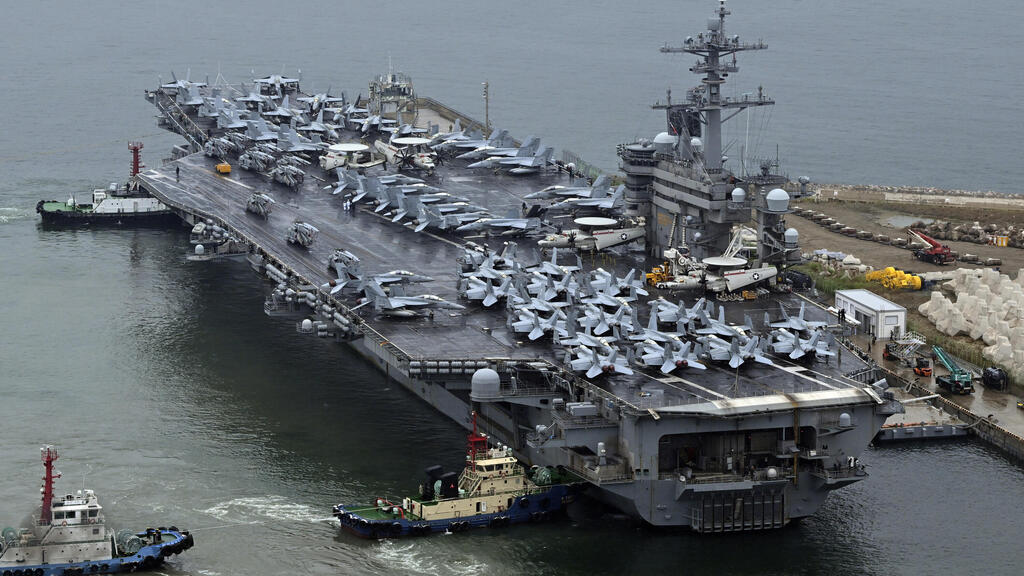
The USS Theodore Roosevelt aircraft carrier during a visit to South Korea
(Photo: Kyung-Seok/Pool Photo via AP)
The expected deployment comes as Washington seeks to preserve military pressure on Tehran alongside the diplomatic negotiations. An additional aircraft carrier strike group could provide greater flexibility for possible operations, but its movement alone does not establish that the administration intends to launch another attack.
US military airlift to Israel continues
Alongside the naval movements, the American military airlift to Israel and Gulf states is continuing. According to the tracking data, approximately 16 flights by U.S. Air Force C-17 transport aircraft departed from Fort Bliss in the United States toward Ovda Air Base in southern Israel. The aircraft are believed to be carrying military equipment, potentially including components for Patriot missile defense systems and other air defense capabilities.
Several of the transport aircraft passed through Ramstein Air Base in Germany this week before continuing toward the Middle East. Ramstein serves as a major logistics hub for the U.S. Air Force, and the aircraft may have collected additional cargo there before proceeding into CENTCOM's area of responsibility. The continuing flights suggest an effort to strengthen regional defensive capabilities, particularly those protecting Israel and American allies in the Gulf.
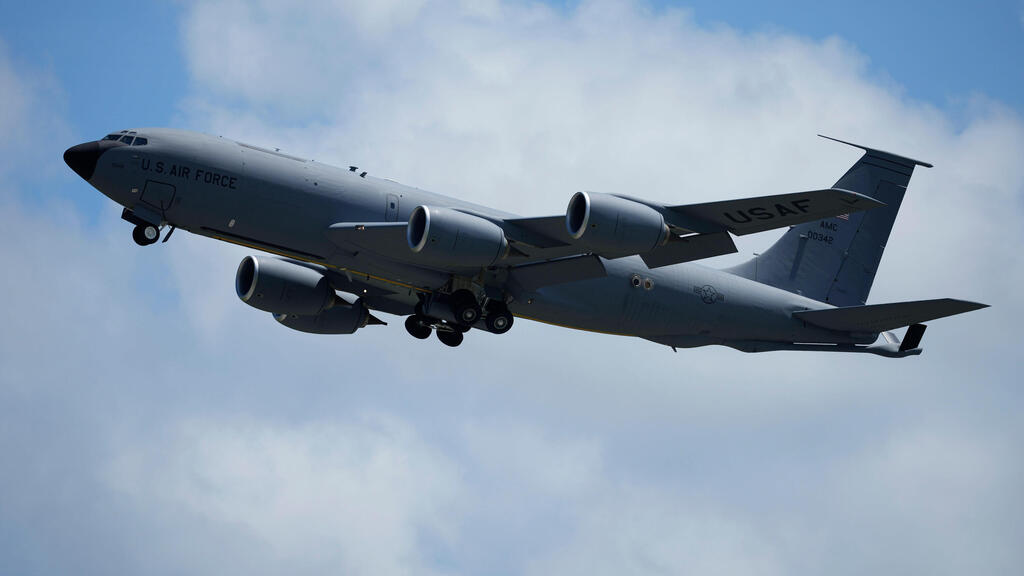
A US military refueling aircraft
(Photo: AP Photo/Hiro Komae, File)
The American aerial refueling fleet is also maintaining a substantial presence. According to the analysis, the number of U.S. tanker aircraft in Europe and CENTCOM's area of responsibility has risen slightly to more than 200, while the deployment in the Gulf region has remained relatively stable. KC-46A refueling aircraft are conducting daily sorties from the vicinity of Al Dhafra Air Base in the United Arab Emirates, indicating sustained American air operations and the ability to support prolonged military activity if required.
Rare US intelligence aircraft arrives in Britain
Another development attracting attention was the arrival of an American RC-135U Combat Sent intelligence aircraft at RAF Mildenhall in Britain on November 4. One of only two aircraft of its kind in the U.S. fleet, the RC-135U specializes in collecting intelligence on radar systems and electronic emissions, making it a valuable asset for monitoring military activity and air defense networks.
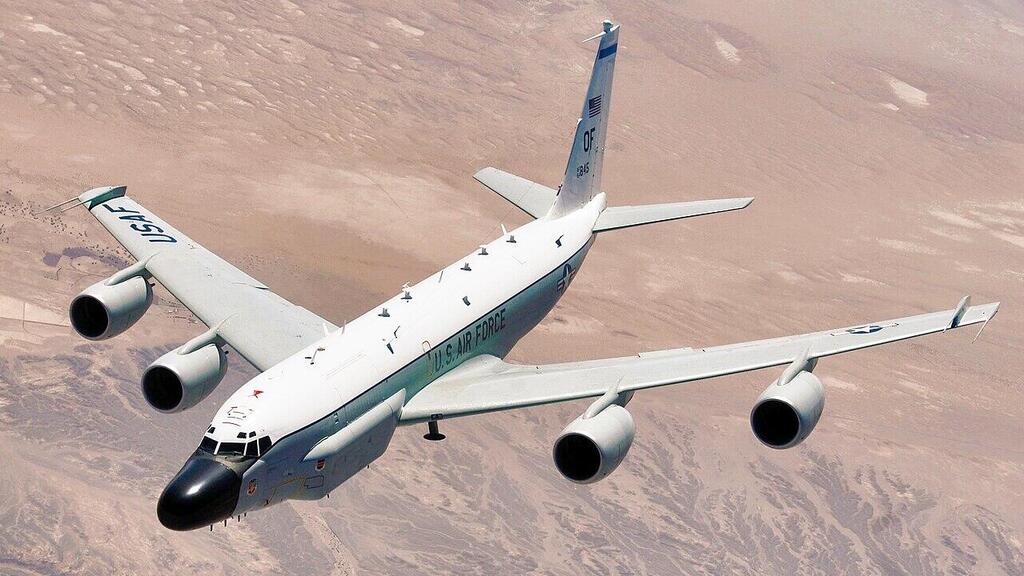
A US Air Force Boeing RC-135 intelligence aircraft, designed to collect information on radar systems and electronic signals
Its arrival in Europe places the aircraft within reach of intelligence-gathering missions across the continent, although it remains unclear whether it will continue toward CENTCOM's area of responsibility. The movement is notable because of the aircraft's specialized capabilities, but does not independently indicate that a military operation against Iran is imminent.
Trump keeps diplomatic and military options open
Taken together, the deployments indicate that the United States is continuing to reinforce its military posture in the Middle East, maintain aerial and intelligence capabilities and strengthen the defenses of Israel and Gulf states. However, the movements alone are insufficient to conclude that Washington is preparing to attack Iran in the immediate future.
The military buildup is unfolding alongside what could become a significant diplomatic development. Tehran's reported willingness to consider previously rejected nuclear-related proposals, together with its positive response to the latest mediation initiative, offers a possible opening for negotiations. Nevertheless, no final agreement has been announced, and substantial differences may remain between Washington and Tehran.
For now, the United States appears to be preserving a broad range of options for Trump, from continued diplomatic and military pressure on Iran to strengthening regional air defenses and potentially resuming military operations if negotiations fail to produce an agreement acceptable to the administration. The forces are being positioned, the military options are expanding and the diplomatic channel remains active. The ultimate decision rests with Trump.