


With the war against Iran now effectively on hold, partly amid Pentagon warnings over dwindling interceptor stocks, the West is being forced to confront a problem it largely ignored for decades.
Israel could also be affected, despite its substantial domestic production capacity.
Gallery
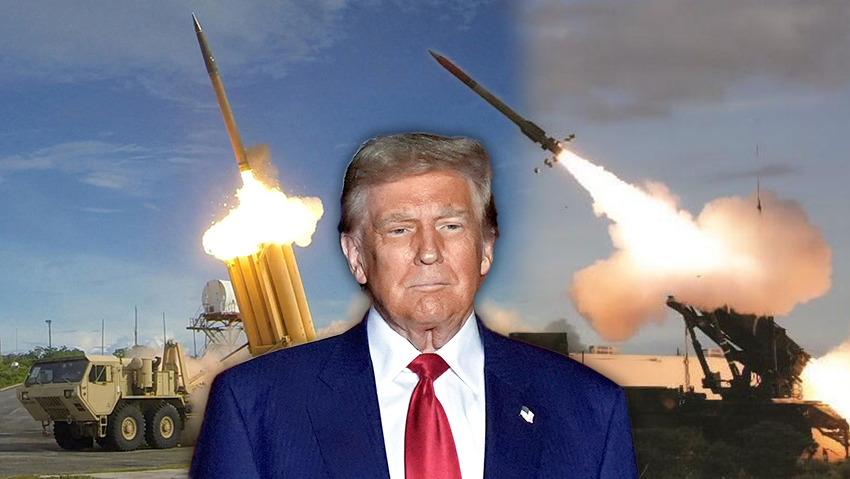
Pentagon warnings over dwindling Patriot and THAAD stocks have exposed a deeper Western production crisis
(Photo: AP/Carlos Osorio, Reuters, United States Armed Forces)
The central concern involves expensive Patriot and THAAD interceptors, which have been used extensively against ballistic missiles, cruise missiles and drones that often cost only a fraction of the weapons fired to destroy them.
After nearly two weeks of nightly exchanges between Iran and the United States, an uneasy calm has settled over the region.
The New York Times reported overnight that one reason U.S. President Donald Trump set aside plans for a dramatic escalation, at least temporarily, was concern that a powerful Iranian response could significantly deplete the Patriot missiles and other interceptors available to U.S. forces in the Middle East.
Launch of a THAAD air defense interceptor toward a ballistic missile


At the heart of closed-door discussions in Washington was the Pentagon’s shrinking interceptor stockpile.
In recent weeks, U.S. systems have faced heavy barrages of Iranian ballistic missiles and drones targeting bases in Jordan, Kuwait, Bahrain and the United Arab Emirates.
The cost of a failure in those defenses became clear last weekend, when U.S. troops were killed in Jordan after a ballistic missile penetrated air defenses during a combined Iranian barrage of missiles and drones, according to a senior U.S. official.
Joint Chiefs of Staff Chairman Gen. Dan Caine warned in private discussions that the military could resume large-scale fighting against Iran, but that doing so risked dangerously reducing the number of interceptors available to U.S. Central Command.
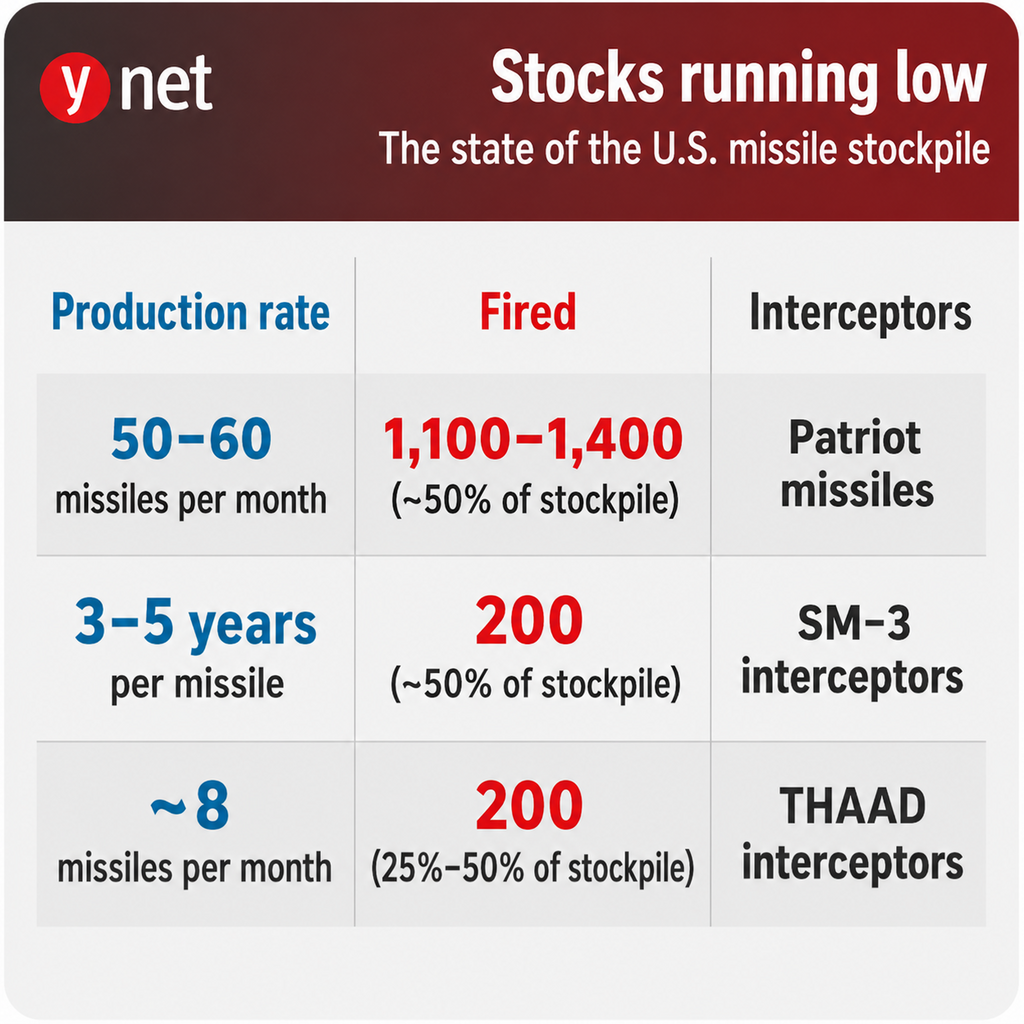
Internal Defense Department estimates published in April said the United States had already used more than 1,200 Patriot interceptors during the war, each costing more than $4 million. Military officials considered the state of the stockpile troubling even then and say it has since deteriorated considerably.
But how unusual is the crisis? How long will it take to resolve? How could interception policy change, and what would happen if high-intensity fighting resumed?
Brig. Gen. (res.) Eran Ortal, former commander of the IDF’s Dado Center and head of the military studies program at Bar-Ilan University’s Begin-Sadat Center, explains.
How serious is the interceptor crisis?
Ortal cautioned that it remains impossible to know whether interceptor shortages were the decisive reason for Washington’s decision to halt its attacks.
“A dramatic interceptor crisis does not necessarily prevent continued fighting, and the fact is that further escalation remained under consideration,” he said.
 Brig. Gen. (res.) Eran Ortal
Still, he argued that the shortage reflects a much deeper strategic problem.
“Over the past 30 years, ballistic missiles have become a strategic threat, including to U.S. forces in the theater, with missiles capable of sinking an aircraft carrier from thousands of kilometers away,” Ortal said.
Missiles can also be used to pressure the United States by threatening its allies, while posing an immediate tactical danger to U.S. bases, as seen in Bahrain and Jordan.
“Missiles have become the leading strategy of regional powers seeking to challenge American hegemony,” he said. “China in its region, Russia in Europe and Iran in ours.”
Missile interception therefore became a central strategic issue decades ago.
Internal Defense Department estimates published in April said the United States had already used more than 1,200 Patriot interceptors during the war
Originally, interceptor systems were designed primarily to confront a limited number of extremely expensive nuclear weapons. Today, they must also cope with tens of thousands of ballistic missiles and drones.
“The strategy of threatening an adversary with missiles has become widespread, while the technology behind those missiles has become much cheaper,” Ortal said.
Interceptor performance has also improved dramatically, but the weapons must now engage far more targets, including missiles with increasingly challenging characteristics.
As a result, interceptors have become extremely expensive relative to the threats they are used against.
For the Americans, Patriot represents the lower tier of interception, Ortal said, roughly equivalent in operational role to Israel’s Iron Dome. Above it are longer-range and more expensive systems, including ship-launched SM-3 interceptors and THAAD.
“They are not only extremely expensive compared with Iranian, Russian or Chinese ballistic missiles,” he said. “They are also highly complex to manufacture.”
How long will it take to rebuild the stockpiles?
Part of the current crisis stems from the decline of Western industrial capacity, Ortal said.
“Over the past 50 years, the West exported much of its manufacturing capability to the East, and it is only now waking up to the consequences,” he said.
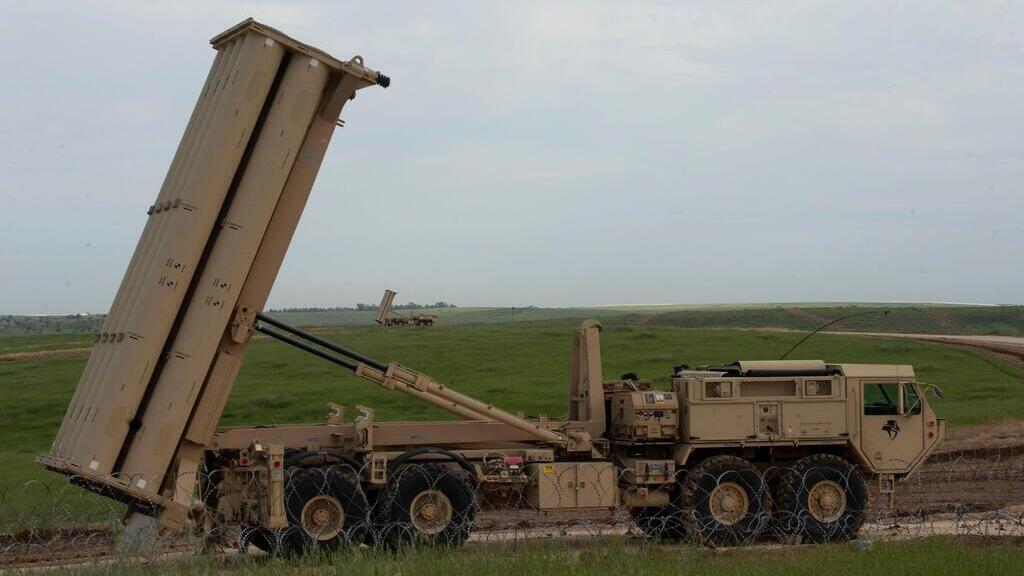
THAAD missile defense system
(Photo: AFP / HANDOUT / DVIDS / US ARMY)
Missile-versus-missile wars tend to become wars of attrition. When the ground front is frozen, or no ground front exists at all, the conflict becomes an extended exchange of fire.
“The West did not sufficiently account for the possibility that although it entered a short war with a technological advantage and sophisticated interceptors, the situation would become dramatic once the war dragged on,” Ortal said.
A military may possess highly advanced interceptors, but if it cannot produce them rapidly or in large numbers, a prolonged campaign creates a severe problem.
“Both Israel and the United States struggle to expand their production capacity substantially,” he said. “Their systems are the best in the world, but even if enormous amounts of money are invested, production cannot be increased overnight.”
Ukraine has faced a similar problem but has developed local solutions.
Russia attacks Ukraine with missiles and Iranian-designed Shahed drones, some of which are also intercepted with Patriot missiles. Lacking a traditional defense industry on the scale of Western powers, Ukraine built a new one around systems that are cheap and easy to manufacture.
“They intercept Shaheds with interceptor drones,” Ortal said.
Ukraine has also received U.S. authorization to produce Patriot systems domestically, but intends to make them simpler and less expensive, he said. It is also converting a cruise missile developed in recent years into an interceptor.
“All of these systems will be less capable than what Israel and the United States currently possess,” Ortal said. “But they are supposed to be cheaper and easier to manufacture.”
Will the US stop intercepting every threat?
Ortal distinguished between two professional concepts: selective interception and discriminatory interception.
Selective interception means deciding whether to engage a threat according to the geographic area being protected and whether the projected impact point lies within a zone defined as vital.
Discriminatory interception means prioritizing a particularly dangerous target because of the weapon itself, regardless of where it may land. Examples could include a nuclear missile or a missile carrying multiple warheads.
Intelligence and radar systems can help distinguish between different threats in the air.
In Israel, selective interception is extremely precise. Air defense systems identify narrowly defined areas covering populated or strategically important sites.
The United States, Ortal said, traditionally applies a much broader standard.
“It is possible that, because of the shrinking stockpiles, the Americans have decided to apply much stricter criteria and distinguish more sharply between vital areas and less important ones,” he said. “That may explain some of the strikes on infrastructure in the Gulf.”
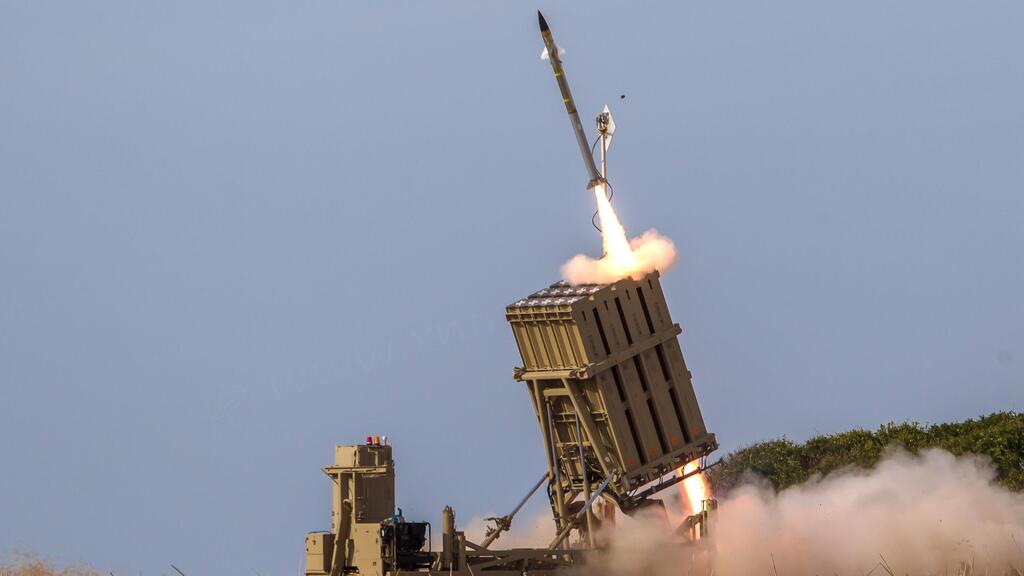
The Iron Dome
(Photo: IDF, Nir Ben Yosef)
However, the recent fighting also suggests that the problem extends beyond the number of available interceptors.
When an American base in Jordan is struck and troops are killed, the building hit was almost certainly inside an area defined as vital and protected.
“We also know that radars were struck during the war,” Ortal said. “The Iranians are not simply launching missiles at random targets. They are studying air defense systems and trying, apparently with some success, to hit critical air defense assets. Once that happens, the system’s effectiveness declines.”
Iran may also be developing flight profiles that make its missiles harder to intercept.
“That creates a compounding problem,” Ortal said.
One response to a decline in interception accuracy is to launch two interceptors at every incoming missile. But that becomes difficult when stocks are already low.
How could the shortage affect Europe and Israel?
For Washington, interceptor supplies are not only a Middle Eastern concern.
“The short blanket problem for the Americans is whether they begin shifting their strategic red line away from their main theater, which is China,” Ortal said. “It is not a coincidence that they stopped transferring Patriots to Ukraine.”
The shortage could also affect Israel because the United States has carried a significant share of the burden in defending it.
Israeli air defense systems have reportedly been deployed in Gulf countries, but Ortal stressed that Israel’s defense industry remains a strategic national asset.
“There is no dilemma. Our defense industries work for us first,” he said.
During wartime, Israel may also bring back weapons previously sold to foreign customers, while promising replacements at a later stage.
A full battery is unlikely to be withdrawn from the Gulf, Ortal said, but newly produced interceptors would not be sent abroad if Israel needed them.
Iron Dome, he added, is primarily designed for short-range threats, which are not the central shortage in a confrontation with Iran. That makes it a secondary issue in this particular crisis.
What happens if the war resumes at full intensity?
If high-intensity fighting resumes, Ortal expects Gulf air defenses to become far less wasteful.
Gulf states have likely already approached Ukraine about acquiring interceptor drones to deal with Shaheds and similar unmanned aircraft, he said.
Israel also uses Iron Dome to intercept drones because it lacks a cheaper dedicated alternative in some cases.
“A drone coming from Lebanon or Iraq costs dramatically less than an Iron Dome interceptor, and there can be an endless number of them,” Ortal said. “The disparity is even greater when a Patriot is used in the Gulf.”
He expects cheaper Ukrainian-style methods to play a greater role, at least against drones.
The Americans are also likely to become more selective in deciding which threats to intercept.
There is currently no comparable substitute for Patriot against ballistic missiles, particularly the large number of short-range ballistic missiles used in the Gulf.
Patriot systems will therefore continue to carry most of the burden, alongside Iron Dome batteries reportedly deployed in the region during the war.
Iron Dome has been adapted to engage some medium-range ballistic missiles and can provide an effective complementary capability, Ortal said.
Has Iran learned how to defeat the defenses?
Ortal warned that the effectiveness of air defenses had already declined toward the end of the previous round of fighting before the April ceasefire.
Multiple-warhead missiles are harder to intercept and may require more interceptors for each incoming threat.
“When we return to the next round, we will see that the Iranians have learned much more about all of the region’s air defense systems, including ours,” he said.
The attacker can generally adapt more rapidly than the defender.
“It is easier to modify an Iranian offensive missile in a short adaptation cycle than it is to redesign an interceptor to counter that modification,” Ortal said.
That imbalance means the next phase of the confrontation may not only involve fewer available interceptors, but also Iranian missiles that are more effective at evading them.