

U.S. President Donald Trump said Sunday that he had a "very good" conversation with Israeli Prime Minister Benjamin Netanyahu on Saturday, with Iran among the topics discussed, as diplomatic efforts continued to avert renewed large-scale fighting between Washington and Tehran.
"Just had a very good talk with him," Trump said, confirming that the two leaders discussed Iran. He provided no further details about the conversation.
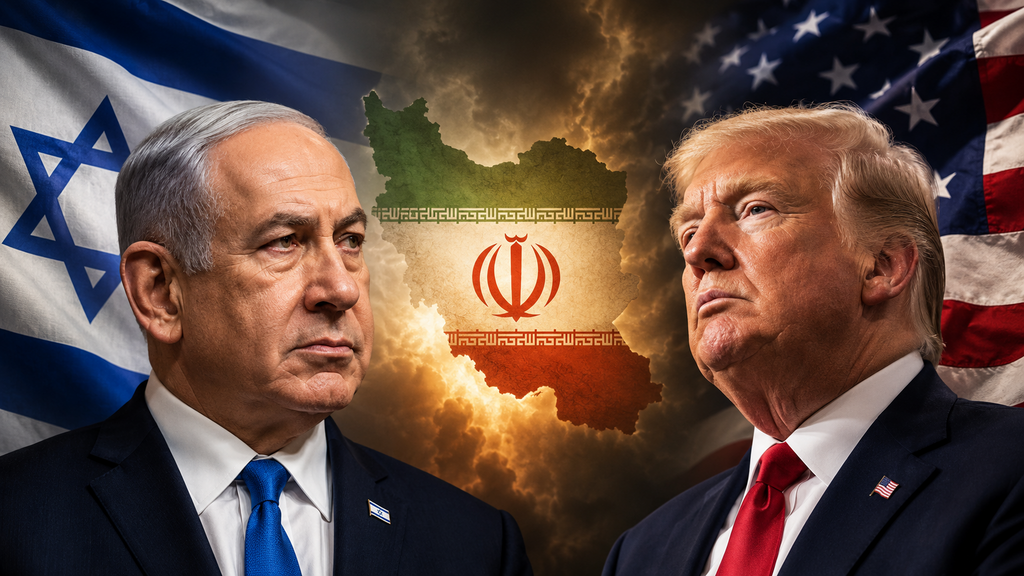
The call came as Iran signaled its willingness to pursue diplomacy while warning that it remained prepared for renewed military confrontation. Iranian Foreign Minister Abbas Araghchi said consultations with mediators were continuing and that the prospects for an agreement depended on Washington's response to Tehran's demands.
In an interview shared on his Telegram channel, Araghchi expressed hope that the United States would choose "diplomacy over other paths." He said Iran was prepared for both defense and negotiations, depending on Washington's "rationality."
Araghchi said Saturday that Iranian negotiators were in Qatar for discussions on a proposal that could reopen the Strait of Hormuz within two days if the United States met several Iranian conditions. He emphasized that no direct negotiations were taking place between Tehran and Washington.
The proposed arrangement would allow shipping through the strategic waterway to resume after Washington fulfilled agreed measures. The strait is a critical route for global oil shipments, and restrictions imposed by Iran have disrupted maritime traffic amid the confrontation with the United States and Israel.

Iranian Foreign Minister Abbas Araghchi said consultations with mediators were continuing
(Photo: Vyacheslav PROKOFYEV / POOL / AFP)
Iran says two oil tankers exploded after striking mines
Meanwhile, Iran's Islamic Revolutionary Guard Corps navy said Sunday that two oil tankers had exploded after striking mines while traveling through what it described as an "unauthorized route" in the Strait of Hormuz, according to Iranian state media.
The claims could not be independently verified.
Iran has imposed restrictions on vessels attempting to navigate the strait and has attacked ships it accuses of violating those restrictions. Tehran has sought to strengthen its control over the strategic waterway and use maritime pressure as leverage against Washington.
The reported explosions underscored the continuing risks to commercial shipping even as diplomatic efforts sought to restore access to the waterway.
Iran designates British military forces terrorist organizations
In a separate development, Iran designated Britain's Royal Navy and Royal Air Force as terrorist organizations and declared the country's MI6 foreign intelligence service a hostile entity, according to Iran's state-run IRNA news agency.
Iran's Foreign Ministry accused Britain of supporting U.S.-Israeli attacks on Iranian territory by providing military bases and logistical assistance.
The designation could expose individuals accused of cooperating with MI6 to prosecution under Iranian law and further heighten tensions between Tehran and London.
The developments highlight the competing diplomatic and military pressures shaping the regional confrontation. While Tehran has indicated that negotiations could lead to the reopening of the Strait of Hormuz, reported attacks on commercial vessels and its move against British forces illustrate the potential for further escalation.
No agreement to reopen the strait has been announced, and the outcome of the indirect U.S.-Iran talks remains uncertain.