


When she was a teenager, Inbar Hyman told her parents she wanted to serve as a combat soldier. “What men can do, I can do too,” she declared, recalls her aunt Hana. That determination would later define her life — and, tragically, her death.
Hyman, 27, was kidnapped and murdered by Hamas terrorists on Oct. 7, 2023, during the Nova music festival near Re’im, where she had volunteered. Her body was held in the Gaza Strip for more than two years before being returned to Israel on Oct. 16, 2025. She was laid to rest in her hometown of Petah Tikva.
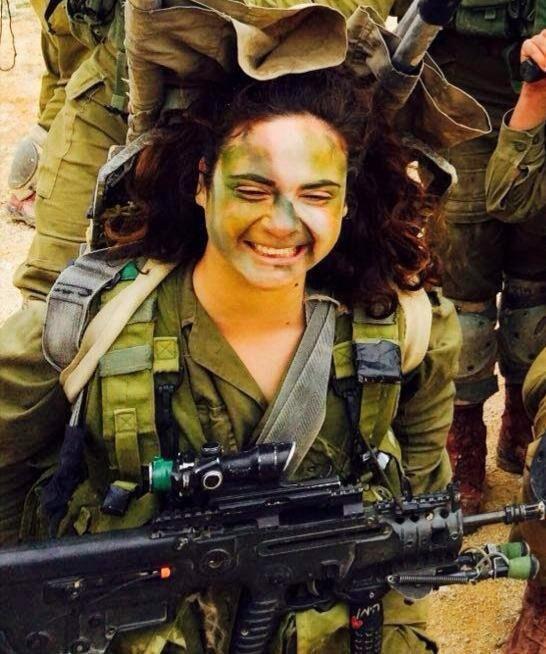
Her aunt Hana, who led the public campaign for Hyman’s return, says the young woman had always been driven by a deep sense of purpose. “She said she wanted to do meaningful service, to really contribute to the country,” Hana recalls. “Her parents tried to talk her out of it — they worried — but she insisted on becoming a combat soldier, even when there were far fewer women in combat roles back then. For me, she was a pioneer.”
Born and raised in Petah Tikva, Hyman later moved to Haifa to study visual communication at the WIZO Academic Center. Before her military service, she completed a year of national service at the bilingual Hebrew-Arabic school in Jerusalem and hiked the Israel National Trail — “the land she loved so much,” Hana says.
In August 2015, Hyman enlisted as a combat soldier in the IDF’s 33rd “Caracal” Battalion, a mixed-gender infantry unit stationed along Israel’s southern border. She later completed the IDF squad leaders’ course and was discharged with the rank of sergeant.
“She was admired as a commander — brave, dedicated, a real fighter. Everyone loved her,” Hana says. “During one mission near the Egyptian border, a grenade exploded close to her. She didn’t even tell her parents at first so they wouldn’t worry. When she finally mentioned it, it was just in passing.”
Hyman was volunteering at the Nova festival when Hamas terrorists stormed the site on Oct. 7, 2023, killing and abducting hundreds. “During her army service, we worried constantly — three years of fear that she might be captured or hurt. But we trusted her. She was a fighter,” Hana says. “And then here, in the sovereign territory of the State of Israel, as a civilian volunteer, she was kidnapped and murdered.”
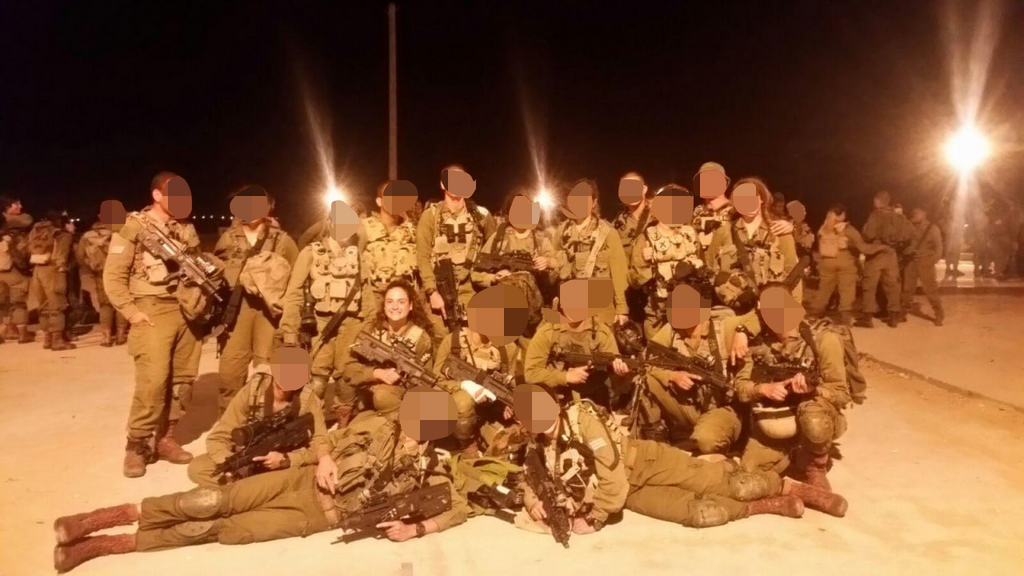
Her family describes her as a gifted young woman — a singer and dancer, an outstanding student, and a talented photographer. “We carry Inbar in our memories,” Hana says. “A wonder child, a gift for 27 years.”
For more than two years, Hana led the struggle to bring her niece home for burial. Throughout that time, the family avoided any mention of Hyman’s combat service. “It torments me,” Hana says. “I fought for two years to bring Inbar back for a proper burial — a girl who gave her life to this country, who was left there in that cursed soil.”
Hyman’s return marked the end of a two-year ordeal. She was the last woman to be brought back from Hamas captivity. “Inbar was abandoned three times — first on Oct. 7, second in the women’s prisoner exchange, and third when she remained more than two years as the only woman held hostage,” Hana says. “Inbar is waiting for all her brothers and sisters to come home from Hamas captivity. We will do everything to bring them back — until the last hostage. Thanks to the IDF soldiers, without whom we could not have brought her home.”
Maj. (res.) S., an officer in the IDF Ground Forces who served alongside Hyman, says their professional connection grew into a deep friendship. “Inbar was a friend and commander with a huge heart. She believed in everyone around her — those she commanded and those who commanded her,” she says. “She was always mission-driven and wanted to do everything in the best possible way — from daily routines to operational missions.”
When she learned that Hyman had been abducted, S. says she felt “deep worry for her fate and condition, but also great hope that she would return soon, healthy and whole.” After Hyman’s body was recovered, she said, “There’s a sense of relief that Inbar is back with us, laid to rest in her homeland.”
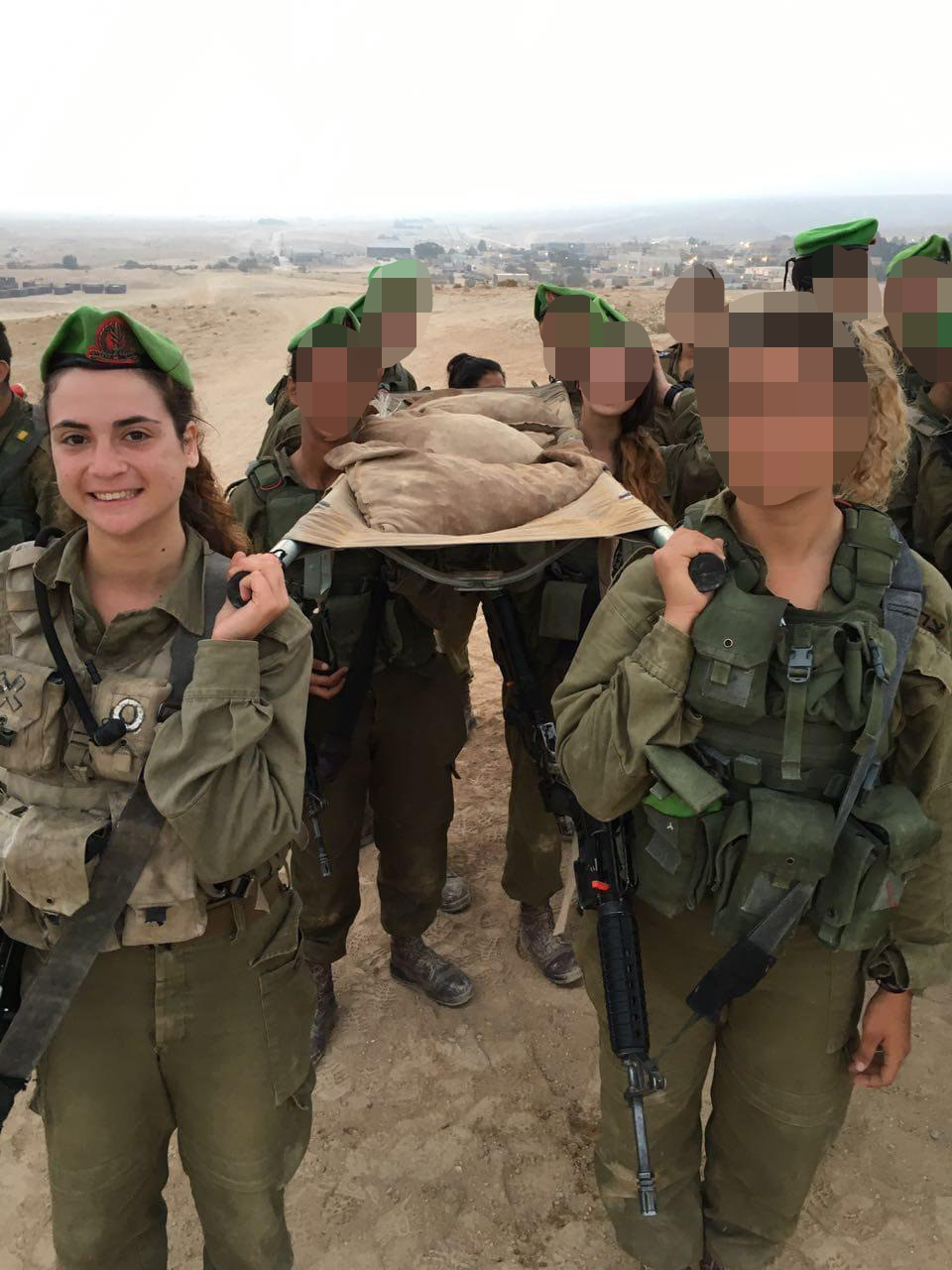
Maj. M., a commander in the Ephraim Brigade who also served with Hyman in the 33rd “Caracal” Battalion, remembers her as both a leader and a unifier. “She was my right hand,” M. says. “She brought the soldiers together and made them love the mission. I remember her telling them she planned to run drills to make sure they were ready for any surprise. She was a professional sergeant who loved her soldiers with all her heart. She was an incredible fighter — there wasn’t a soldier in the battalion who didn’t want to be like Inbar.”
During the two-year campaign for Hyman’s return, M. kept all details of their shared service confidential. “Finally, we can say she was a combat soldier,” she says. “All that time, we weren’t allowed to say a word or publish a photo. That was a big part of who she was — a fighter with a soft heart.”
Her funeral, M. adds, “was very hard. Inbar was buried in the land she loved so much, close to her parents, so they’ll have a place to visit her.”
Maj. (res.) A., who served as a platoon commander in the same company, says she stood out from the start. “We began our roles at the same time — I was a platoon commander, and she was a squad commander. From the first moment, we connected,” he says. “She combined high motivation and professionalism with compassion. Her squad’s nickname was ‘Hyman’s Ducks’ — they followed her everywhere. She made sure they were one hundred percent ready to be the best fighters possible, and she never compromised on their personal wellbeing.”