

After more than a year of internal deliberations, the Israel Defense Forces on Tuesday unveiled a new General Staff order formalizing adjustments for ultra-Orthodox soldiers. The directive establishes three distinct enlistment tracks, including separate command and officer training courses and the creation of an external rabbinical oversight body.
The announcement came alongside a change-of-command ceremony for the Hasmonean Brigade, a unit established as a strict framework for ultra-Orthodox combat soldiers. Col. R. assumed command from Col. Avinoam Amona, who will become the IDF chief of staff’s adviser on ultra-Orthodox affairs.
Change-of-command ceremony for the ultra-Orthodox Hasmonean Brigade
(Video: IDF)


Under the new order, the strictest track, known as “David,” will require all service, including professional training, command and officer courses, to take place within closed units with full gender separation. Only ultra-Orthodox men meeting stringent religious criteria will be eligible, and commanders will be religious as well, except in rare cases requiring senior approval.
Candidates for the “David” track will undergo a dedicated interview to assess their religious lifestyle before placement.
The second track, “Herev,” will also be male-only, staffed by ultra-Orthodox or religious commanders. The third track, “Magen,” is designed for non-combat roles, with service conducted in gender-separated team “capsules” within broader units.
All commanders assigned to the specialized tracks will receive dedicated training or preparation. Admission to the tracks will be based on verified ultra-Orthodox lifestyle criteria, including interviews and approval by authorized IDF officials. Soldiers who no longer meet the requirements will be removed from the designated track and transferred to standard service.
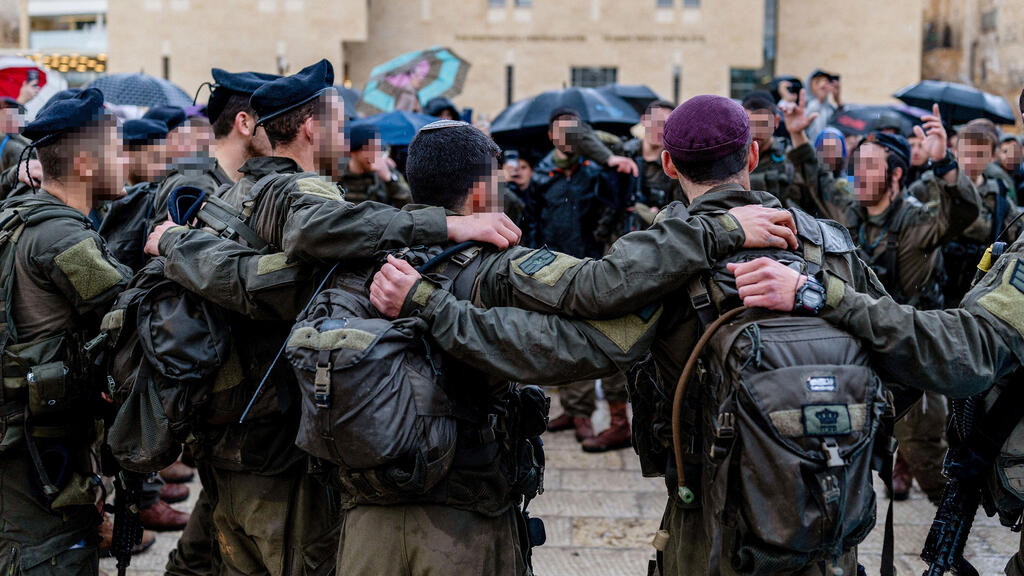
Hasmonean Brigade
(Photo: Reuters/ Ronen Zvulun
)
The order allows ultra-Orthodox soldiers to request enhanced kosher food supervision and, for religious reasons, to leave bases without wearing uniforms. Swearing-in ceremonies will be replaced by declarations, reflecting religious prohibitions against oaths.
A significant and unprecedented provision, included at the request of Rabbi David Leibel, is the establishment of an external rabbinical body operating under the Defense Ministry. The body will oversee IDF compliance with the order and will have the authority to report irregularities directly to senior manpower officials.
IDF Chief of Staff Lt. Gen. Eyal Zamir signed the order, making the arrangements binding. The directive was drafted after prolonged coordination between representatives of Rabbi Leibel and senior IDF and Defense Ministry officials.
The IDF stressed that the new framework will not harm female soldiers and that civilian rabbis will not hold authority within the military chain of command. External rabbis may advise and accompany ultra-Orthodox recruitment efforts, but decisions will remain in the hands of uniformed commanders, supported by military rabbis.
At the same time, the military warned of a growing shortage of combat soldiers, with more than 10,000 already lacking due to prolonged fighting, casualties and injuries. Within 11 months, an additional 5,000 combat and support troops are expected to be lost as soldiers complete shortened mandatory service under existing law.
Senior IDF officials said the shortage is exacerbated by the failure to amend conscription legislation and by legal rulings linking reserve service burdens to the absence of genuine equality in ultra-Orthodox enlistment.
Rabbi Leibel welcomed the signing of the order, saying it guarantees that “anyone who enters the IDF as ultra-Orthodox will leave as ultra-Orthodox,” while enabling meaningful military service.