


Mossad chief David Barnea said Tuesday that Israel’s campaign against Iran will be considered complete only with the fall of the regime, pushing back on reports that Israel misled U.S. President Donald Trump about the likelihood of a rapid collapse.
“Our mission has not yet been accomplished,” Barnea said at a Holocaust Remembrance Day ceremony at Mossad headquarters. “We did not think this mission would be completed immediately after the fighting subsided, but planned for the campaign to continue beyond the strikes in Tehran.”
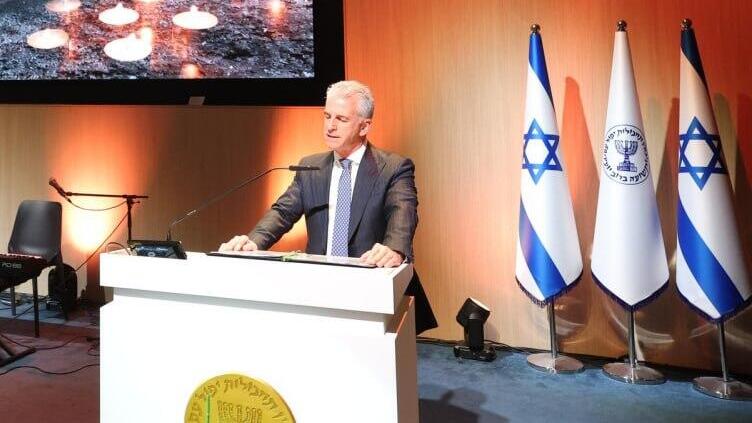
He added, “Our commitment will be fulfilled only when this extreme regime is replaced. A regime that seeks our destruction must cease to exist. We will not stand idly by in the face of another existential threat — guided by the command: never again.”
Barnea also addressed reports, including in The New York Times, that Israel had presented overly optimistic assessments to Washington, suggesting Iran’s regime could collapse within days of the war’s outset.
According to U.S. officials cited in the report, Barnea had proposed a plan under which the Mossad would help mobilize Iran’s opposition to spark unrest that could lead to regime collapse. The proposal was reportedly presented to senior Trump administration officials during a visit to Washington in January and adopted by Prime Minister Benjamin Netanyahu.
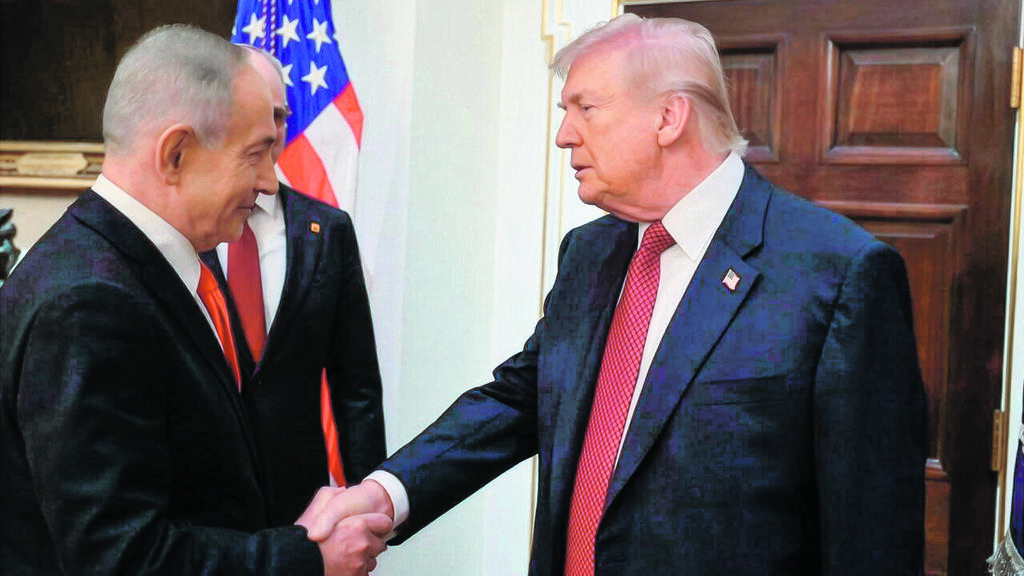
Benjamin Netanyahu and Donald Trump
(Photo: Avi Ohayon/ GPO)
Despite skepticism among some U.S. and Israeli intelligence officials, the report said Netanyahu and Trump believed that early strikes on Iranian leadership, combined with covert operations, could trigger a mass uprising and bring a swift end to the war.
A separate report said Netanyahu presented Trump in February with a war plan suggesting Iran was vulnerable not only to military strikes but also to regime change — an assessment dismissed by CIA officials as unrealistic. The plan also assumed Iran’s ballistic missile program could be destroyed within weeks and that Tehran would be unable to significantly retaliate.
Barnea’s remarks appeared to counter those claims. Officials familiar with the matter said he never argued the regime would collapse during active fighting, noting that sustained bombardment would likely deter public unrest. Instead, the strategy envisioned a longer-term effort — potentially lasting months — after the war.
Some elements of the plan were not implemented, including the possible involvement of Kurdish forces. According to reports, Turkish President Recep Tayyip Erdogan opposed the move, fearing it could embolden Kurdish groups and threaten Turkey’s stability, and urged Trump to block it.
Questions remain over the source of the briefings that fueled the reports. Some officials suggested they originated within the Israeli military, while others pointed to Netanyahu’s circle or to U.S. officials opposed to the war who sought to shift blame onto Israel.
Barnea also addressed tensions between the Mossad and the Israeli military early in the conflict, when reports suggested friction over the agency’s role. While praising the Israel Defense Forces, he emphasized that Mossad intelligence from deep inside Tehran enabled precise airstrikes against threats to Israeli civilians.
“Forty days of intense fighting brought highly significant achievements,” he said, citing damage to Iran’s capabilities and disruption of threats against Israel.