

The UN Security Council decided Thursday evening that the United Nations Interim Force in Lebanon (UNIFIL) will begin withdrawing from the country in 2027, ending nearly five decades of peacekeeping operations on Israel’s northern border.
The resolution, pushed by Israel and the United States, extends UNIFIL’s mandate for the final time until the end of 2026. Starting in 2027, a yearlong withdrawal period will begin, after which the mission will fully disband and leave Lebanon.

Earlier Thursday, Lebanese media reported that an Israeli drone crashed near Naqoura. According to the Lebanese army, when a unit approached the wreckage, it exploded, killing an officer and another soldier, and wounding two others.
UNIFIL was created in 1978 following Israel’s Litani Operation in southern Lebanon. For decades, the mission was tasked mainly with reporting violations along the “Blue Line,” the UN-demarcated border. But after the 2006 Lebanon War, Security Council Resolution 1701 granted it enforcement powers intended to curb Hezbollah. In practice, Israel says, the force allowed the Iran-backed militia to build up a powerful military presence in southern Lebanon.
The mission currently consists of 10,800 troops and personnel from 47 countries. Under the new resolution, once UNIFIL completes its withdrawal, responsibility for security in southern Lebanon will rest solely with the Lebanese government. Beirut is promoting what it calls a “historic initiative” to disarm Hezbollah, though the group has firmly rejected the plan and warned that any attempt to forcibly disarm it would spark another civil war. Lebanon’s previous civil war lasted 15 years and ended in 1990; Hezbollah remains the only armed faction from that conflict that has not disbanded. During the withdrawal period, UNIFIL will retain limited operational authority.

UNIFIL forces in southern Lebanon
(Photo: Mohd Rasfan, AFP)
Israel has long opposed extending UNIFIL’s mandate, arguing that the mission failed to prevent Hezbollah’s military entrenchment. The Trump administration cut U.S. funding to the force, calling it a waste of money that delayed the goal of reducing Hezbollah’s power and transferring full security responsibility to the Lebanese army.
Lebanon, however, has warned it is not yet ready to assume control of the border with Israel. Prime Minister Nawaf Salam on Thursday welcomed the extension of UNIFIL’s mandate for 16 months. European countries, particularly France and Italy, also opposed a rapid termination of the mission, warning that an early exit would create a dangerous “vacuum” that Hezbollah could exploit.
The Israeli Foreign Ministry said in a statement: “Israel welcomes the Security Council decision to end UNIFIL’s mandate, which will formally expire in December 2026, in line with Israel’s position. UNIFIL has utterly failed to prevent Hezbollah’s military build-up for years within its area of operation.”
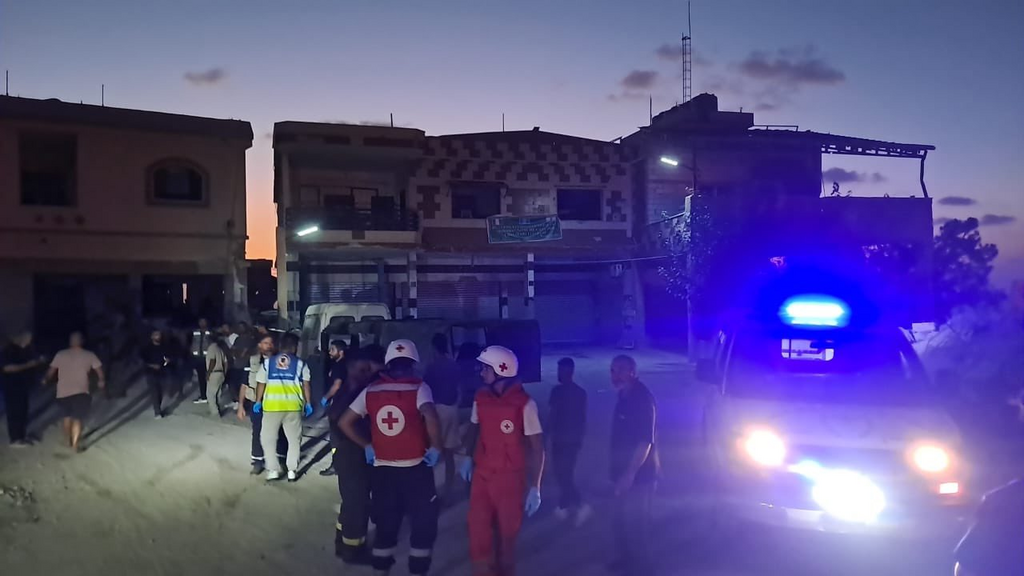
Two killed when an IDF drone exploded
According to the ministry, “UNIFIL’s reports to the Security Council did not reflect the reality on the ground or the scale of Hezbollah’s armament, creating a false impression of stability. Therefore, the Security Council’s decision to carry out an orderly and gradual withdrawal is correct and will contribute to regional stability. The Lebanese government now bears the historic responsibility to exercise full sovereignty.”
The ministry said it coordinated internal interagency work with the Israel Defense Forces and the National Security Council, while engaging with international partners, to secure the outcome.
Foreign Minister Gideon Sa’ar added: “Israel appreciates the U.S. position, and particularly that of Secretary of State Rubio, which made this result possible. U.S. involvement in shaping a better security environment for the region is welcome. The recent developments in Lebanon are positive. Israel will ensure that these achievements are not eroded and that the security of northern residents remains guaranteed.”