

U.S. President Donald Trump’s statement that he should personally be involved in selecting Iran’s next leader, just as he said he did in Venezuela, has reinforced assessments over the past day that Trump is attempting to promote a similar model of change in Tehran to the one he pursued in Caracas.
Diplomats and analysts around the world are skeptical of that expectation, stressing that the Islamic Republic differs greatly from the South American oil power and warning that Trump is mistaken if he believes the same methods can be applied.
Gallery
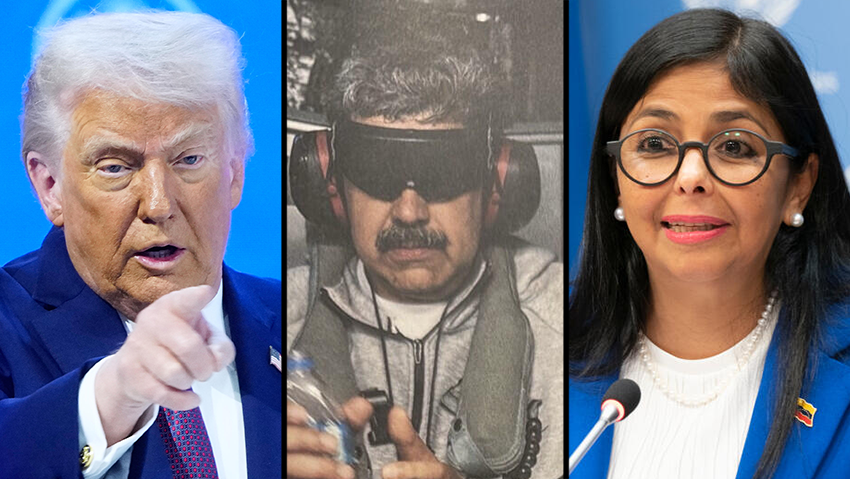
Donald Trump, Nicolás Maduro, Delcy Rodríguez
(Photo: lev radin/shutterstock, AP Photo/Markus Schreiber)
On January 3, Trump ordered U.S. special forces to capture Venezuela’s socialist president, Nicolás Maduro, following months in which he accused Maduro of running a drug cartel and smuggling illegal and harmful substances into the United States. Trump warned that if Maduro did not comply with U.S. demands, his regime would be overthrown. After Maduro was captured and transferred to the United States, Washington said it was holding productive talks with his vice president, Delcy Rodríguez. Within days she was sworn in as his successor.
Shortly after Maduro’s removal, Trump announced that Washington would now manage Venezuela’s affairs remotely, with Rodríguez cooperating with the United States. He warned that if the new president failed to comply with U.S. demands — chief among them granting Washington access to Venezuela’s oil resources — the United States would strike the country again. In the two months since the operation in Caracas, the message appears to have taken hold. The new government led by Rodríguez seems largely aligned with Washington, and Trump himself has praised her conduct.
Many analysts believe what appeared to be a successful operation in Venezuela emboldened Trump to launch a campaign against Iran and fueled hopes in Washington that it could also shape the future of the regime in Tehran. Against the backdrop of reports that Iran’s clerical establishment has chosen Mojtaba Khamenei, son of the eliminated supreme leader Ayatollah Ali Khamenei, as the next leader, Trump said the appointment was unacceptable to him and indicated he wanted to play a role in determining Iran’s next leader. In remarks to Axios, Trump said the United States wanted Iran to be led by someone who would bring harmony and peace.
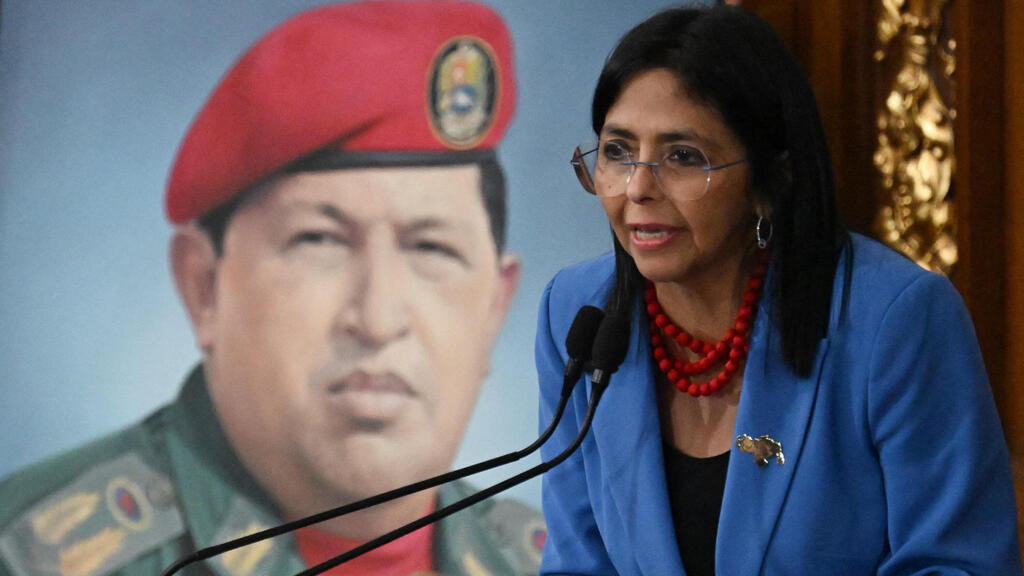
Delcy Rodríguez with a portrait of former Venezuelan leader Hugo Chávez in the background
(Photo: JUAN BARRETO / AFP)
Experts, however, warn that drawing parallels between Venezuela and Iran is a serious mistake. They note that the two countries differ greatly and require entirely different strategies. Secretary of State Marco Rubio made a similar point during a Senate hearing in January, acknowledging that there is no simple answer to who would replace Khamenei if he were removed. Rubio said he expected the situation to be far more complicated than in Venezuela.
Kill the head, the deep state remains
One fundamental difference between Iran and Venezuela — and the challenge they pose to U.S. ambitions — lies in the structure of power and the distribution of authority. Mona Yacoubian, director of the Middle East program at the Center for Strategic and International Studies, said Iran’s governing system is “far more complex than Venezuela’s” and that power is more widely dispersed.
She told AFP that this complexity was one of the main concerns before the war began: the fear that removing the leadership could produce unpredictable consequences and lead to genuine chaos inside Iran.
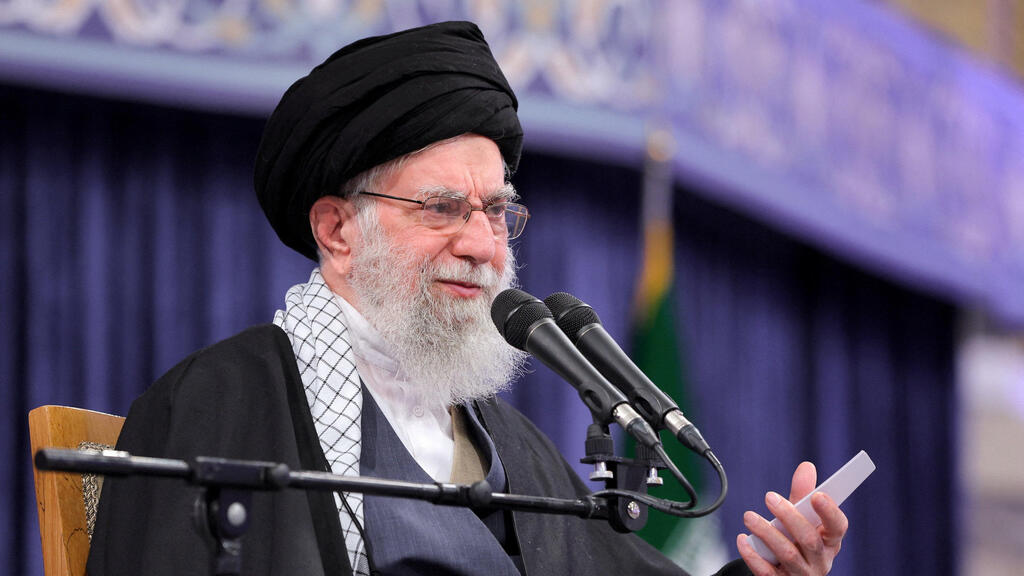
The eliminated supreme leader, Ali Khamenei
(Photo: Office of the Iranian Supreme Leader/WANA (West Asia News Agency)/Handout via REUTERS)
CNN noted that although Khamenei served as Iran’s supreme leader, authority within the regime is widely divided among clerics, military institutions and various political bodies. Vali Nasr, a professor at Johns Hopkins University, said the leadership further dispersed authority after Operation Rising Lion in June of last year so that assassinations would not disrupt the system as severely as they otherwise might. “We can remove the head,” he said, “but the system was built to keep functioning.”
Nasr explained that Iran effectively operates through a “deep state” — a network of bureaucrats, politicians, clerics and commanders in the military and the Islamic Revolutionary Guard Corps — who in practice have long managed the country even while taking direction from the supreme leader.
Another challenge for Trump is the absence of a ready-made successor in Iran — a deputy leader who could quickly step in and cooperate with Washington, as happened with Rodríguez in Venezuela.
Turning Iran into a compliant client state is far less practical than in Venezuela, Benjamin Gedan, a former National Security Council director for South America, told The Guardian. Even under Maduro, he said, Venezuela’s government had already maintained working ties with the United States, historically its key energy partner and a central regional player. “The notion that after Venezuela the United States can simply move around the world, intervene and install a Rodríguez-style figure wherever an aircraft carrier docks is rather foolish,” he said.
The Shiite ethos and the bitter adversary
Another obstacle lies in the nature of Iran’s military power and the internal resistance facing the United States. The clerical regime, beyond being far stronger militarily than the government in Caracas, relies on the Islamic Revolutionary Guard Corps and the Basij volunteer militia. Just two months ago those forces carried out a mass crackdown against protesters who took to the streets calling for the regime’s overthrow.
So far there are no clear signs of serious fractures within those forces. On the contrary, their statements suggest they are closing ranks and intend to hold on to power even after the war ends.
Iran’s opposition, by contrast, lacks an armed force capable of confronting the Revolutionary Guard and the Basij. It also lacks a military leader like Ahmad al-Sharaa, whose organization Hayat Tahrir al-Sham led the 2024 uprising that toppled Bashar Assad’s regime in Syria.
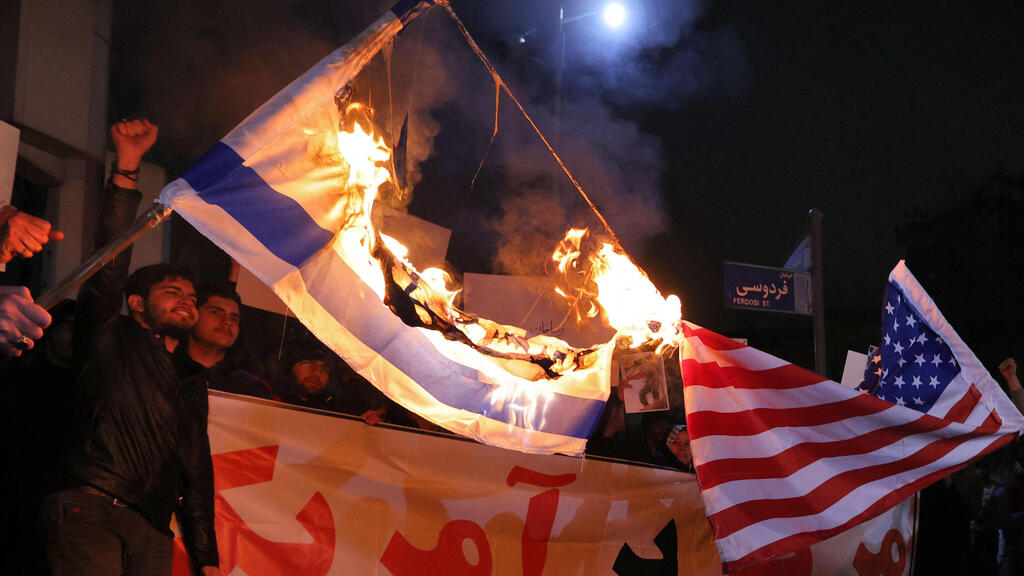
Basij members burn US and Israeli flags in Tehran
(Photo: ATTA KENARE / AFP)
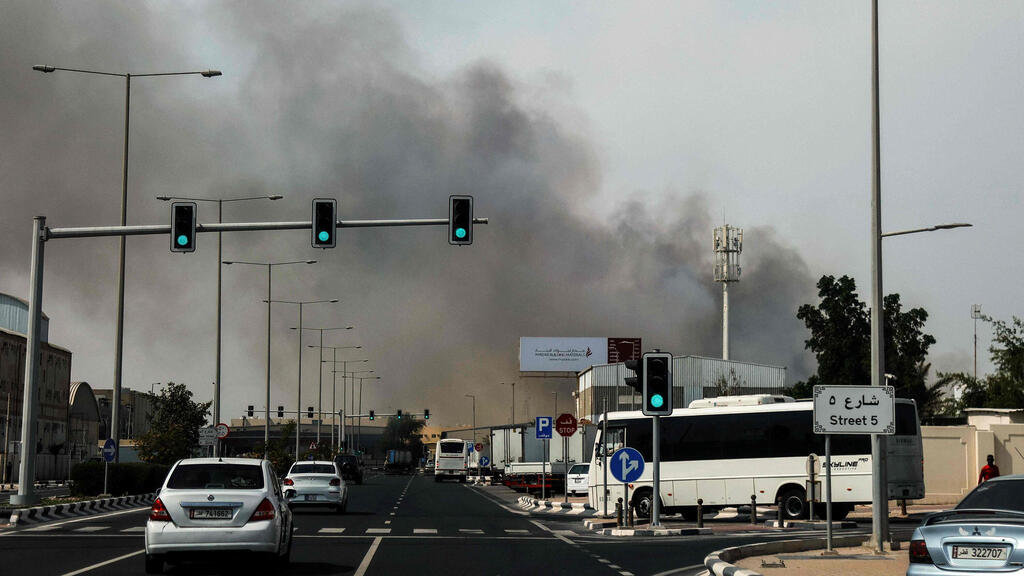
Smoke rises after an Iranian missile strike in Abu Dhabi
(Photo: AFP)
Equally significant is the regime’s unusually rigid ideology. Since the 1979 Islamic Revolution, Iran has operated as a Shiite theocracy. While the government in Caracas also adopted a radical ideological line from the early 2000s under socialist leaders who viewed the United States as a colonial power and bitter adversary, analysts say the hostility expressed in Venezuela never approached the intensity of Iran’s anti-American ideology.
The belief in defeating the “Great Satan” is embedded in the ideology of the Iranian regime, and the chant “Death to America” is a recurring feature of official ceremonies. The Shiite ethos itself is rooted in narratives of enduring injustice and surviving against a ruthless enemy. Given that many Iranian officials, diplomats and security leaders are themselves motivated by this religious ideology, analysts say it is harder to imagine them capitulating and accepting Trump’s dictates.
Another major difference already visible is the scale of military involvement required in Iran and its regional consequences. To launch an attack on the Islamic Republic, the United States assembled the largest military force deployed to the Middle East since the start of the second Gulf War. Iran responded by launching heavy fire at military and civilian targets across several regional countries allied with Washington in an effort to pressure them to push Trump to halt the war.
This situation bears little resemblance to the events in Venezuela, where a limited and brief military operation was enough to assist U.S. special forces in capturing Maduro and enabling Rodríguez to take power. If the Iranian regime withstands the assault and refuses to surrender, pressure on Trump from regional partners is expected to increase as they seek to limit the heavy economic and security damage they are already facing.
'Decapitate and delegate'— the ideal scenario
At least publicly, those differences have not discouraged Trump. In recent weeks he has repeatedly cited the events in Caracas as an example of how regime change can be carried out. He told The New York Times this week that what the United States did in Venezuela represented what he viewed as the ideal scenario.
Days later he said he had “three very good options” for who should lead Iran after Khamenei, though he declined to name them.
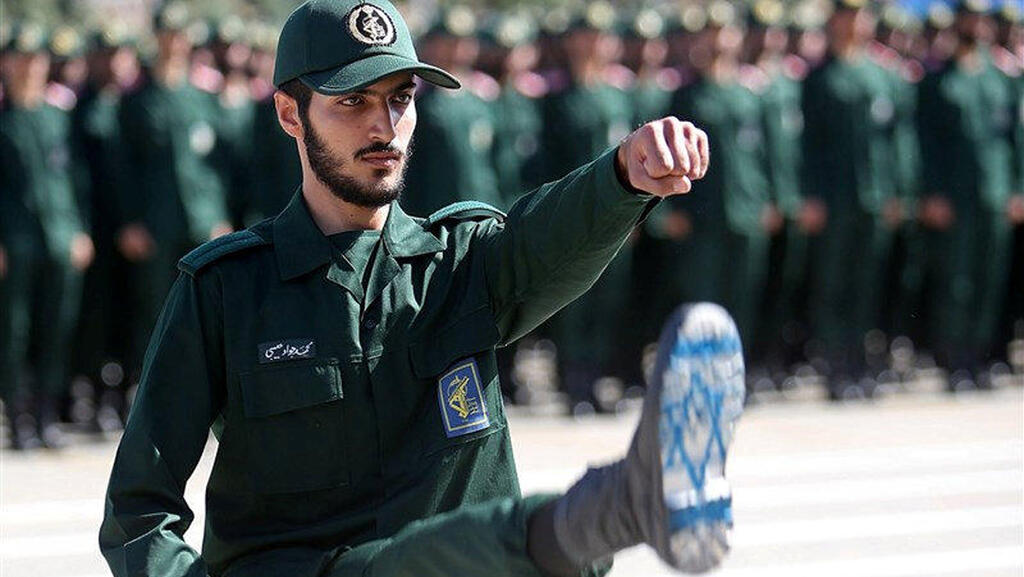
An Iranian soldier steps on a Star of David symbol during a Revolutionary Guard parade
(Photo: Reuters)
A U.S. State Department official told The Wall Street Journal that Trump’s “Venezuela strategy” — shaping the regime’s behavior from afar without deploying American ground troops — could be described as “decapitate and delegate.”
Iran specialists, however, told The Guardian that Trump’s demand to be involved in selecting Iran’s next leader is likely to be categorically rejected by surviving figures within the regime.
Alex Vatanka, director of the Iran Program at the Middle East Institute in Washington, said Trump’s attempt to intervene in choosing Iran’s leader was “beyond absurd.” “What he is effectively doing,” Vatanka said, “is like asking radical Shiite Islamists to become part of the MAGA movement.”