


A limited postponement of elections could be justified in an emergency if free, equal and accessible voting could not be held, the Central Elections Committee chairman said on Tuesday, but warned that such a move must not become a tool for a government to extend its rule.
Supreme Court Deputy Chief Justice Noam Sohlberg made the remarks at a closed Hebrew University conference while presenting an article he co-authored with Dean Livne, acting director general of the Central Elections Committee. The article examines elections during crises, including the postponement of elections and the extension of elected officials’ terms.
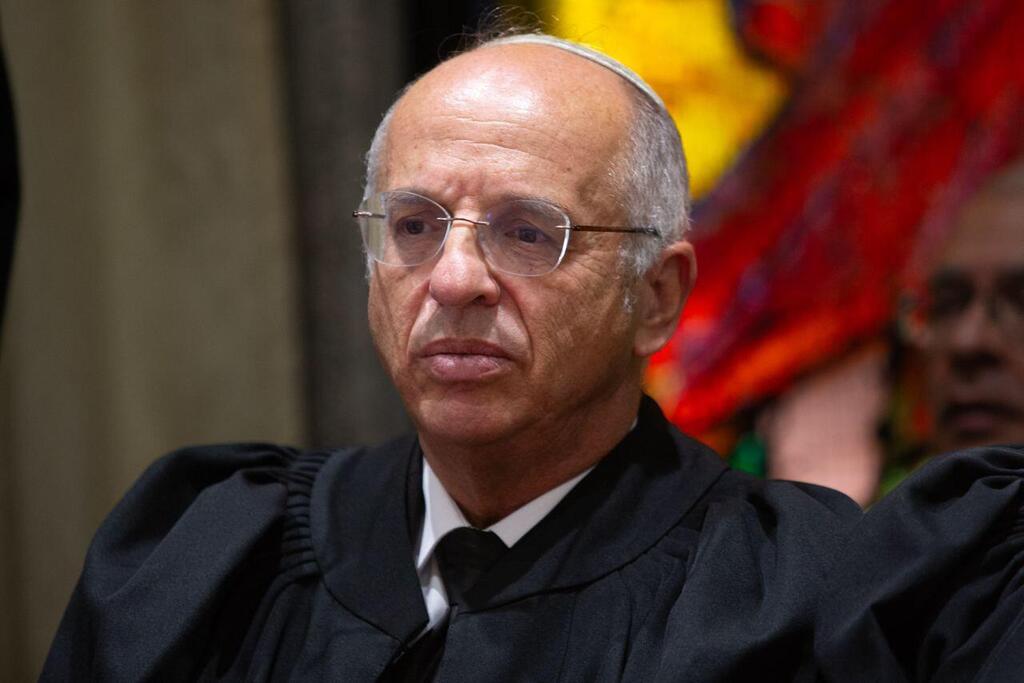
Supreme Court Deputy Chief Justice Noam Sohlberg
(Photo: Alex Kolomoisky)
Sohlberg said any decision to delay elections during an emergency must meet six tests.
The first, he said, is necessity: Those seeking to postpone elections bear the burden of proof. “The existence of a general crisis is not enough,” he said. “It must be shown that it substantially harms the ability to hold free, equal and genuine elections.”
The second is temporariness. Any delay must be limited in time and include either a new election date or a clear mechanism for setting one.
The third is institutional pluralism. Sohlberg said the severity of a delay should be judged not only by its length, but also by its geographic scope, its impact on equal participation and political competition, and whether it merely preserves the existing process or requires renewed arrangements for voter rolls, candidacies and campaign financing.
The fourth is last resort. Authorities must first exhaust alternatives such as early voting, special polling stations, mobile polling stations and voting arrangements for soldiers, evacuees and people in isolation before moving to postpone an entire election.
The fifth is transparency and reasoning. Any decision to delay elections must be based on public facts and explanations that allow for public and judicial review.
The sixth is a return to normal. Sohlberg said any proper postponement framework must include an exit plan, including the new date, the relevant cutoff date for voter rolls, arrangements for candidacies and funding and the point at which emergency discretion ends and ordinary rules resume.
“To reduce the number of events that can surprise us during an election period, to minimize their damage and to prepare an appropriate response as quickly as possible, we at the committee think through and drill scenarios, including elections during an emergency,” Sohlberg said.
He said officials must prepare for every scenario, including whether elections should be postponed or the sitting Knesset’s term extended, but added that he hoped Israel would not reach a point where such a delay had to be considered.